What it is
Localised skin redness spans inflammatory, infectious, allergic, and systemic causes.
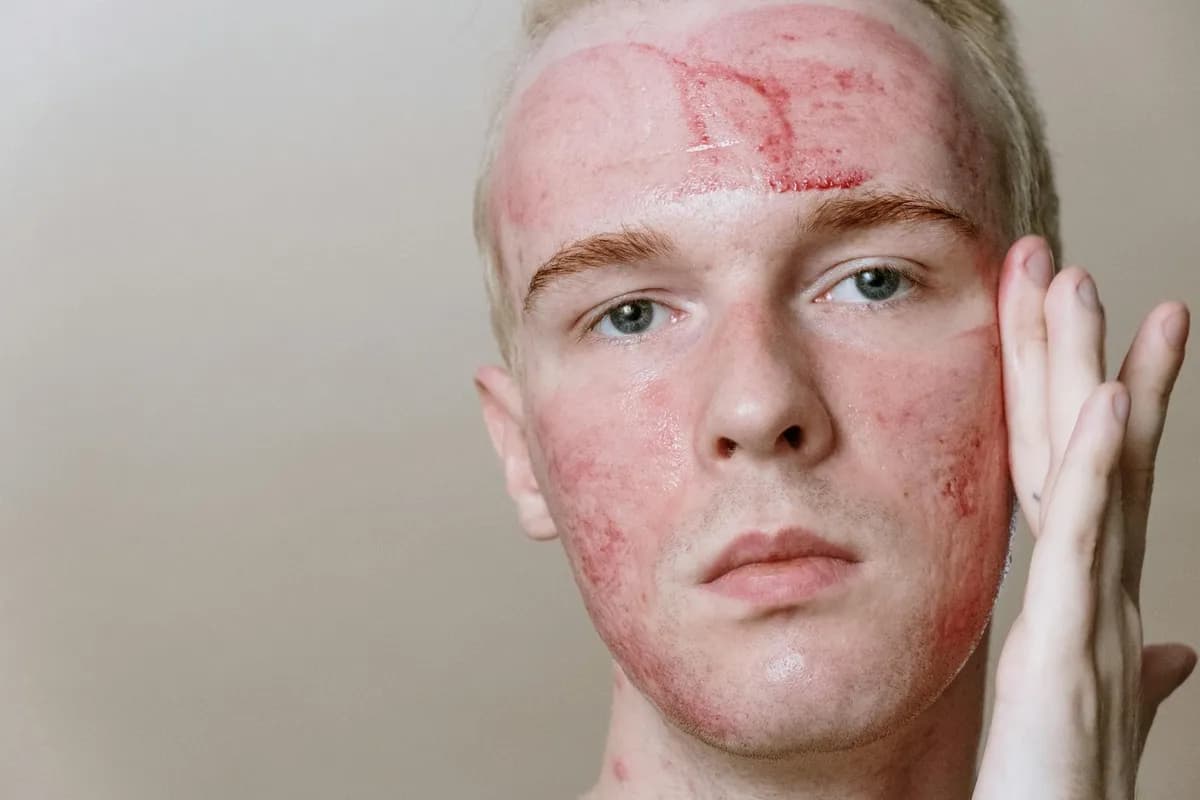
Localised redness of the skin caused by increased blood flow to the surface, inflammation, or irritation. May be acute or chronic, and is associated with a wide range of skin, allergic, infectious, and systemic conditions.
At a glance
What it is
Localised skin redness spans inflammatory, infectious, allergic, and systemic causes.
Commonly experienced as
Evidence context
Emerging evidenceSee the evidence snapshotSafety
See staying safeContext
Localised skin redness describes visible erythema confined to a defined area of the skin surface — reflecting local vasodilation driven by inflammation, irritation, infection, or allergy. The term is equivalent to localised redness and refers to the same spectrum of presentations. The colour, border sharpness, associated symptoms (itch, pain, warmth), and distribution are the primary features guiding diagnosis. Sharply demarcated redness with itch suggests contact dermatitis or an allergic reaction. Diffuse redness with warmth and tenderness suggests cellulitis. Redness with scaling and well-defined borders is characteristic of psoriasis. Facial redness triggered by heat, alcohol, and spicy foods is characteristic of rosacea. Any spreading, painful redness with fever requires urgent medical assessment to exclude serious skin infection.
Could this be you
Localized Skin Redness shows up differently for everyone. Browse by how it tends to be felt — these are common experiences, not a checklist or a diagnosis.
Common experiences people describe — not a diagnostic checklist.
The Evidence
What research and clinical practice say about localised skin redness — and when it needs urgent attention.
Common causes are well understood; some need urgent care
Localised skin redness has many well-studied causes, from contact dermatitis to infection. Most cases are manageable, but certain patterns — especially non-blanching rash or rapidly spreading redness with fever — require immediate professional assessment.
A non-blanching rash must be assessed urgently to exclude meningococcal disease. Rapidly spreading redness with fever may indicate cellulitis or necrotising fasciitis. An expanding ring rash after a tick bite suggests Lyme disease. A facial butterfly rash with systemic symptoms warrants prompt professional evaluation for lupus.
Contact dermatitis is among the most common causes, with patch testing in specialist settings being the most widely used method for identifying allergens. Topical corticosteroids are well-supported for many inflammatory skin conditions when professionally diagnosed. Rosacea management — including trigger avoidance, topical metronidazole, and azelaic acid — is well supported. Erythema migrans warrants prompt professional assessment, as it typically requires medical management.
Sharply demarcated redness with itch points toward contact dermatitis or allergy. Diffuse redness with warmth and tenderness suggests infection. Redness with scaling and defined borders is characteristic of psoriasis. Facial redness triggered by heat or alcohol is typical of rosacea. These patterns help clinicians narrow the cause efficiently.
TCM associates skin redness with Heat and Blood Heat patterns, often involving Lung and Heart pathology. Topical preparations such as calendula, aloe vera, and chamomile are widely used in traditional and complementary contexts. Ayurveda links inflammatory skin presentations to Pitta excess. Evidence for these approaches varies; they should complement, not replace, professional assessment.
Applying topical corticosteroids to infected or broken skin without professional assessment can worsen infection. A non-blanching rash should never be monitored at home without urgent medical review. Self-managing persistent or worsening redness without professional input risks delayed identification of serious underlying conditions.
A GP or dermatologist can assess cause, recommend evidence-informed care approaches, and refer where needed. Complementary practitioners may support skin health through lifestyle, dietary, or topical approaches. For conditions such as rosacea or contact dermatitis, complementary care works best alongside professional assessment — particularly when redness is persistent, spreading, or accompanied by systemic symptoms.
Safety first
General, informational guidance — not diagnostic. A qualified practitioner can advise on your own situation.
References
Educational sources that inform this overview. Inclusion is for context and does not imply endorsement.
Full citations are maintained by the Gyfts editorial team and reviewed periodically.
Keep exploring
Browse practitioners, explore honest overviews, and take what you learn to a conversation — at your own pace.