What it is
Social anxiety describes intense fear of social or performance situations in which scrutiny by others is possible, driven by fear of embarrassment, humiliation, or negative evaluation.
An intense, persistent fear of social or performance situations due to fear of negative evaluation, embarrassment, or humiliation — leading to significant avoidance and distress.
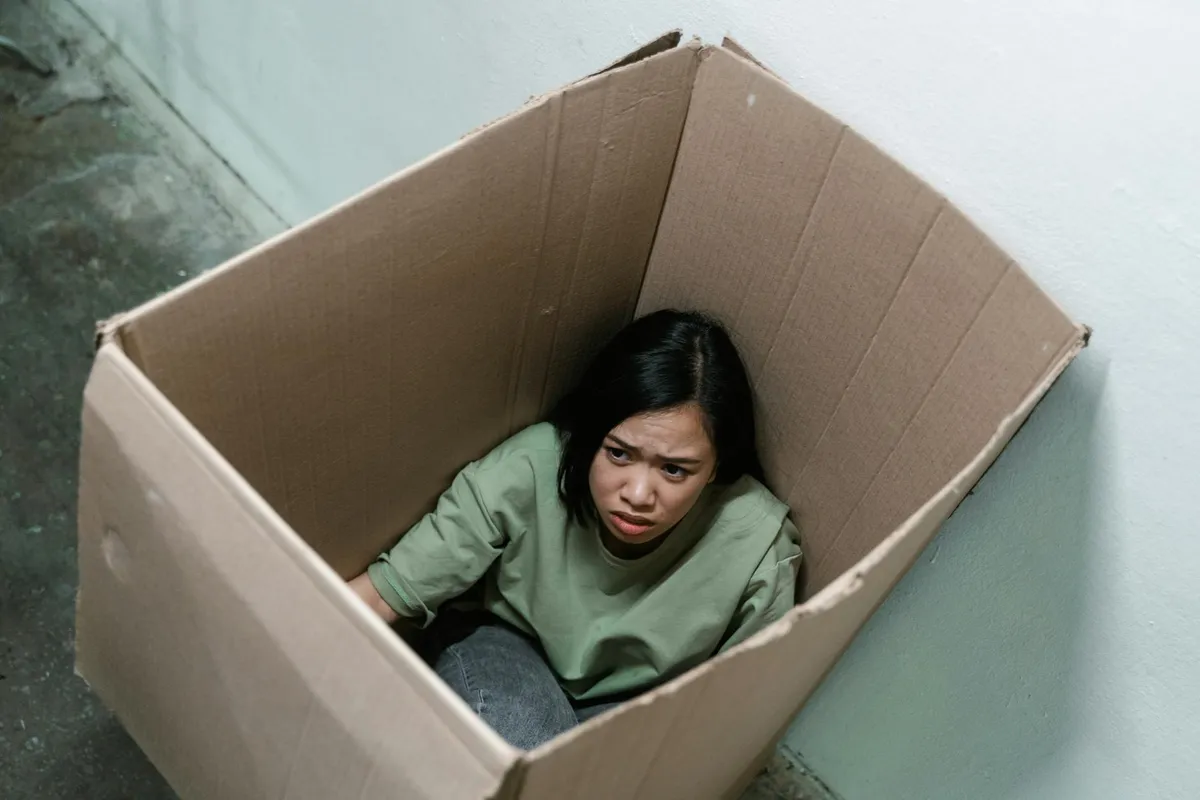
At a glance
What it is
Social anxiety describes intense fear of social or performance situations in which scrutiny by others is possible, driven by fear of embarrassment, humiliation, or negative evaluation.
Commonly experienced as
Evidence context
Research-supportedSee the evidence snapshotSafety
See staying safeContext
Social anxiety disorder (social phobia) is characterised by a marked, persistent fear of social situations in which the individual may be observed, evaluated, or scrutinised by others. The feared outcome is humiliation, embarrassment, or negative judgment. Common feared situations include speaking in public, meeting new people, being observed while eating or working, or being the centre of attention. Physical symptoms in feared situations — blushing, sweating, trembling, difficulty speaking — are both dreaded outcomes and symptoms in their own right, creating a self-perpetuating cycle. Social anxiety is one of the most prevalent psychiatric disorders, with lifetime prevalence of approximately 12–13%, and frequently leads to significant educational underachievement, occupational limitation, and social isolation. The majority of cases begin in adolescence.
Could this be you
Social Anxiety shows up differently for everyone. Browse by how it tends to be felt — these are common experiences, not a checklist or a diagnosis.
Common experiences people describe — not a diagnostic checklist.
The Evidence
What research and clinical practice tell us about social anxiety, and where professional support matters most.
Social anxiety is well-studied and responsive to structured care
Social anxiety disorder is one of the most common anxiety conditions, with lifetime prevalence estimates varying across populations and cultures. Strong evidence supports both psychological and pharmacological approaches, with structured, exposure-based intervention showing particularly consistent results.
Complete social withdrawal combined with depression, alcohol dependence used as a coping strategy, or suicidal ideation driven by shame and isolation all require professional attention without delay. These are not signs of weakness — they are signals that the level of support needed goes beyond self-directed approaches.
Exposure-based cognitive behavioural therapy — targeting avoidance, distorted self-perception, and self-focused attention — is the most robustly evidenced approach. SSRIs and SNRIs are effective pharmacological options. Combined psychological and medication approaches can offer additive benefit for some seekers, though the advantage over either approach alone is modest rather than dramatic.
Alcohol and benzodiazepines are frequently used to manage social situations, but both prevent the natural habituation that reduces anxiety and carry real dependency risks. Consistent avoidance of feared situations also reinforces anxiety rather than reducing it — even when avoidance feels protective in the short term.
CBT components include cognitive restructuring, video feedback to correct distorted self-image, attention retraining, and graded behavioural exposure. Mindfulness-based approaches reduce the self-focused attention that amplifies anxiety in social situations. Medication is often considered when psychological approaches alone are insufficient.
Practices that build physiological steadiness — such as breathwork and body awareness — may reduce anticipatory anxiety before feared situations. Interest-focused or structured social environments lower evaluative pressure compared to unstructured interaction. These approaches are best understood as supportive rather than primary interventions.
Mild social anxiety may respond well to self-directed learning, peer support, or complementary approaches. Moderate to severe social anxiety — particularly where it limits education, work, or relationships — warrants professional assessment. A qualified mental health practitioner can help identify the most appropriate pathway.
Safety first
General, informational guidance — not diagnostic. A qualified practitioner can advise on your own situation.
References
Educational sources that inform this overview. Inclusion is for context and does not imply endorsement.
Full citations are maintained by the Gyfts editorial team and reviewed periodically.
Keep exploring
Browse practitioners, explore honest overviews, and take what you learn to a conversation — at your own pace.