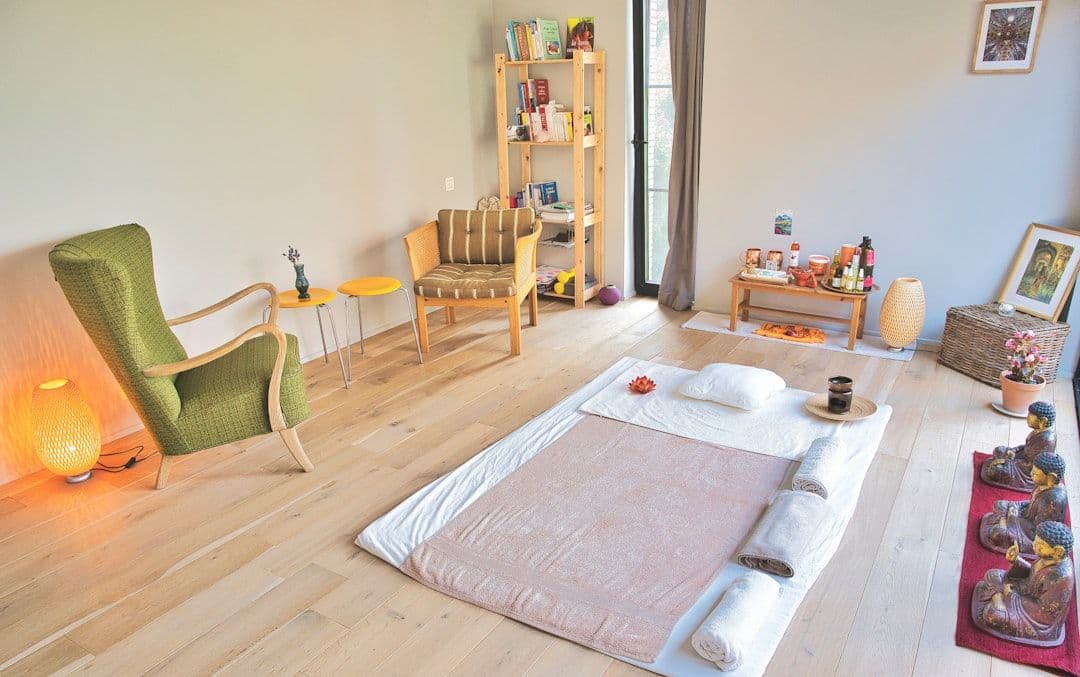
The Touch That Talks
Picture this: you're lying on a massage table, fully clothed, as gentle hands work along your shoulders. But this isn't a typical massage. As the practitioner's touch finds a particularly tight spot, they pause and ask: "What comes up for you here?" The knot under their fingers isn't just muscle tension — it's stored emotion, waiting to be acknowledged and released.
This is biodynamic therapy, a distinctive form of psychotherapy that treats your body as an active participant in healing psychological wounds. Rather than sitting across from a therapist discussing your troubles, you experience direct physical contact whilst exploring the emotional landscape your body has been quietly mapping for years.
From Norway to the World
Biodynamic therapy emerged in the 1950s through the work of Gerda Boyesen, a Norwegian psychologist and physiotherapist. Boyesen had trained in Reichian therapy — Wilhelm Reich's pioneering work on how emotions create chronic muscular tension — but she developed her own understanding of what she termed the body's "emotional metabolism."
Working first in London and later establishing training programmes internationally, Boyesen observed that the body has its own intelligence for processing difficult experiences. She noticed that when people felt safe to express suppressed emotions, their bodies would often produce distinct sounds — what she called "psychoperistalsis" — rumbling from the digestive system that seemed to accompany emotional release.
Today, biodynamic therapy practitioners work across Europe, with established training institutes maintaining Boyesen's original emphasis on gentle, non-invasive touch combined with psychoanalytic insight.
How Physical Touch Unlocks Emotional Memory
Biodynamic therapy operates on the premise that unprocessed emotions don't simply disappear — they become embedded in your muscle fibres, creating what practitioners call "body armour." This physical holding pattern restricts not just movement but also the natural flow of emotional expression.
A practitioner uses specific massage techniques to identify these areas of chronic tension, working slowly and sensitively to encourage release. They're simultaneously listening — both to what you're saying and to what your body is communicating through breath, muscle response, and those distinctive digestive sounds Boyesen first documented.
The theory suggests that by addressing stored emotion at the physical level, you can access and process psychological material that might remain hidden in traditional talking therapy. From a biomedical perspective, we know that chronic stress does indeed create measurable changes in muscle tension and nervous system function, though the specific mechanisms proposed by biodynamic theory await rigorous scientific investigation.
Who Finds Their Way Here
Many people discover biodynamic therapy when conventional approaches haven't fully addressed their concerns. You might be someone who feels emotions primarily as physical sensations — that knot in your stomach during anxiety, the shoulder tension that never quite resolves, or unexplained body symptoms that medical investigations can't pin down.
Those with trauma histories sometimes find this approach particularly resonant, especially if you struggle to access or articulate difficult emotions through words alone. The gentle, boundaried touch can help rebuild a sense of safety in your own skin.
Others are drawn to biodynamic work when they feel intellectually aware of their patterns but somehow disconnected from real change. If you find yourself saying "I understand why I do this, but I still can't stop," the body-focused approach may offer a different pathway to integration.
A Session Unfolds
Your first session typically begins with conversation — understanding what brings you here and establishing clear boundaries around touch. You remain fully clothed throughout, usually lying on a massage table while the practitioner works with oil through light clothing or directly on exposed arms and hands.
The touch itself is gentle and responsive rather than deep or forceful. A skilled practitioner reads your body's responses moment by moment, adjusting pressure and pace accordingly. They might spend considerable time on one area if it seems to hold particular significance, or move fluidly across different regions as your session unfolds.
Throughout this physical work, you're encouraged to notice what arises — sensations, emotions, memories, or images. The practitioner helps you stay present with whatever emerges, using both touch and words to support the process. Sessions typically last 60 to 90 minutes, with the final portion often involving integration time to discuss what you've experienced.
The Evidence Picture
Biodynamic therapy exists in an evidence landscape that's both challenging and telling. Controlled trials specific to this modality are virtually non-existent, reflecting both the individualised nature of the work and the practical difficulties of researching complex, touch-based interventions.
What we do have are case studies, practitioner observations, and client reports spanning several decades. Many people describe profound shifts in their relationship with their bodies and emotions, often after years of other therapeutic approaches. Practitioners report particular success with trauma-related presentations and chronic stress patterns.
The broader field of body-oriented psychotherapy shows encouraging research outcomes, with studies indicating benefits for PTSD, depression, and anxiety disorders. However, translating these findings to biodynamic therapy specifically requires caution — the approaches, whilst related, employ different techniques and theoretical frameworks.
Finding a Practitioner
Qualified biodynamic therapists complete extensive training programmes, typically lasting three to four years and combining theoretical study with supervised practice. Look for practitioners registered with recognised professional bodies such as the UKCP or BACP, or specifically with the Gerda Boyesen International Foundation.
Expect to invest between £60-£120 per session, with many practitioners offering initial consultations to ensure good fit. Treatment length varies enormously — some people find benefit in short-term work, whilst others engage in longer therapeutic relationships spanning months or years.
When choosing a practitioner, prioritise clear professional boundaries, appropriate training credentials, and someone who makes you feel genuinely safe. This work requires considerable trust, so take time to find someone whose approach resonates with your needs and comfort level.