The Research Landscape: Traditional Knowledge Meets Academic Inquiry
Sacred geometry occupies a unique position in the research literature. Unlike clinical interventions designed to address specific health conditions, this practice represents a traditional knowledge system that interprets mathematical patterns as expressions of universal principles.
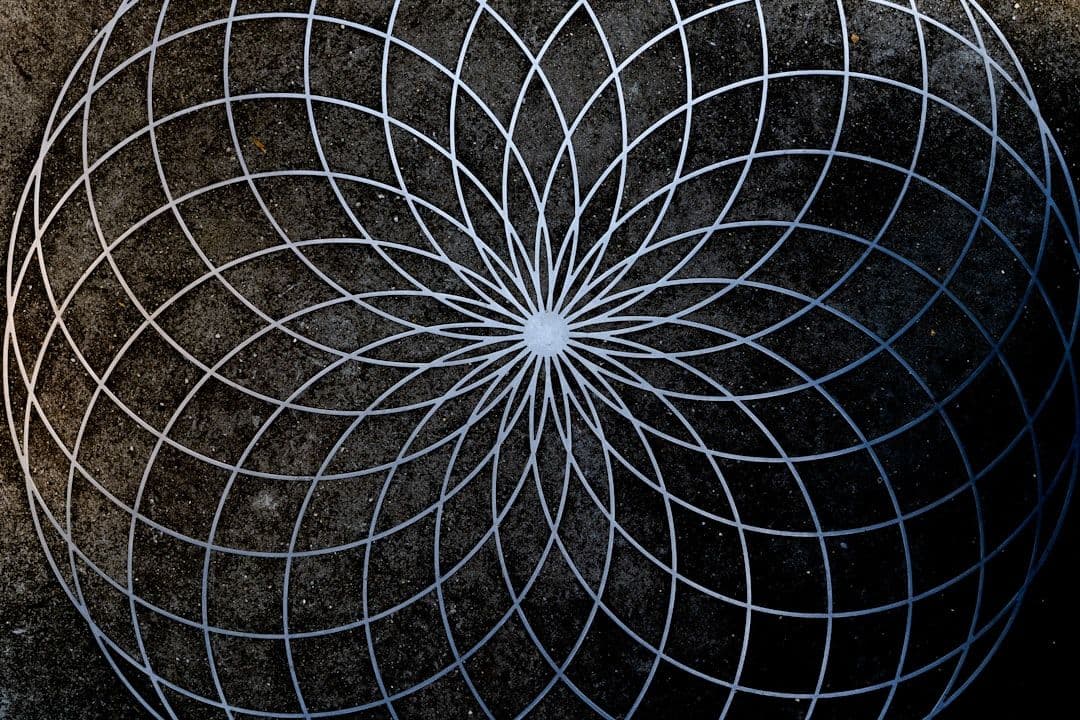
Academic investigation has approached sacred geometry from multiple angles. Mathematical research documents the prevalence of specific ratios—particularly the golden ratio (φ = 1.618...)—in natural formations from nautilus shells to flower petals. Architectural studies examine how ancient builders incorporated geometric principles into temple and monument design. Psychology research explores how humans respond to geometric patterns and proportions.
However, conventional clinical trials examining therapeutic benefits remain virtually non-existent. This absence reflects not a research gap, but rather the nature of the practice itself. Sacred geometry functions as a contemplative and symbolic system rather than a medical intervention, making randomised controlled trials largely irrelevant to its core purpose.
Mathematical Foundations and Pattern Recognition
The strongest evidence base for sacred geometry lies in mathematical research confirming the widespread occurrence of specific geometric relationships in nature. Studies in biomathematics have documented Fibonacci sequences in pine cone spirals, sunflower seed arrangements, and leaf patterns. Research in crystallography reveals how molecular structures follow precise geometric rules.
Architectural analysis of ancient structures provides compelling documentation of sophisticated geometric knowledge. Studies of the Great Pyramid, Parthenon, and Gothic cathedrals demonstrate deliberate use of specific ratios and proportions. These investigations confirm that ancient builders possessed advanced understanding of geometric principles, though interpretations of their symbolic significance remain within traditional knowledge frameworks.
Neurological research offers intriguing insights into human responses to geometric patterns. Brain imaging studies suggest that viewing certain proportions activates reward centres, potentially explaining why specific ratios appear aesthetically pleasing across cultures. However, this research stops short of validating metaphysical interpretations of geometric significance.
Contemplative Practice and Psychological Responses
Limited research has examined sacred geometry within contemplative contexts. Small studies on mandala meditation—which incorporates geometric patterns—suggest potential benefits for focus and emotional regulation. One pilot study of 30 participants found that geometric meditation practices reduced anxiety scores compared to control groups, though the sample was too small for definitive conclusions.
Research on environmental psychology indicates that geometric patterns in architecture and art can influence mood and cognition. Studies in healing environments show that certain geometric designs may promote feelings of calm and wellbeing, though these effects likely reflect general responses to harmonious proportions rather than specific sacred geometric properties.
These findings must be interpreted carefully. The studies examine geometric patterns as visual or meditative stimuli, not as therapeutic interventions. Benefits appear to emerge through the meditative process itself rather than from any inherent power within the geometric forms.
Evidence Limitations and Traditional Knowledge Frameworks
Conventional research limitations include small sample sizes, lack of standardised protocols, and the challenge of studying subjective spiritual experiences. Most importantly, the research paradigm itself may be inappropriate for evaluating sacred geometry's core claims.
Within traditional knowledge systems, sacred geometry operates through symbolic and contemplative frameworks that don't translate directly into measurable clinical outcomes. Practitioners engage with geometric patterns as tools for meditation, spiritual insight, and understanding universal principles—experiences that resist quantification through conventional research methods.
This represents a fundamental epistemological difference. Traditional practitioners don't view geometric patterns as mechanisms producing specific effects, but rather as symbolic languages for understanding cosmic principles. The practice's value lies in personal meaning-making and contemplative engagement, not in measurable therapeutic outcomes.
Research Directions and Unanswered Questions
Future research might productively explore sacred geometry's role within broader contemplative practices. Studies examining how geometric focus affects meditation depth, attention training, or creative problem-solving could provide valuable insights without requiring validation of metaphysical claims.
Interdisciplinary collaboration between mathematicians, anthropologists, and consciousness researchers could deepen understanding of how geometric symbolism functions across cultures. Investigation of sacred geometry's applications in art therapy, architectural design, and educational settings might reveal practical benefits without overstepping traditional knowledge boundaries.
The most important recognition is that sacred geometry's primary value may lie precisely in domains that resist scientific measurement. Personal transformation, spiritual insight, and symbolic understanding represent legitimate human experiences that don't require clinical validation to hold meaning and significance for practitioners.