What It Is
Sarcopenia is the gradual, age-related loss of muscle mass, strength, and physical function.
Understanding why muscles change as you age
At a glance
What It Is
Sarcopenia is the gradual, age-related loss of muscle mass, strength, and physical function.
How It Presents
Slower walking, difficulty rising from chairs, fatigue with mild activity, and reduced grip strength.
What May Help
Resistance training, protein optimisation, vitamin D, and practices like Rasayana Therapy are commonly explored.
Evidence Context
Moderate evidence supports exercise and nutrition; complementary approaches are promising but still being studied.
See the evidence snapshotWhen to Seek Help
Seek evaluation if muscle weakness, unintentional weight loss, or falls are affecting daily independence.
Explanation
Sarcopenia is the age-related progressive loss of skeletal muscle mass, strength, and function. It is a major contributor to frailty, falls, disability, and loss of independence in older adults. Muscle loss typically begins in the fourth decade and accelerates after 65. Sarcopenia is driven by reduced physical activity, inadequate protein intake, hormonal changes, systemic inflammation, and neurological changes. It is highly responsive to resistance exercise and nutritional intervention, making early recognition and action critically important.
Could this be you
Sarcopenia shows up differently for everyone. Browse by how it tends to be felt — these are common experiences, not a checklist or a diagnosis.
Common experiences people describe — not a diagnostic checklist.
Why it happens
Sarcopenia usually comes from a mix of factors rather than a single cause. These are common contributors — not certainties.
Natural aging slows muscle protein synthesis and reduces motor neuron signaling, accelerating muscle fiber loss over time.
Chronic psychological or physical stress may elevate cortisol levels, which some research suggests can contribute to muscle tissue breakdown.
Hormonal decline, chronic inflammation, poor nutrition, physical inactivity, and conditions like diabetes or heart disease may all accelerate muscle loss.
Poor or insufficient sleep may disrupt growth hormone release overnight, a period when muscle repair and maintenance normally takes place.
What happens in the body
Sarcopenia can involve several of the body’s systems. These are common patterns researchers describe — how they show up varies from person to person.
With aging, the rate of muscle protein breakdown may begin to outpace synthesis, gradually reducing muscle fiber size and overall muscle mass over time.
Declining levels of anabolic hormones such as testosterone, estrogen, and IGF-1 with age may reduce the signals that normally support muscle protein synthesis and repair.
Age-related loss of motor neurons can reduce the number of muscle fibers that receive activation signals, contributing to declining muscle strength and coordination.
Low-grade chronic inflammation associated with aging may elevate circulating cytokines that interfere with muscle protein synthesis and accelerate muscle fiber breakdown.
Process
Management
Progressive resistance exercise is a cornerstone approach; some research suggests it may support muscle mass retention and functional strength in older adults.
Adequate dietary protein, particularly leucine-rich sources, may support muscle protein synthesis; a dietitian can help tailor intake to individual needs.
Some practitioners suggest vitamin D and creatine supplementation may support muscle function, particularly in older adults with low baseline levels.
An Ayurvedic rejuvenation approach traditionally used to support vitality and tissue nourishment; some people find it a complementary addition to conventional care.
Certain peptides are explored by some practitioners as a way to support muscle recovery and hormonal signaling; a doctor may discuss suitability on an individual basis.
Self-Care
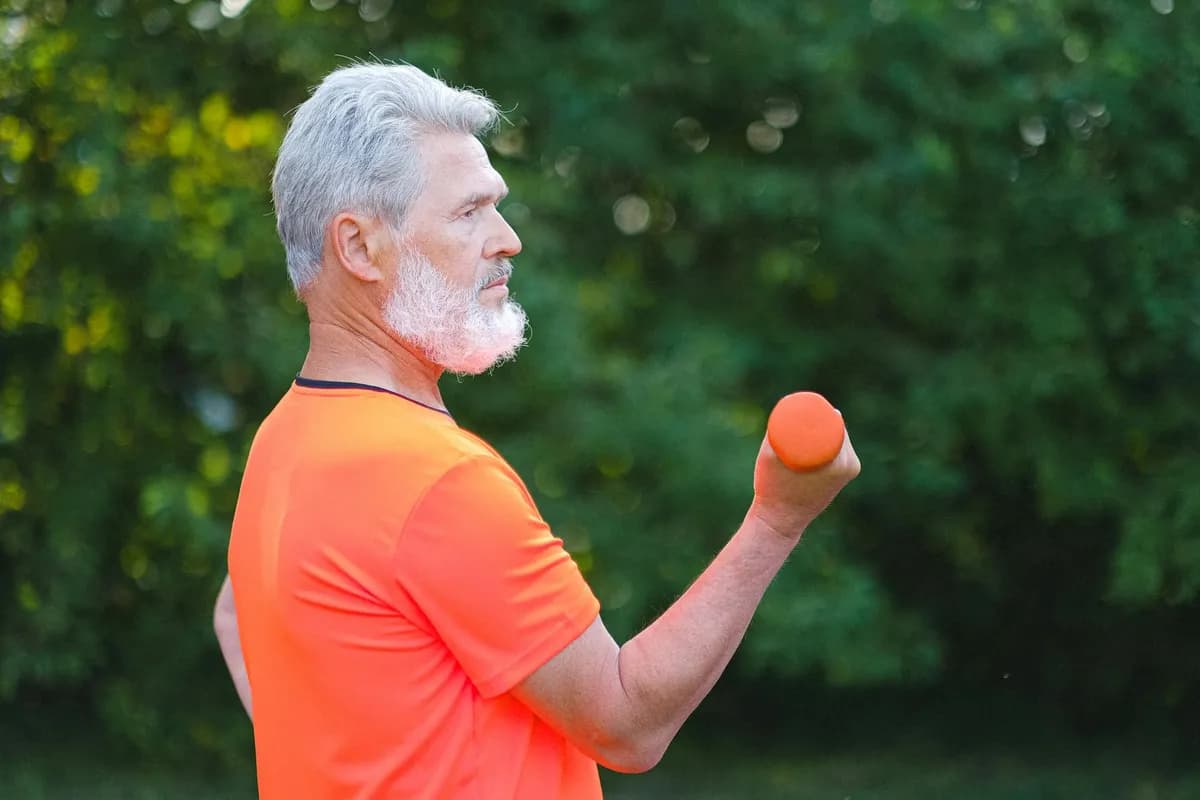
Lifting weights or using resistance bands two to three times weekly may support muscle retention and strength in older adults.
Spreading protein intake across meals, aiming for roughly 25 to 30 grams per serving, may help support muscle protein synthesis.
Exercises like single-leg stands or tai chi may support stability and help reduce fall risk associated with muscle loss.
Some practitioners suggest these supplements may support muscle function, though individual needs vary and guidance from a healthcare provider is advisable.
Reducing prolonged sitting and incorporating walking or light activity may complement structured exercise for overall muscle health.
The Evidence
What research currently supports for understanding and addressing age-related muscle loss.
Sarcopenia is reasonably well-studied, with intervention showing meaningful promise
Resistance training and adequate protein intake have consistent research support for slowing or partially reversing age-related muscle loss. Early recognition and consistent action appear to make a meaningful difference to long-term outcomes.
Progressive resistance training is the most consistently supported intervention for sarcopenia across multiple study designs. Dietary protein at 1.2–1.6g per kg of body weight per day has consistent evidence across studies for preserving muscle mass. Creatine supplementation shows supportive evidence as an adjunct to resistance training, and vitamin D supplementation has evidence where deficiency is confirmed.
Clinicians may use grip strength testing, walking speed, or chair-stand tests as practical screening tools. Imaging or body composition analysis can confirm muscle mass changes. Because decline is gradual, many people are not assessed until function is already significantly reduced — making earlier recognition valuable.
Sudden severe muscle weakness, rapid unintentional weight loss, inability to stand or walk, a fall involving injury or head trauma, or unexplained functional decline should each prompt professional assessment. These presentations may indicate causes beyond typical age-related change and are not appropriate for self-directed management alone.
Tai chi has evidence for improving balance and reducing fall risk in older adults. Yoga and Pilates may support functional strength, flexibility, and body awareness. Nutritional therapy can assist with optimising protein intake and identifying relevant deficiencies. These approaches are most effective when used alongside, not instead of, resistance training and professional guidance.
Prolonged bed rest or physical inactivity is one of the fastest drivers of muscle loss at any age. Restricting protein intake in older adults — sometimes done with good intentions around kidney health — can worsen sarcopenia unless clinically indicated. Focusing exclusively on endurance exercise without resistance training may not adequately preserve muscle mass.
A physiotherapist or exercise physiologist can design a safe and progressive resistance programme suited to current capacity. A dietitian can assess protein intake and identify nutritional gaps. Where hormonal or inflammatory factors are suspected, a GP or specialist assessment may be appropriate. Gyfts does not replace professional assessment or personalised care planning. A coordinated approach involving relevant practitioners tends to produce better outcomes than a single-modality approach.
Safety first
Sarcopenia is manageable, and support helps. Some situations call for prompt professional help.
Explore approaches
Practices people explore for sarcopenia — alongside professional care.
FAQ
While some muscle change is a natural part of aging, significant sarcopenia is not inevitable. Research suggests that resistance training and adequate protein intake may meaningfully slow its progression and support functional independence.
Some practitioners suggest older adults may benefit from higher protein intake than standard recommendations, often around 1.2 to 1.6 grams per kilogram of body weight daily. Spreading protein across meals may also support muscle protein synthesis.
Some people find value in Ayurvedic Rasayana practices and emerging Peptide Therapy approaches as part of a broader strategy. Evidence is still developing, so these are best explored alongside, not instead of, established exercise and nutrition foundations.
If you notice rapid functional decline, frequent falls, significant unintentional weight loss, or difficulty with basic daily tasks, a medical assessment is warranted. A geriatric evaluation can help identify contributing factors and guide a personalised plan.
Vitamin D may support muscle function and strength, and deficiency is common in older adults. Some research suggests adequate vitamin D levels are associated with better physical performance, though supplementation should be guided by a healthcare provider.
Keep exploring
Browse practitioners, explore honest overviews, and take what you learn to a conversation — at your own pace.