What it is
Elastic tape applied to horses' muscles and fascia to support movement and recovery.
Equine Kinesiology Taping is a specialized technique using elastic tape applied to horses' bodies to support musculoskeletal function, re...
At a glance
What it is
Elastic tape applied to horses' muscles and fascia to support movement and recovery.
Why explore it
May aid muscle recovery, joint stability, and rehab support for equine athletes and aging horses.
How it’s experienced
A trained practitioner tapes specific muscle patterns; horses usually tolerate it well for days.
Evidence context
Equine research is still emerging, so results are adapted from human studies and should be read cautiously.
See the evidence snapshotSafety
Low risk when applied correctly, but always get a vet assessment before taping any injury or lameness.
See staying safeHistory & Origin
Equine Kinesiology Taping uses specialized taping techniques to support and enhance the well-being of horses.
Kinesiology taping originated in Japan during the 1970s when Dr. Kenzo Kase developed elastic therapeutic tape designed to mimic the elasticity and thickness of human skin. While initially created for human athletes, the principles were adapted for equine applications as equestrian veterinarians and therapists recognized the potential benefits for horses. The technique gained popularity in equine circles during the 1990s and 2000s, particularly among performance horse practitioners, sports medicine equine veterinarians, and rehabilitation specialists.
The adaptation to equine medicine built upon the foundational concepts of kinesiology taping—using directional tension and specific anatomical applications to provide proprioceptive feedback, support muscle function, and encourage lymphatic drainage. Equine practitioners began studying equine anatomy and biomechanics to apply taping techniques in ways that would benefit horses' unique musculoskeletal structure. The technique spread internationally through equestrian communities, with particular adoption among dressage, jumping, eventing, and racing professionals.
Today, Equine Kinesiology Taping is used by licensed equine veterinarians, certified equine physical therapists, and trained equine sports medicine practitioners. It has become an integrated component of comprehensive equine rehabilitation programs and performance enhancement protocols. The modality is often used alongside other therapies such as massage, acupuncture, chiropractic care, and conventional veterinary treatment to support optimal equine health and function.
Mechanism
Equine Kinesiology Taping is generally described as working through skilled touch, careful pacing, and the body's response to pressure, movement, warmth, or stillness. Practitioners may focus on muscle tone, joint comfort, circulation, breath, or relaxation depending on the method. Traditional explanations may also include energy flow or whole-person balance. Research support varies by modality, so the experience is best framed as supportive care with outcomes that vary. Elastic therapeutic tape is applied directly to the horse's skin in specific patterns corresponding to muscle groups, meridians, or areas of tension or injury.
Your first visit
A typical session outline to help you feel prepared
A skilled practitioner assesses your horse, then carefully applies flexible therapeutic tape to support muscles and joints across a 30–60 minute hands-on session.
Your practitioner starts by asking about your horse's history, recent injuries, performance concerns, and any areas of stiffness or sensitivity. This helps them understand what your horse needs before
Your horse is observed walking, trotting, or moving in hand so the practitioner can watch for gait irregularities, muscle tension, or compensatory patterns. This visual read guides exactly where the tape will be applied.
The practitioner runs their hands along your horse's muscles, tendons, and joints, feeling for tight spots, swelling, or areas of heat. Your horse's reactions — leaning in, flinching, or relaxing — he
Before taping, the coat in each target area is brushed clean and wiped down to remove dust and oils, since the tape needs a clean surface to adhere properly and stay in place for several days.
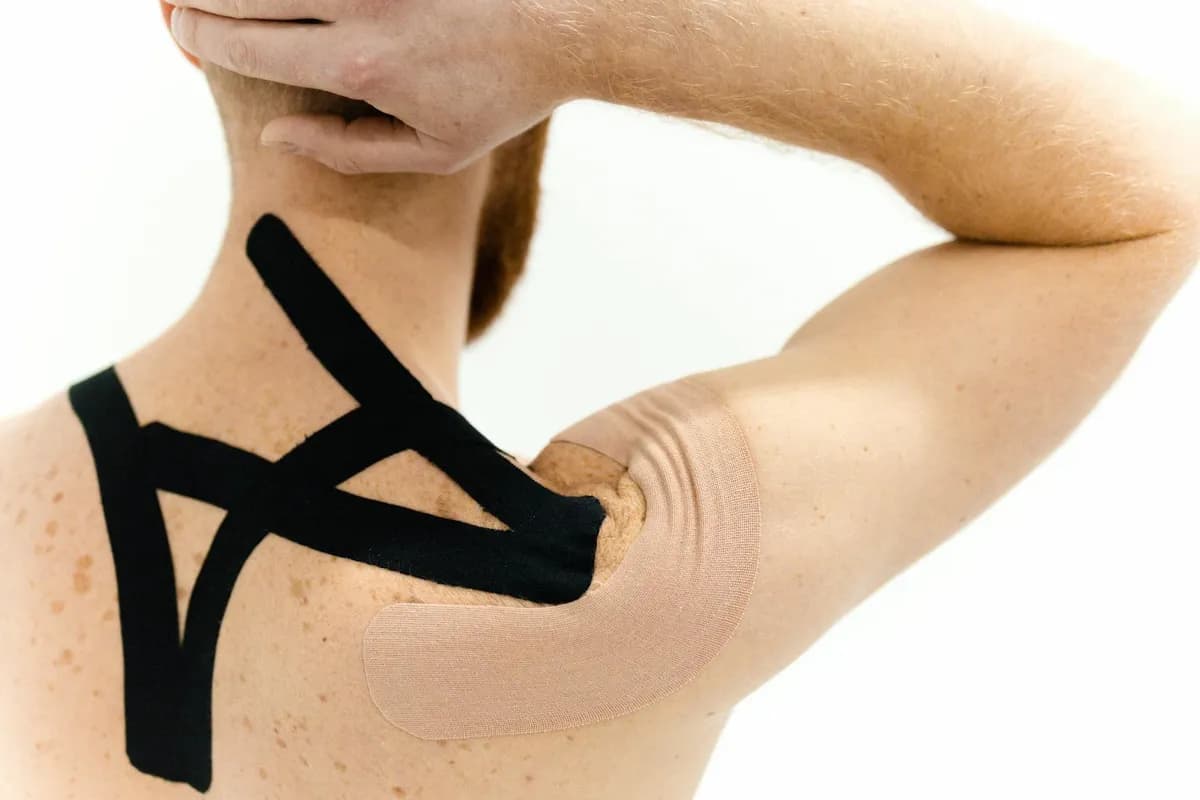
Strips of flexible kinesiology tape are cut, stretched to the appropriate tension, and applied along specific muscle lines or around joints. Your horse may twitch, shift, or visibly relax as each stri
The practitioner gently rubs over each tape strip to activate the adhesive with warmth, then steps back to watch your horse move again, confirming the tape sits correctly and isn't causing any restriction or irritation.
You'll be walked through what to watch for over the coming days — how long the tape should stay on, signs it needs to come off early, and any movement or rest recommendations to support the taping work.
A follow-up visit is typically scheduled for several days later to assess how your horse responded, remove or replace tape as needed, and adjust the approach based on any changes in movement or comfort.
The Evidence
What research and practice currently tell us about Equine Kinesiology Taping, and where the evidence is still developing.
Promising in practice, but formal research is still catching up
Equine Kinesiology Taping draws on principles from human sports taping adapted to equine anatomy. Practitioner experience and case reports are encouraging, but large controlled trials in horses are limited, so claims should be interpreted cautiously.
Most available evidence comes from practitioner experience, case reports, and extrapolation from human kinesiology taping studies. Controlled clinical trials in horses are sparse. Human research suggests proprioceptive and mild mechanical effects, but these findings cannot be directly transferred to equine applications without dedicated study.
Within a holistic approach, taping is valued for supporting movement quality, muscle recovery, and comfort without restricting natural motion. It is most commonly used as part of a broader rehabilitation or performance support plan, complementing veterinary assessment, physiotherapy, and appropriate exercise management.
Practitioners apply elastic tape in patterns targeting specific muscle groups, joints, or areas of tension. Reported uses include supporting recovery from mild strain, improving proprioceptive feedback, and assisting lymphatic flow. Outcomes vary between horses, and individual response should guide continued use.
The mechanisms proposed for equine taping — proprioceptive facilitation, lymphatic enhancement, mechanical support — are biologically reasonable but not yet well-validated in horses through rigorous trials. Practitioners and owners should be cautious of inflated outcome claims and treat published anecdotal results as hypothesis-generating rather than conclusive.
Tape should never be applied over open wounds, active skin infections, or areas of acute trauma. Horses with adhesive sensitivity require hypoallergenic alternatives or should avoid taping. Any lameness or injury should be assessed by a licensed equine veterinarian before taping begins. Taping is not a substitute for professional veterinary assessment of serious conditions.
Seek practitioners with formal training in equine rehabilitation, veterinary physiotherapy, or certified equine kinesiology taping programmes. Ask about their qualifications, experience with your horse's specific concern, and whether they work collaboratively with your veterinarian. Poorly applied tape can restrict movement or cause skin irritation.
Safety first
General guidance to help you decide whether this approach is appropriate for you. This is informational only and not a substitute for medical, psychological, or professional advice.
If your animal is unwell, injured, recovering from surgery, or on medication, check with a qualified veterinarian before booking a session.
Some situations call for extra care or a different approach. Share any conditions, injuries, or sensitivities with your practitioner before your first session.
Look for clear boundaries, transparent pricing, and practitioners who avoid fear-based claims or pressure to book frequent sessions.
Watch your animal for tenderness, tiredness, or changes in behaviour afterwards, and contact the practitioner or your vet if anything seems off.
For you?
A simple, human way to weigh it up. This is general guidance, not personal medical advice — a qualified practitioner can advise on your situation.
Gyfts is a discovery platform, not a medical provider. Nothing here diagnoses, treats or replaces professional care. In an emergency, contact your local emergency number.
Explore approaches
Other practices people often explore alongside equine kinesiology taping.
In their words
FAQ
The practitioner evaluates your horse's movement and condition, then cleanses the area to be taped. Elastic tape is applied using specific directional techniques designed to support muscles, joints, or fascial structures relevant to your horse's needs. The tape remains in place for 3-7 days, and you'll receive guidance on activity and monitoring. Most horses tolerate the process well, though it's important that your horse is calm and cooperative.
This varies significantly based on the horse's condition, age, and response to treatment. Some horses show improvement with 2-3 sessions, while others benefit from ongoing applications. Your practitioner will develop a treatment plan after the initial assessment, and adjustments will be made based on progress. Many practitioners recommend starting with a series of sessions spaced 1-2 weeks apart, with frequency adjusted according to response.
No. Kinesiology taping is a complementary therapy that works best alongside conventional veterinary care. It should never delay veterinary diagnosis or replace necessary medical treatment. Always have lameness or injury evaluated by your veterinarian first, and discuss kinesiology taping as a potential adjunctive therapy.
Most horses tolerate the tape well once applied. The sensation of application may feel unusual initially, but it is not painful. Some horses may be sensitive to the adhesive or the pressure, which should be discussed with your practitioner. The tape should never cause swelling, redness, or obvious discomfort—if it does, it should be removed and your veterinarian consulted.
Kinesiology tape typically remains in place for 3-7 days, depending on the practitioner's recommendation and your horse's activity level. It may loosen or need replacement sooner if the horse is very active or sweats heavily. Your practitioner will advise on the expected duration and when to remove or replace the tape.
While many horses can benefit from kinesiology taping, it is not appropriate for horses with open wounds, active infections, severe skin conditions, or acute injuries requiring immediate veterinary intervention. Older horses, young horses, and those with sensitivities can often be taped, but individual assessment is essential. Discuss your horse's specific situation with your practitioner.
Many equestrian practitioners use kinesiology taping to support muscle function and proprioceptive feedback in performance horses. While anecdotal reports suggest improvements in movement quality and comfort, scientific evidence for performance enhancement in horses is limited. Taping may be most effective when combined with proper conditioning, training, and veterinary care.
References
Educational sources that inform this overview. Inclusion is for context and does not imply endorsement.
Full citations are maintained by the Gyfts editorial team and reviewed periodically.
Keep exploring
Browse practitioners, explore honest overviews, and take what you learn to a conversation — at your own pace.