What it is
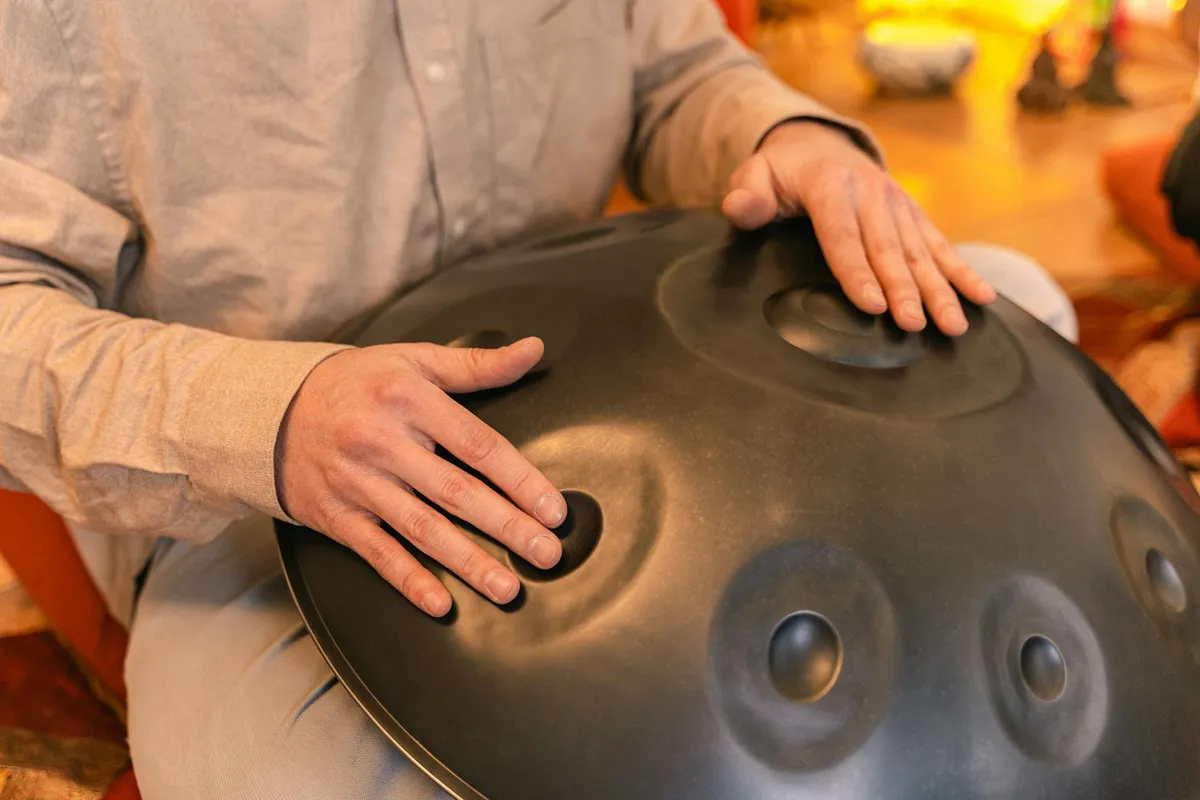
Handpans are dome-shaped metal drums played by hand, creating rich harmonic tones for relaxation and emotional support.
Handpans are percussion instruments with a distinctive dome shape that produce melodic, harmonic tones when struck with mallets or hands
At a glance
What it is
Handpans are dome-shaped metal drums played by hand, creating rich harmonic tones for relaxation and emotional support.
Why explore it
Their resonant sound may ease stress, support emotional processing, and complement yoga, mindfulness, or pre-sleep routines.
How it’s experienced
You relax while a practitioner plays nearby, receiving sound passively or hands-on, usually in 20 to 30 minute sessions.
Evidence context
Research on handpans is early, though broader sound therapy studies show promising signals for anxiety and well-being.
See the evidence snapshotSafety
Generally low-risk, but those with tinnitus, PTSD, or pacemakers should consult a provider before trying sound therapy.
See staying safeHistory & Origin
Handpans are musical instruments known for their soothing and melodic sounds, often used for relaxation and meditation.
The handpan is a relatively modern percussion instrument, invented in 2000 by Swiss craftsmen Felix Rohner and Sabina Schärer in Bern. Also known as a hang drum or tank drum, it evolved from earlier steel drum traditions and modern percussion experimentation. The instrument gained international recognition in the early 2000s and has since become popular in world music circles, yoga studios, and wellness settings across Europe, North America, and beyond.
The handpan's design draws inspiration from Caribbean steel drums and Asian gong traditions, combining these influences into a unique acoustic instrument. Its emergence coincided with growing global interest in sound healing and alternative wellness practices. The instrument's relatively accessible learning curve and meditative sound quality made it particularly attractive to practitioners seeking to integrate music into therapeutic and wellness applications.
Handpan popularity expanded significantly through social media and online communities dedicated to sound healing and mindfulness. Music therapists and wellness practitioners began incorporating handpan music into sessions, further establishing its presence in complementary health spaces. Today, handpans are manufactured by numerous artisans worldwide, with varying tuning systems and acoustic properties, making them accessible to both hobbyists and professional musicians.
Mechanism
Handpans is generally framed as a guided process for attention, reflection, learning, and emotional integration. Depending on the method, a practitioner may use conversation, imagery, structured exercises, body awareness, or therapeutic techniques to help the person explore patterns and choices. It should not be presented as a standalone solution or a substitute for urgent care, but it may support self-understanding when practiced within an appropriate scope. Handpans produce sustained, resonant tones when struck with hands or mallets across their steel surface, creating harmonic frequencies that engage the auditory system and may activate the parasympathetic nervous system.
Your first visit
A typical session outline to help you feel prepared
A handpan session is a gentle sound experience where a skilled player performs the instrument close to you, letting the tones naturally settle your mind and body over 20 to 60 minutes.
You and the practitioner chat briefly about what drew you to handpan sound, any hearing sensitivities, and how you are feeling that day so the session can be shaped around you.
The practitioner adjusts lighting, temperature, and your seating or lying position on a mat or chair so you feel physically comfortable before a single note is played.
You are invited to close your eyes, take a few easy breaths, and release any tension in your shoulders while the room becomes quiet and still around you.
The practitioner starts playing softly from a few feet away, introducing the warm, bell-like tones of the handpan gradually so your ears and nervous system can adjust gently.
Over the next 20 to 45 minutes the player moves through different scales and rhythms, sometimes drawing the instrument closer so the vibrations are felt as much as heard in your chest and limbs.
The practitioner slowly brings the playing to quieter, slower phrases, letting the final resonances fade into silence and giving you a moment to simply rest in the stillness.
You are given a minute or two in silence before the practitioner softly invites you back, allowing you to wiggle your fingers, open your eyes, and reorient at your own pace.
You share any sensations, images, or emotions that came up during the session, and the practitioner may suggest how often to return to build on the calm, grounded feeling many people notice afterward.
The Evidence
What research says about handpans, and where the evidence is still catching up with practice.
Promising signals from sound therapy; handpan-specific research is limited
Handpans sit within the broader field of sound and music therapy, where moderate evidence supports stress reduction and relaxation. Research specific to handpans is minimal, as the instrument is relatively new and has not yet been studied in rigorous clinical trials.
Multiple systematic reviews and randomised controlled trials support music therapy for stress, anxiety, and pain perception. Handpans specifically have not been studied in clinical trials. The instrument's unique tonal qualities may contribute to relaxation, but this has not been isolated from music listening in general.
Studies on sound frequencies, vibrational therapy, and music listening show promise for parasympathetic nervous system activation and emotional regulation. No published trials focus specifically on handpan therapy. Current evidence is largely observational, anecdotal, or extrapolated from related sound-based practices.
As a relatively modern instrument used in wellness and sound healing contexts, handpans occupy an alternative rather than clinically established space. They are commonly integrated into yoga, meditation, and relaxation settings. Their use is experiential and self-directed, with growing but still limited practitioner-led application.
Acoustic stimulation from sustained harmonic tones may lower heart rate and cortisol through auditory pathways. These effects are plausible and consistent with music therapy mechanisms. However, handpan sessions are not a substitute for professional assessment or evidence-based care for anxiety, pain, or sleep conditions.
People with tinnitus, hyperacusis, trauma-related conditions, or pacemakers should seek professional guidance before engaging with sound-based practices. Sound therapy should complement, not replace, conventional care for serious health conditions. Always inform any practitioner about relevant health history.
Most supporting research applies to music therapy broadly, not handpans specifically. Study quality varies, sample sizes are often small, and long-term outcomes are rarely measured. Practitioners and users should maintain realistic expectations and treat handpan sessions as a supportive wellness practice rather than a primary intervention.
Safety first
General guidance to help you decide whether this approach is appropriate for you. This is informational only and not a substitute for medical, psychological, or professional advice.
If you are pregnant, managing a health condition, recovering from injury or surgery, or taking medication, consult a qualified healthcare professional first.
Some situations call for extra care or a different approach. Share any conditions, injuries, or sensitivities with your practitioner before your first session.
Look for clear boundaries, transparent pricing, and practitioners who avoid fear-based claims or pressure to book frequent sessions.
Mild, short-lived effects such as tenderness, tiredness, or temporary soreness can occur. Rest, hydrate, and tell your practitioner how you respond.
For you?
A simple, human way to weigh it up. This is general guidance, not personal medical advice — a qualified practitioner can advise on your situation.
Gyfts is a discovery platform, not a medical provider. Nothing here diagnoses, treats or replaces professional care. In an emergency, contact your local emergency number.
Explore approaches
Other practices people often explore alongside handpans.
In their words
FAQ
Handpans produce warm, melodic, resonant tones ranging from deep bass notes to bright, crystalline pitches. The sound is often described as ethereal, soothing, and meditative. Different handpans have different tuning systems, creating varied sonic characteristics. Many people find the sound inherently calming and emotionally evocative.
Sessions typically last 30–60 minutes, though some practitioners offer shorter 20-minute introductory sessions or longer 90-minute immersive experiences. Duration can be customized based on your preference and response. Shorter initial sessions allow you to experience the modality before committing to longer formats.
No musical background is required to benefit from handpan listening or therapy sessions. You are not expected to play the instrument yourself; instead, you listen while a trained practitioner plays. Active listening and openness to the experience are the primary requirements.
This varies by individual and goal. Some people experience immediate relaxation from a single session, while others benefit from regular, ongoing sessions. Many practitioners recommend weekly or bi-weekly sessions over 4–8 weeks to assess impact, though optimal frequency depends on your circumstances and response. Think of handpan sessions as part of a broader wellness routine rather than a time-limited treatment course.
Research on handpan specifically is limited. However, broader studies support the potential of sound and music therapy for stress reduction, anxiety, and relaxation. More rigorous clinical trials focused on handpans would strengthen the evidence base. Currently, handpan therapy sits within the growing field of sound healing, which shows promise but requires further investigation.
Yes, many practitioners and musicians offer handpan recordings for personal use. Listening to recordings can provide some relaxation benefits, though live sessions may offer additional value through the physical presence, vibrations, and personalized attention of a practitioner. Both can complement your wellness routine.
Handpan therapy is generally well-tolerated with minimal side effects. Some people report temporary emotional release, drowsiness, or vivid dreams following sessions, all considered normal responses to deep relaxation. Rarely, individuals with sensory sensitivities may find sustained sound uncomfortable. Communicate any discomfort with your practitioner.
No. Handpan therapy is a complementary modality intended to support well-being alongside, not instead of, conventional medical care. If you have diagnosed medical or mental health conditions, continue working with your healthcare providers and discuss how sound therapy fits into your overall treatment plan.
References
Educational sources that inform this overview. Inclusion is for context and does not imply endorsement.
Full citations are maintained by the Gyfts editorial team and reviewed periodically.
Keep exploring
Browse practitioners, explore honest overviews, and take what you learn to a conversation — at your own pace.