What it is
A practice using exercises and reflection to strengthen your natural intuition.
Intuitive Development is a metaphysical practice focused on cultivating and strengthening natural intuitive abilities through structured ...
At a glance
What it is
A practice using exercises and reflection to strengthen your natural intuition.
Why explore it
People explore it to build self-trust, find clarity, and sharpen personal decision-making.
How it’s experienced
Expect guided visualization, journaling, and meditation with feedback from a practitioner.
Evidence context
Intuition is studied as cognition, but this practice isn't clinically validated healthcare.
See the evidence snapshotSafety
Low risk for most, but consult a mental health pro first if you have serious MH conditions.
See staying safeHistory & Origin
Intuitive Development focuses on developing and honing one's intuitive abilities for personal growth and guidance.
Intuitive Development emerged as a formalized practice during the late 20th century, drawing from ancient wisdom traditions that recognized intuition as a valid form of knowledge. Many cultures—including Indigenous practices, Eastern philosophies, and Western esoteric traditions—have long acknowledged intuitive knowing alongside rational thought. The modern codification of Intuitive Development was influenced by New Thought movements, contemporary spirituality, and the growing interest in holistic personal development during the 1970s and 1980s.
Key figures in popularizing intuitive development include authors and teachers who bridged psychology and metaphysics, emphasizing that intuition is a learnable skill rather than an innate gift reserved for a select few. The practice gained momentum as part of the broader self-help and spiritual growth movements, with practitioners developing frameworks for teaching intuitive sensing, psychic awareness, and energetic perception. Today, Intuitive Development is offered through workshops, coaching, online courses, and private sessions by practitioners who view it as a complement to personal development and spiritual growth.
The modality has spread globally through publishing, digital platforms, and teacher training programs, becoming integrated into wellness centers, holistic health practices, and life coaching services. While scientific validation remains limited, the practice continues to attract individuals interested in exploring non-rational ways of knowing and decision-making. Its growth reflects broader cultural interest in mindfulness, self-awareness, and alternative approaches to personal guidance.
Top symptoms
Mechanism
Intuitive Development is best framed as a traditional, symbolic, energetic, reflective, or spiritual practice rather than a validated medical mechanism. Practitioners may use ritual, attention, sound, imagery, touch-free work, cards, symbols, prayer, or intention to support meaning-making and a sense of connection. People may explore it for reflection, calm, or spiritual context, while health claims should remain cautious and personal. Intuitive Development employs structured practices to strengthen the distinction between intuitive signals and mental noise.
Your first visit
A typical session outline to help you feel prepared
A guided journey inward to help you recognize, trust, and strengthen your natural intuitive gifts through conversation, meditation, and awareness exercises.
Your practitioner greets you warmly and invites you to get comfortable, whether in person or virtually. You might take a few slow breaths together to help you arrive fully in the space.
You talk openly about your experiences with intuition so far — moments of gut feelings, vivid dreams, or unexplained knowing. Your practitioner listens without judgment and asks gentle questions to un
Together you identify what you most want to develop or understand, such as learning to trust your gut, quieting mental chatter, or distinguishing intuition from anxiety. This shapes everything that fo
Your practitioner leads you through a calming visualization or breathing exercise designed to quiet the analytical mind and open your awareness to subtler inner signals. Most people feel a noticeable
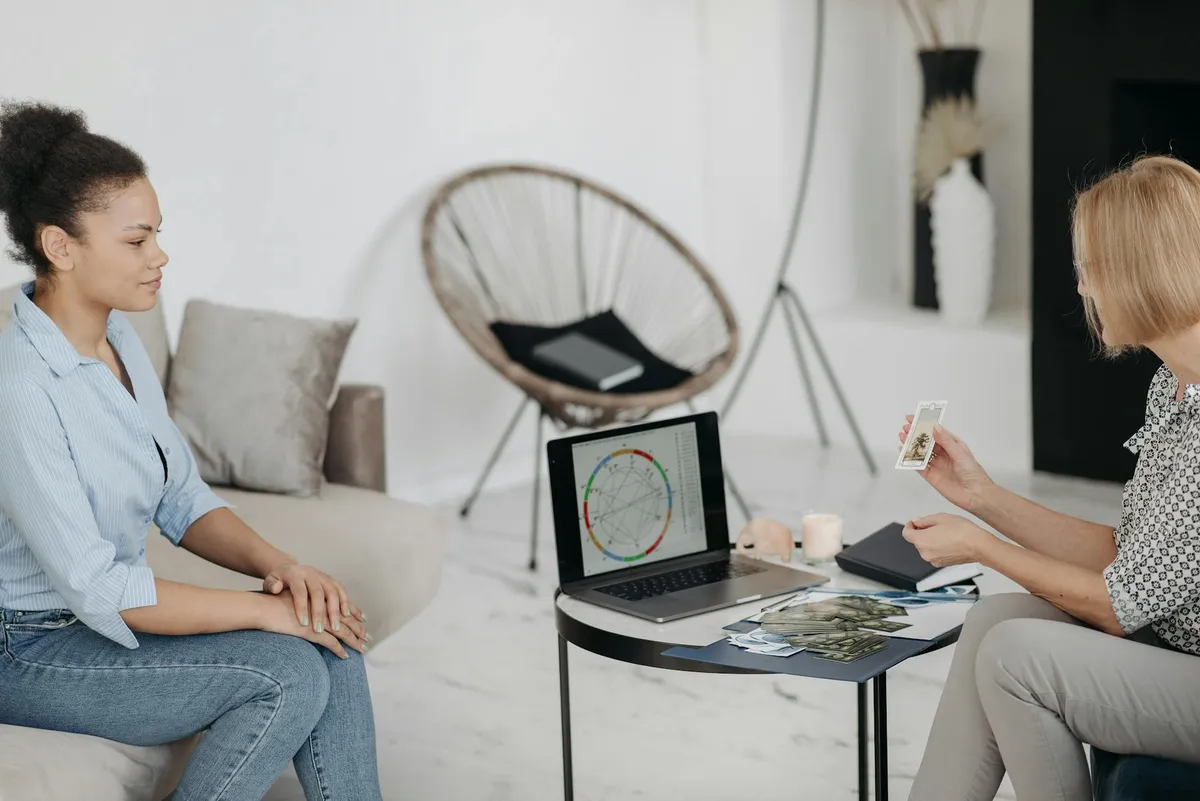
You move into hands-on practices tailored to your goals, which might include sensing energy, receiving symbolic imagery, journaling spontaneously, or practicing with oracle cards or other intuitive to
You share what arose during the exercises and your practitioner helps you interpret the symbols, feelings, or knowings in the context of your life. You begin to see patterns in how your intuition uniquely speaks to you.
A key part of each session is learning to tell the difference between authentic inner guidance and fear-based thinking. Your practitioner offers simple frameworks and questions you can apply on your own going forward.
You leave with one or two lightweight daily practices, like a journaling prompt, a brief body-scan check-in, or a mindful pause ritual, chosen specifically to reinforce what surfaced in your session.
The Evidence
What research and tradition say about Intuitive Development, and how to engage with it thoughtfully.
Experiential practice with limited formal research
Intuitive Development sits within the metaphysical wellness domain and is not evaluated by clinical trials. Its value is grounded in personal experience, spiritual tradition, and self-reported wellbeing rather than empirical evidence.
This practice belongs to the metaphysical category of the MACH framework, meaning its foundations are phenomenological and tradition-based rather than laboratory-tested. Participants engage with inner sensing, symbolic awareness, and non-rational knowing as valid forms of personal guidance. These are meaningful experiences that fall outside the scope of conventional evidence-based medicine.
Research confirms that humans engage in non-conscious information processing that can influence decisions — this is the scientific basis of intuition. However, structured Intuitive Development programs as offered in complementary settings have not been formally studied. Reported benefits such as increased self-awareness and decision confidence are subjective and have not been independently verified.
Indigenous practices, Eastern philosophies, and Western esoteric traditions have long valued intuition alongside rational thought. The modern formalisation of Intuitive Development emerged in the late 20th century, drawing on New Thought movements and holistic personal development. Today it is taught as a learnable skill rather than an innate gift.
Users commonly report that Intuitive Development supports self-trust, clarity in decision-making, and a sense of spiritual connection. These outcomes are personally meaningful even where formal evidence is absent. Engaging reflectively — noticing what resonates and what does not — is a reasonable approach to exploring this practice.
Those experiencing active mental health conditions such as psychosis, severe dissociation, or significant anxiety should consult a mental health professional before engaging with intuitive practices. Intuitive Development should complement, not replace, professional support for clinical concerns. Seek practitioners with clear training, ethical boundaries, and a grounding approach.
Practitioners vary widely in background, training, and approach. Ask about their experience, ethical framework, and how they handle clients in emotional distress. Be cautious of inflated outcome claims or pressure to continue sessions. A reputable practitioner will encourage you to maintain grounding in daily life and will refer you to other professionals when appropriate.
Safety first
General guidance to help you decide whether this approach is appropriate for you. This is informational only and not a substitute for medical, psychological, or professional advice.
If you are experiencing severe distress, suicidal thoughts, psychosis, acute trauma, or another serious mental health concern, seek qualified support first.
This approach is not suitable for diagnosis, treatment instructions, or decisions that require medical, legal, financial, or professional advice.
Look for clear boundaries, transparent pricing, and practitioners who avoid fear-based claims or pressure to book frequent sessions.
Treat any insight as one reflective perspective, not absolute truth. Important decisions should be considered with appropriate professional support.
For you?
A simple, human way to weigh it up. This is general guidance, not personal medical advice — a qualified practitioner can advise on your situation.
Gyfts is a discovery platform, not a medical provider. Nothing here diagnoses, treats or replaces professional care. In an emergency, contact your local emergency number.
Explore approaches
Other practices people often explore alongside intuitive development.
In their words
FAQ
Intuitive Development can include exploring psychic or energetic sensing, but the primary focus is on cultivating your natural intuitive abilities—the inner knowing you already possess. Some people develop heightened perceptual abilities, while others primarily strengthen their capacity to access wisdom and guidance from within. The modality is broader than psychic development and emphasizes practical application to your life.
Results vary significantly based on your natural abilities, openness, and practice consistency. Some people notice clarity shifts within 1-2 sessions, while others require 6-8 weeks of regular practice. Most practitioners recommend a commitment of at least 4-6 sessions to assess whether the work resonates with you. Long-term development typically involves ongoing practice over months or years.
Intuitive Development operates from the belief that intuition is a natural human capacity that can be strengthened through practice, similar to how you develop any skill. While some people may find it easier to access intuition, practitioners generally teach that with consistent practice, anyone can enhance their intuitive awareness. Results depend on your commitment, openness, and individual learning pace.
Most contemporary Intuitive Development practitioners focus on helping you develop your own intuitive abilities rather than giving predictions. Some may offer intuitive insights about patterns or possibilities during sessions, but the emphasis is on empowering you to access your own inner wisdom. Practitioners typically avoid creating dependency and encourage you to trust your own guidance.
Intuitive Development can be explored within any belief system or none at all. While some practitioners work within spiritual frameworks, others present intuition as a natural psychological capacity. You can engage with this modality in ways that align with your personal values and beliefs—no particular faith or spiritual commitment is required.
Learning to evaluate intuitive impressions is a key part of Intuitive Development training. Practitioners teach you to notice whether your intuitive insights lead to positive outcomes, align with your values, and feel distinctly different from fear or wishful thinking. You develop discernment by testing your intuitive impressions against real-world results over time and learning your personal intuitive signature.
Yes, many people successfully combine Intuitive Development with therapy, coaching, meditation, and other complementary practices. In fact, practices that support self-awareness and inner work often complement each other. If you're working with a mental health provider, it's helpful to mention that you're exploring intuitive development so your care team has complete information.
References
Educational sources that inform this overview. Inclusion is for context and does not imply endorsement.
Full citations are maintained by the Gyfts editorial team and reviewed periodically.
Keep exploring
Browse practitioners, explore honest overviews, and take what you learn to a conversation — at your own pace.