What it is
Guided practices from many traditions to deepen self-awareness, purpose, and meaning.
Spiritual Development is a holistic practice focused on nurturing personal growth, self-awareness, and spiritual evolution through guided...

At a glance
What it is
Guided practices from many traditions to deepen self-awareness, purpose, and meaning.
Why explore it
Supports life transitions, emotional resilience, and living more closely aligned with your values.
How it’s experienced
Explore through one-on-one guidance, group teachings, meditation, journaling, or ritual practice.
Evidence context
Rooted in centuries of tradition; benefits rest largely on experiential and philosophical foundations.
See the evidence snapshotSafety
Low-risk for most, though those with trauma or mental health concerns should involve a qualified professional.
See staying safeHistory & Origin
Spiritual Development focuses on nurturing personal and spiritual growth through various practices, teachings, and experiences.
Spiritual development as a formalized practice draws from ancient wisdom traditions spanning thousands of years across multiple cultures. Indigenous cultures worldwide integrated spiritual growth into daily life through rituals, storytelling, and ceremonial practices. Eastern traditions, particularly Buddhism, Hinduism, and Taoism, developed sophisticated philosophical and practical frameworks for spiritual evolution, emphasizing meditation, self-inquiry, and the pursuit of enlightenment or higher consciousness. Western spiritual development gained momentum in the 19th and 20th centuries through theosophy, New Thought movements, and the integration of Eastern philosophies with Western psychology, with figures like Helena Blavatsky, Rudolf Steiner, and later Ram Dass bridging ancient wisdom and contemporary understanding.
The modern spiritual development movement expanded significantly from the 1960s onward, influenced by increased global cultural exchange, the countercultural movement's interest in alternative philosophies, and the growing recognition of meditation and mindfulness in scientific research. Teachers and authors such as Sri Ramakrishna Paramahamsa, Swami Vivekananda, J. Krishnamurti, and contemporary practitioners have democratized access to spiritual teachings, making them available beyond monastic or traditional institutional settings. Today, spiritual development encompasses diverse approaches including meditation, contemplative practice, energy work, shamanism, transpersonal psychology, and secular mindfulness-based practices.
Spiritual development has become increasingly integrated into mainstream wellness and self-help contexts, with practitioners ranging from traditional spiritual teachers to life coaches, therapists, and wellness professionals. The practice emphasizes that spiritual growth is a deeply personal journey, with multiple valid pathways suited to different individuals, cultural backgrounds, and belief systems. Contemporary spiritual development often emphasizes accessibility and integration with modern life rather than requiring monastic withdrawal or specific religious affiliation.
Mechanism
Spiritual Development is best framed as a traditional, symbolic, energetic, reflective, or spiritual practice rather than a validated medical mechanism. Practitioners may use ritual, attention, sound, imagery, touch-free work, cards, symbols, prayer, or intention to support meaning-making and a sense of connection. People may explore it for reflection, calm, or spiritual context, while health claims should remain cautious and personal. Spiritual development typically involves structured or self-guided practices—such as meditation, contemplative prayer, journaling, or study of philosophical texts—designed to deepen self-awareness and explore existential meaning.
Your first visit
A typical session outline to help you feel prepared
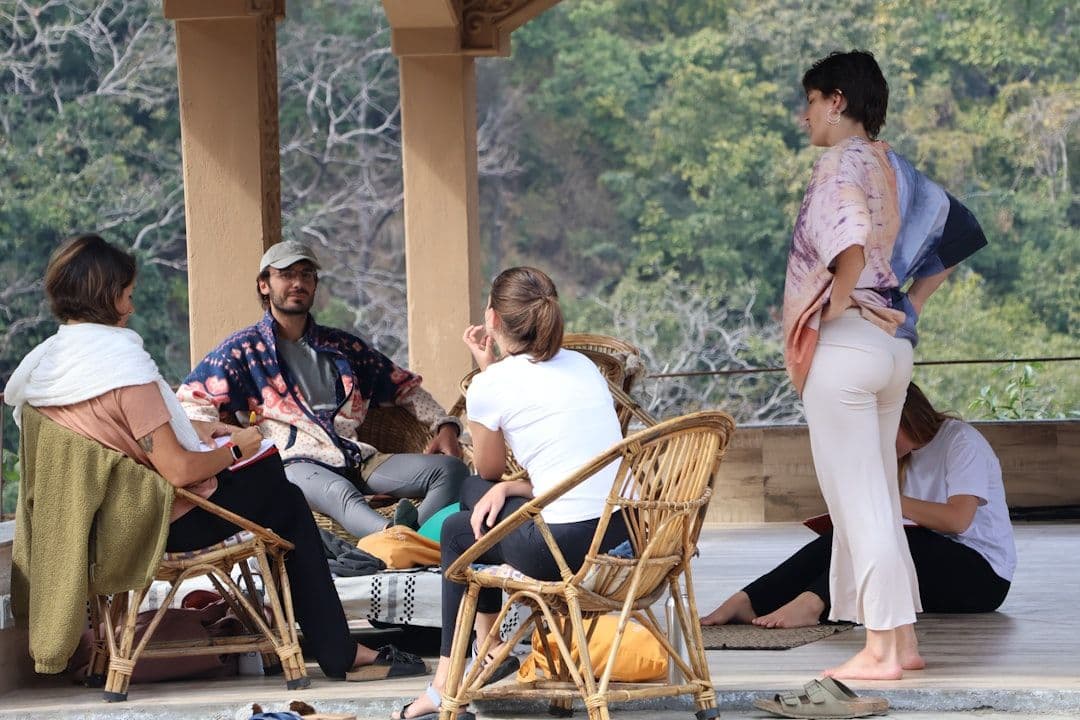
A spiritual development session is a guided inner journey where you and your practitioner explore your awareness, beliefs, and deeper sense of self through conversation, meditation, and tailored practices.
Your practitioner greets you warmly and invites you to settle into a calm, comfortable space. There's no rush — this opening moment is about helping you arrive fully and feel at ease.
You'll be gently asked what drew you to spiritual development and what you're hoping to explore or understand. This isn't a quiz — there are no wrong answers, and your practitioner listens without judgment.
Your practitioner may ask about your spiritual history, current beliefs, or any practices you already engage in, like prayer or meditation. This helps them understand where you are on your path so ses
Together, you'll decide on a direction for the session — this might be a guided meditation, self-inquiry exercise, breathwork, or a teaching on a concept you're curious about. Your input shapes what happens next.
You'll move into the main experience of the session, which could be a silent or guided meditation, a reflective dialogue, or an inquiry practice like exploring a limiting belief. Your practitioner hol
After the practice, your practitioner invites you to share what you noticed — thoughts, feelings, imagery, or subtle shifts. This reflection helps integrate the experience and often opens meaningful insight.
The session winds down gently, with your practitioner offering a brief summary of themes that arose and suggesting simple practices to carry forward, like a daily reflection, a mantra, or a few minutes of quiet sitting.
You'll leave with a clear, manageable suggestion for continuing the work on your own. Many people notice a quiet sense of clarity or openness in the hours after a session, and your practitioner may ch
The Evidence
What research and tradition tell us about spiritual development, and where the evidence is limited.
Rooted in tradition, supported by related research
Spiritual development as a whole lacks standardised research, but many of its component practices have meaningful evidence behind them. Its foundations are primarily experiential, philosophical, and cross-cultural, spanning thousands of years.
Spiritual development is concerned with meaning, purpose, inner growth, and connection to something beyond the everyday self. These are inherently personal and philosophical dimensions of human experience. The MACH framework places it in the Metaphysical category, recognising that its value is not primarily measured through clinical outcomes.
Spiritual development as a unified modality resists standardised measurement, so large-scale trials are absent. However, component practices such as meditation, mindfulness, and contemplative prayer have substantial research support for stress reduction and emotional wellbeing. Evidence for the broader modality remains primarily experiential and qualitative.
Buddhist, Hindu, Taoist, Indigenous, and Western esoteric traditions have each developed frameworks for inner growth and self-inquiry. These traditions form the primary evidence base for spiritual development — not clinical trials, but accumulated lived wisdom refined across generations and cultures.
Qualitative research and practitioner accounts suggest spiritual development can support meaning-making, resilience, and life satisfaction. However, outcomes vary widely between individuals and are not predictable. Progress is rarely linear, and what constitutes growth is defined by the individual, not by external measures.
If you are experiencing acute mental health difficulties, unprocessed trauma, or symptoms such as dissociation, speak with a qualified mental health professional before beginning intensive spiritual practice. Spiritual development is not a substitute for professional assessment or care. For most people in stable health, the risk profile is low.
There is no universal accreditation for spiritual development practitioners. Look for transparency about their training, lineage, and approach. Be cautious of inflated outcome claims or pressure to commit to long-term programmes. A good practitioner will respect your autonomy and encourage you to seek professional support when needed.
Safety first
General guidance to help you decide whether this approach is appropriate for you. This is informational only and not a substitute for medical, psychological, or professional advice.
If you are pregnant, managing a health condition, recovering from injury or surgery, or taking medication, consult a qualified healthcare professional first.
Some situations call for extra care or a different approach. Share any conditions, injuries, or sensitivities with your practitioner before your first session.
Look for clear boundaries, transparent pricing, and practitioners who avoid fear-based claims or pressure to book frequent sessions.
Mild, short-lived effects such as tenderness, tiredness, or temporary soreness can occur. Rest, hydrate, and tell your practitioner how you respond.
For you?
A simple, human way to weigh it up. This is general guidance, not personal medical advice — a qualified practitioner can advise on your situation.
Gyfts is a discovery platform, not a medical provider. Nothing here diagnoses, treats or replaces professional care. In an emergency, contact your local emergency number.
Explore approaches
Other practices people often explore alongside spiritual development.
In their words
FAQ
Sessions vary by practitioner and your goals but commonly include guided meditation or contemplative practice, discussion exploring your beliefs and challenges, teachings on spiritual principles, reflection exercises, or practices to deepen awareness. The practitioner creates a safe space for self-inquiry and growth. Most sessions last 60-90 minutes and are collaborative, with you and the practitioner working together to support your spiritual evolution.
This varies significantly by individual and your specific goals. Some people notice shifts in perspective after one or two sessions, while others benefit from consistent practice over months or years. Spiritual development is a gradual process—think of it like building a skill rather than taking a medication. Many practitioners recommend at least 4-6 sessions to establish a foundation and see meaningful change, with ongoing sessions supporting continued growth.
No. While spiritual development draws from many religious and philosophical traditions, most contemporary practitioners emphasize that it is not tied to any single religion. Secular approaches focusing on meaning, purpose, and self-awareness are available, and practitioners often tailor work to your existing beliefs or lack thereof. Spiritual development can complement any religious tradition or exist independently.
Healthy skepticism is fine—many practitioners work with people who are uncertain or skeptical. You can approach spiritual development pragmatically, focusing on practices that demonstrably reduce stress, increase clarity, or improve well-being rather than requiring belief in specific spiritual concepts. Some people find that through consistent practice, their relationship with spirituality naturally evolves.
Spiritual development can support overall well-being and may help reduce stress and increase resilience when used as part of a comprehensive approach. However, for clinical anxiety or depression, professional mental health treatment (therapy, counseling, or medical care) should be your primary resource. Spiritual development works best alongside, not instead of, professional mental health care.
Look for someone with clear training, transparent credentials, and ethical practices. Good practitioners are humble about their limitations, do not pressure you to adopt specific beliefs, maintain professional boundaries, encourage you to maintain other support systems, and do not promise guaranteed results. Trust your instincts—you should feel safe, respected, and heard in the relationship.
While both can support personal growth, therapy focuses on healing specific mental health concerns using evidence-based psychological approaches, while spiritual development emphasizes personal evolution, meaning, and connection to something larger than oneself. Some practitioners integrate both approaches. Therapy treats pathology; spiritual development cultivates growth and transformation. For mental health issues, therapy is the appropriate primary resource.
Practices vary widely and may include meditation, breathwork, journaling, visualization, movement practices like yoga or tai chi, self-inquiry or philosophical discussion, gratitude or compassion practices, energy awareness work, or creativity exercises. Your practitioner will suggest practices aligned with your goals and preferences and will teach you how to practice independently at home to deepen your work.
References
Educational sources that inform this overview. Inclusion is for context and does not imply endorsement.
Full citations are maintained by the Gyfts editorial team and reviewed periodically.
Keep exploring
Browse practitioners, explore honest overviews, and take what you learn to a conversation — at your own pace.