What it is
Yoga adapted to honor choice, consent, and body awareness over perfect form.
Trauma-Informed Yoga is a mindful movement practice that adapts traditional yoga to prioritise choice, consent, and nervous system safety...
At a glance
What it is
Yoga adapted to honor choice, consent, and body awareness over perfect form.
Why explore it
May help with grounding, emotional regulation, and reclaiming a sense of safety in your body.
How it’s experienced
Gentle, invitational sessions where you set your own pace with a trauma-sensitive guide.
Evidence context
Early research looks promising, though larger studies are still needed to confirm benefits.
See the evidence snapshotSafety
Generally very low risk, though acute mental health crises call for clinical support first.
See staying safeHistory & Origin
Trauma-Informed Yoga adapts yoga practices to prioritise consent and nervous system safety.
Trauma-informed yoga emerged in the early 2000s as yoga teachers and mental health professionals recognised that standard yoga classes—with their emphasis on specific poses, instructor-led alignment cues, and close physical adjustments—could inadvertently re-traumatise people with trauma histories. Pioneering practitioners including David Emerson at the Center for Trauma Recovery and Empowerment (based on the Trauma Center model) and yoga teachers like Willoughby Britton began integrating neuroscience, trauma psychology, and somatic awareness into yoga practice. This movement was deeply influenced by understanding how the nervous system responds to perceived threat, drawing on polyvagal theory and the work of trauma researchers such as Bessel van der Kolk and Peter Levine.
The approach represents a significant philosophical shift within contemporary yoga: rather than encouraging practitioners to "push through" discomfort or follow standardised sequences, trauma-informed yoga invites participants to notice sensations, make choices about their body, and build agency. It gained wider recognition in mental health and yoga communities through organisations like Yoga and Body Image Coalition and numerous training programmes for yoga teachers seeking certification in trauma-sensitive facilitation.
Today, trauma-informed yoga is offered in clinical settings, community spaces, studios, and online. It has influenced broader conversations about consent culture in yoga and the importance of creating inclusive, choice-based movement spaces. The practice reflects growing recognition that embodied healing requires respecting individual boundaries and nervous system responses.
Mechanism
Trauma-Informed Yoga is usually understood through movement, breath, attention, and repeated practice. A session may invite the body to explore safer patterns, steadier pacing, or a more settled relationship with sensation. Some traditions describe this as balancing energy or awareness, while contemporary explanations may focus on coordination, nervous system regulation, mobility, and confidence. Experiences vary by person, teacher, setting, and consistency. Trauma-Informed Yoga works by prioritising nervous system safety and personal agency throughout practice.
Your first visit
A typical session outline to help you feel prepared
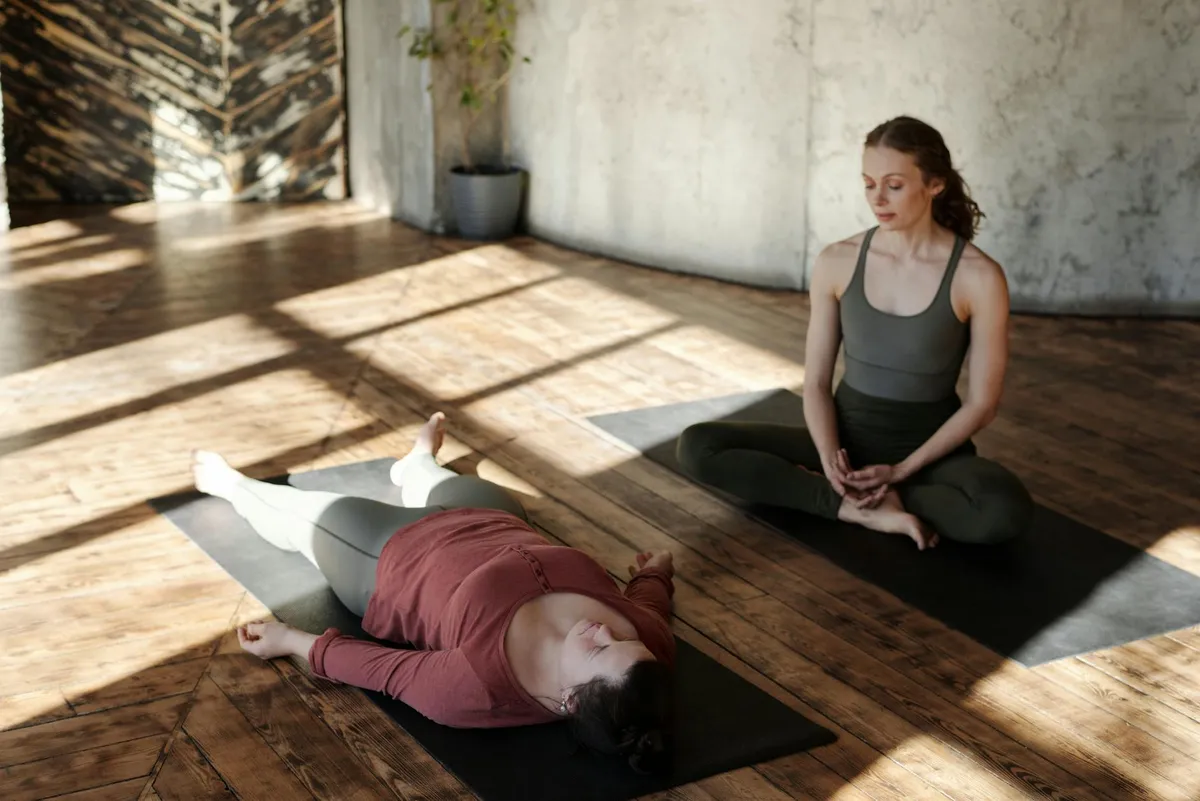
A gentle, choice-based yoga session where you move at your own pace, fully clothed, in a space designed to help you feel safe and in control.
When you arrive, your facilitator warmly greets you and walks you through how the session works, emphasizing that every pose is an invitation, never a requirement.
You and the facilitator briefly check in about how you're feeling today and any boundaries or preferences you want honored, including whether you'd like music or silence.
Before anything begins, the facilitator clearly explains that there are no hands-on adjustments unless you explicitly request them, giving you full control over your physical space.
You're invited to find a comfortable position on your mat, either seated, lying down, or standing, and take a few moments to simply notice your breath without any pressure to change it.
The facilitator guides you through slow, accessible poses like supported child's pose or gentle twists, offering two or three options for each so you can choose what feels right for your body today.
Throughout the session, the facilitator uses language like 'you might try' or 'notice what feels true for you,' helping you tune into physical sensations without pushing past any edges.
The session winds down with an extended rest, often a supported savasana, where you're encouraged to simply be still and let your nervous system settle at its own pace.
Before you leave, the facilitator offers a brief, low-key check-in so you can share anything that came up and receive any suggested practices to try on your own at home.
The Evidence
What research currently shows about trauma-informed yoga, where the evidence is strong, and where gaps remain.
Promising early findings, but high-quality trials remain limited
Trauma-informed yoga has a growing research base supporting its role in nervous system regulation and trauma recovery, particularly alongside other therapies. Most evidence comes from small studies and pilot programmes rather than large randomised controlled trials.
Several small studies and pilot programmes report improvements in trauma-related symptoms, anxiety, and stress following trauma-informed yoga. The general benefits of yoga for anxiety and stress are well-established, but whether trauma-informed modifications specifically outperform standard yoga is less clear. High-quality randomised controlled trials are limited.
Research suggests trauma-informed yoga may work best as a complement to therapy or counselling rather than a standalone approach. It is not a substitute for professional mental health assessment or support. When integrated thoughtfully, it may help build body awareness and nervous system capacity between therapeutic sessions.
Work from the Trauma Center, alongside research drawing on polyvagal theory and somatic trauma models, has provided a neurobiological rationale for trauma-sensitive movement. This theoretical grounding is reasonably well-developed, even where large-scale clinical trials are still lacking. Much supporting evidence remains qualitative or observational.
Most studies involve small cohorts, lack control groups, or rely on self-reported outcomes. It is not yet clear whether trauma-informed adaptations specifically drive benefits beyond general yoga or movement. Inflated outcome claims should be viewed with caution. More rigorous research is needed before strong conclusions can be drawn.
For most people, gentle choice-based movement carries low physical and psychological risk. However, those experiencing acute psychiatric crisis, unmanaged dissociation, or severe trauma symptoms should seek qualified mental health support before starting. Movement can occasionally surface emotional material; this is normal but may need professional support if it becomes overwhelming.
Not all yoga teachers have trauma-informed training. Look for facilitators with recognised qualifications in trauma-sensitive or trauma-informed yoga, ideally with backgrounds that include mental health awareness. If you are working with a therapist, consider discussing whether a particular facilitator or programme is appropriate for your situation.
Safety first
General guidance to help you decide whether this approach is appropriate for you. This is informational only and not a substitute for medical, psychological, or professional advice.
If you are experiencing severe distress, suicidal thoughts, psychosis, acute trauma, or another serious mental health concern, seek qualified support first.
This approach is not suitable for diagnosis, treatment instructions, or decisions that require medical, legal, financial, or professional advice.
Look for clear boundaries, transparent pricing, and practitioners who avoid fear-based claims or pressure to book frequent sessions.
Treat any insight as one reflective perspective, not absolute truth. Important decisions should be considered with appropriate professional support.
For you?
A simple, human way to weigh it up. This is general guidance, not personal medical advice — a qualified practitioner can advise on your situation.
Gyfts is a discovery platform, not a medical provider. Nothing here diagnoses, treats or replaces professional care. In an emergency, contact your local emergency number.
Explore approaches
Other practices people often explore alongside trauma-informed yoga.
In their words
FAQ
A session typically begins with grounding and settling, followed by gentle movement offered as options rather than instructions. The facilitator emphasises choice, nervous system awareness, and internal sensation. There are no forced adjustments, and you are invited to modify or skip anything. Sessions often include breathing practices, gentle stretching, grounding, and time to transition. The overall pace is slower and more introspective than traditional yoga.
There is no set number. Some people benefit from a few sessions to try the practice; others find regular attendance (weekly or monthly) supports ongoing nervous system regulation. Think of it as a skill-building and maintenance practice. Many people integrate it long-term alongside other wellness activities.
No. You are never required to disclose trauma or personal history. The facilitator will work with what you bring to the mat. If you choose to share specific physical or emotional needs (e.g., "I prefer not to be touched" or "Loud noises startle me"), that helps them support you, but it is entirely optional.
No. Trauma-informed yoga is a complementary practice focused on embodiment, choice, and nervous system safety—not clinical diagnosis or treatment. It can complement therapy but does not replace it. If you are in active trauma recovery, work with both a therapist and a trauma-informed yoga facilitator.
Emotions may arise during or after movement—this is a normal somatic response and not a sign something is wrong. Gentle facilitation and grounding help you stay resourced. If strong emotions overwhelm you, you can pause, step out, or ask for support. Discuss this with your facilitator so they can offer tools or resources.
Yes. Trauma-informed yoga principles—choice, safety, and nervous system awareness—benefit anyone. Many people appreciate the slower pace, consent-based teaching, and inclusive approach regardless of trauma history. It is accessible to all.
Look for facilitators with specific training in trauma-informed or trauma-sensitive yoga, not just general yoga certification. Reputable training programmes include those through the Trauma Center, Yoga and Body Image Coalition, and other trauma-informed teacher trainings. Ask about their training and approach.
References
Educational sources that inform this overview. Inclusion is for context and does not imply endorsement.
Full citations are maintained by the Gyfts editorial team and reviewed periodically.
Keep exploring
Browse practitioners, explore honest overviews, and take what you learn to a conversation — at your own pace.