What it is
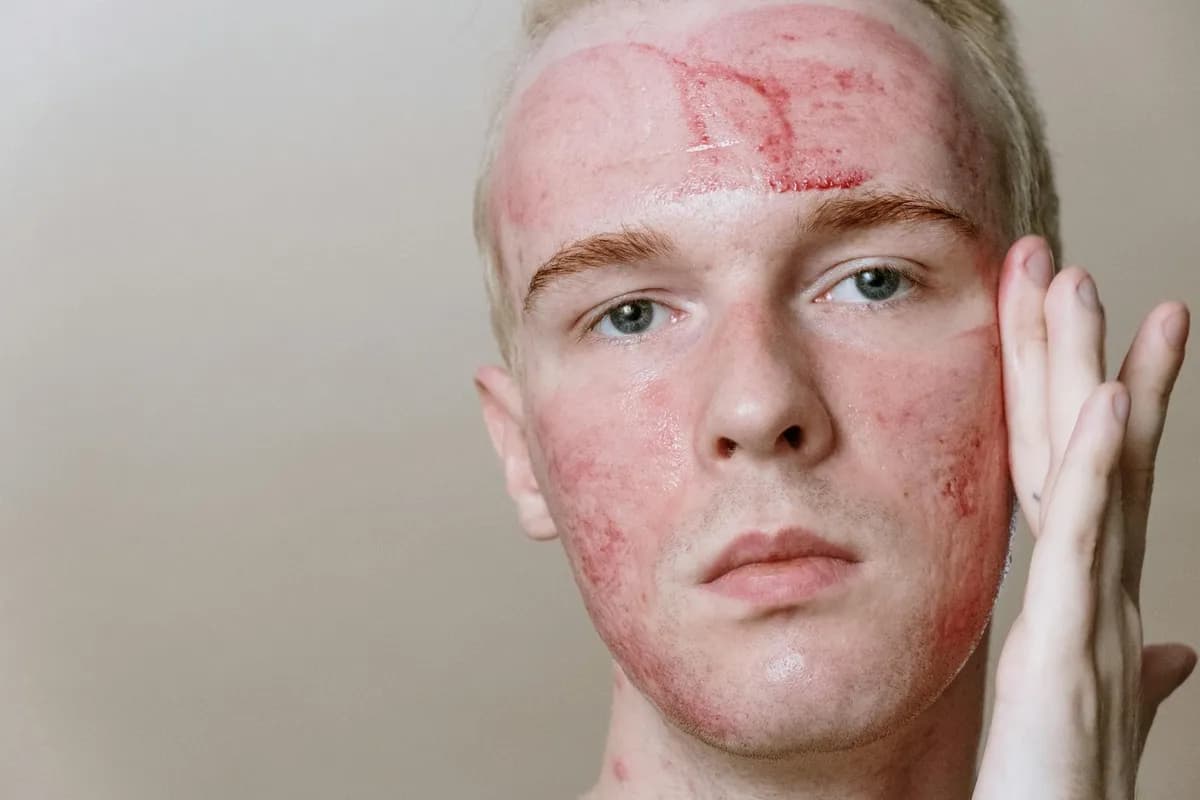
Persistent or episodic redness of the face — associated with rosacea, seborrhoeic dermatitis, contact reactions, hormonal flushing, or autonomic changes.
Persistent or episodic redness of the face — associated with rosacea, seborrhoeic dermatitis, contact reactions, hormonal flushing, or autonomic changes.
At a glance
What it is
Persistent or episodic redness of the face — associated with rosacea, seborrhoeic dermatitis, contact reactions, hormonal flushing, or autonomic changes.
Commonly experienced as
Evidence context
Emerging evidenceSee the evidence snapshotContext
Facial redness (facial erythema) has several common causes. Rosacea is a chronic skin condition producing facial redness, visible blood vessels, and sometimes papules — predominantly affecting the central face. Seborrhoeic dermatitis causes redness and flaking in the eyebrows, nasal folds, and around the hairline. Contact dermatitis produces redness from specific triggers. Perioral dermatitis produces redness around the mouth. Hormonal flushing in perimenopause produces episodic redness associated with heat. Lupus produces a characteristic butterfly-shaped rash across the cheeks and nose. Rosacea triggers vary between individuals but commonly include alcohol, spicy food, temperature extremes, sun, and emotional stress.
Could this be you
Facial Redness shows up differently for everyone. Browse by how it tends to be felt — these are common experiences, not a checklist or a diagnosis.
Common experiences people describe — not a diagnostic checklist.
The Evidence
What research and clinical practice say about facial redness — its common causes, relevant approaches, and when to seek professional assessment.
Facial redness has several distinct causes — each with different implications
Rosacea, seborrhoeic dermatitis, hormonal flushing, and contact reactions are among the most common drivers of facial redness. Identifying the underlying pattern matters, as approaches that help one cause may not suit another.
Seek prompt care if redness spreads rapidly alongside fever, if a skin lesion changes shape or colour quickly, or if there are signs of infection such as increasing warmth, swelling, or discharge. A non-healing wound or ulcer on the face also warrants professional review without delay.
Azelaic acid has reasonable evidence for rosacea management. Dietary approaches targeting inflammatory patterns and gut microbiome health are supported by emerging research in rosacea. Topical preparations containing green tea or chamomile show some evidence for skin calming, though study quality varies. Overall, the evidence base is moderate and condition-specific.
Rosacea affects the central face with redness and sometimes visible vessels or papules. Seborrhoeic dermatitis involves redness and flaking around the brows and nasal folds. Hormonal flushing in perimenopause is episodic and heat-associated. Lupus produces a characteristic cheek-and-nose pattern. Professional assessment is important to distinguish between these presentations.
Nutritional therapy may explore trigger foods, inflammatory dietary patterns, and gut health — particularly relevant in rosacea. Acupuncture is used for vascular and inflammatory skin conditions, though evidence remains limited. Topical herbal preparations are used for skin calming. These approaches are best considered alongside, not instead of, professional skin assessment.
Common rosacea triggers include alcohol, spicy food, temperature extremes, sun exposure, and emotional stress — though triggers vary between individuals. Keeping a simple trigger diary can help identify patterns. Sun protection is broadly relevant across most causes of facial redness.
A GP or dermatologist can assess the likely cause and recommend appropriate management. Complementary practitioners — including nutritional therapists or acupuncturists — can work alongside conventional care once a cause is established. Avoid inflated outcome claims from any single approach; facial redness often requires a considered, multi-factor response.
Featured
These practitioners have chosen to be featured on Gyfts.
References
Educational sources that inform this overview. Inclusion is for context and does not imply endorsement.
Full citations are maintained by the Gyfts editorial team and reviewed periodically.
Keep exploring
Browse verified practitioners, explore honest overviews, and take what you learn to a conversation — at your own pace.
