What it is
Restricted movement in the spine, affecting flexibility.
Restricted movement in the spine, affecting flexibility.
At a glance
What it is
Restricted movement in the spine, affecting flexibility.
Commonly experienced as
Evidence context
Emerging evidenceSee the evidence snapshotContext
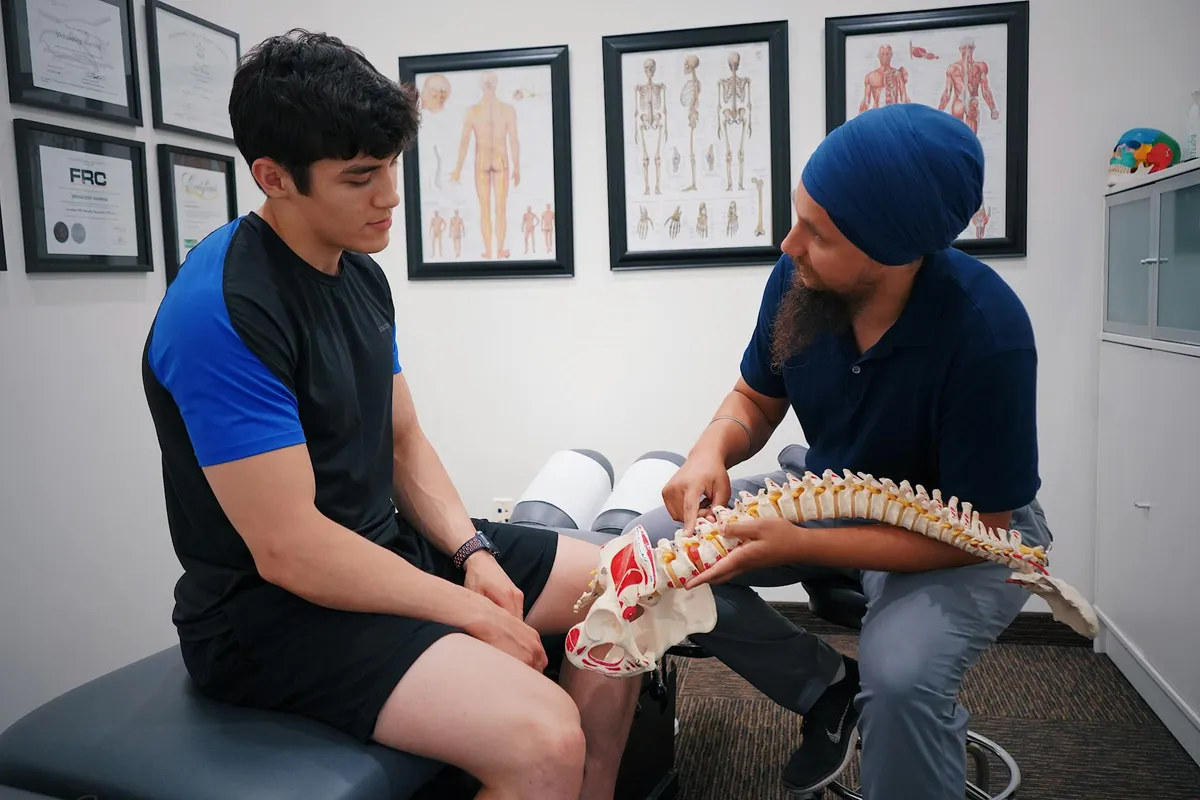
Limited spinal mobility describes reduced range of motion across one or more regions of the spine — cervical (neck), thoracic (mid-back), or lumbar (lower back). The restriction may involve flexion, extension, rotation, lateral bending, or combinations of these movements. Common causes include intervertebral disc degeneration (which reduces disc height and normal segment movement), facet joint arthropathy (where joint surfaces degenerate and stiffen), ankylosing spondylitis (where progressive spinal fusion produces characteristic loss of all movement directions), acute disc herniation with protective muscle guarding, and sustained postural compression. Comprehensive assessment including movement screening and imaging guides targeted intervention. Maintaining spinal mobility through regular, varied movement — rather than seeking complete rest — is the most evidence-supported long-term approach.
Could this be you
Limited Spinal Mobility shows up differently for everyone. Browse by how it tends to be felt — these are common experiences, not a checklist or a diagnosis.
Common experiences people describe — not a diagnostic checklist.
The Evidence
What research and clinical practice say about limited spinal mobility — and when to seek professional assessment.
Movement is central — rest alone is not the answer
Research consistently supports active, varied movement over prolonged rest for maintaining and recovering spinal mobility. Causes range from disc degeneration to inflammatory conditions, and accurate assessment matters for choosing the right approach.
Seek prompt assessment if mobility loss follows a fall or trauma, if you notice progressive limb weakness, or if the spine shows swelling with redness and heat. Sudden inability to bear weight or rapid loss of function are also signals that require professional evaluation rather than self-managed care.
A physiotherapist, osteopath, or medical practitioner can assess movement patterns and, where needed, recommend imaging. Conditions such as ankylosing spondylitis or disc herniation require different management approaches, so professional assessment is more useful than self-assessment alone.
Moderate-quality evidence supports structured exercise, including targeted stretching, yoga, and Pilates, for improving spinal range of motion. These approaches show benefit across multiple spinal regions. Evidence is less clear on which specific format is superior, and individual response varies depending on the underlying cause of restriction.
Practices such as yoga and Pilates are commonly used to support spinal flexibility and are backed by a growing body of research. They work best as part of a broader movement routine rather than as standalone solutions. Inflated outcome claims about any single practice should be viewed with caution.
Prolonged static postures — particularly sustained sitting — are associated with reduced spinal mobility. Regular, varied movement throughout the day is more protective than occasional intensive exercise. Small, consistent changes to movement habits tend to produce more durable results than short-term interventions alone.
Most studies on exercise and spinal mobility are short-term, use varied outcome measures, and do not always distinguish between spinal regions or underlying causes. Evidence for complementary approaches is promising but not yet definitive. This content is educational and is not a substitute for professional assessment of your specific situation.
References
Educational sources that inform this overview. Inclusion is for context and does not imply endorsement.
Full citations are maintained by the Gyfts editorial team and reviewed periodically.
Keep exploring
Browse practitioners, explore honest overviews, and take what you learn to a conversation — at your own pace.