What It Is
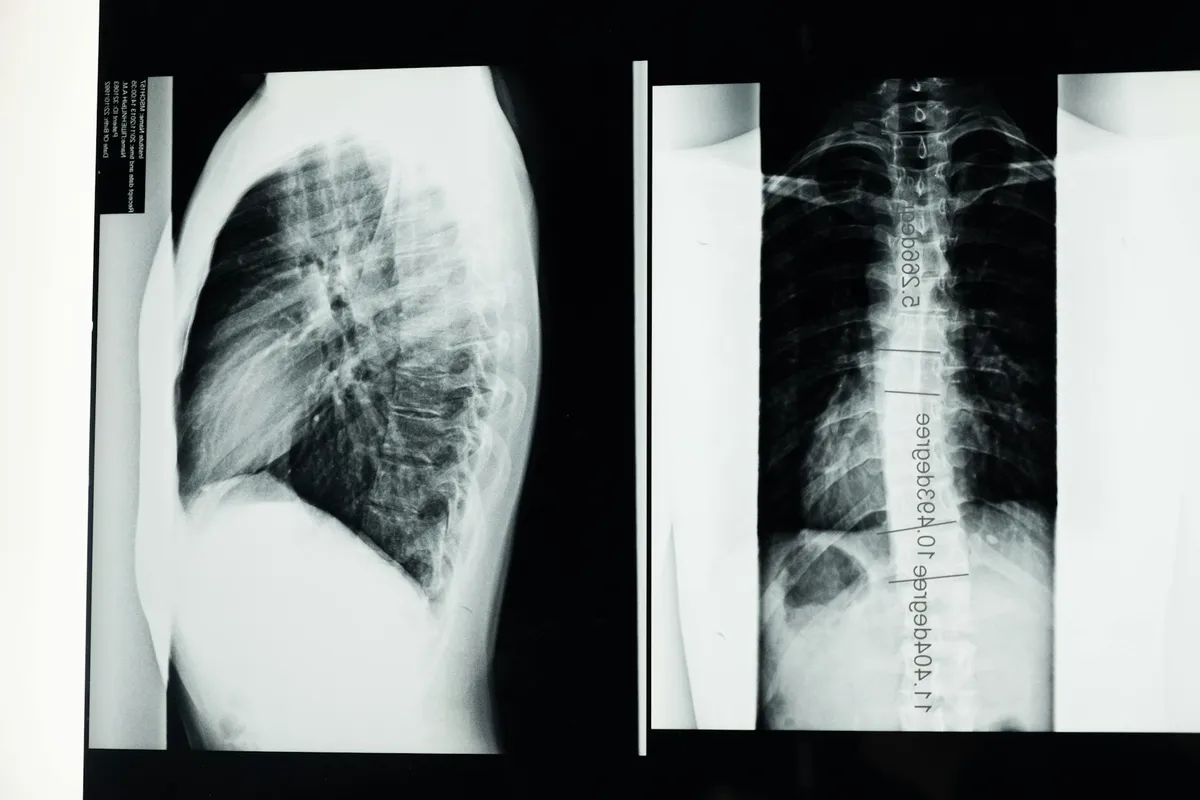
Scoliosis is an abnormal sideways curvature of the spine, often S- or C-shaped, affecting all ages.
Understanding your spine and finding your path forward
At a glance
What It Is
Scoliosis is an abnormal sideways curvature of the spine, often S- or C-shaped, affecting all ages.
How It Presents
Uneven shoulders, hip asymmetry, rib protrusion, back pain, muscle fatigue, and limited spinal mobility.
What May Help
Pilates, Rolfing, and myofascial release are among the approaches some people find supportive.
Evidence Context
Research is ongoing; moderate evidence suggests movement and bodywork may support comfort and function.
See the evidence snapshotWhen to Seek Help
Seek assessment for any child with suspected curvature, rapid progression, pain, or breathing concerns.
Explanation
Scoliosis is a lateral curvature of the spine of 10 degrees or more, often with vertebral rotation. It may be idiopathic (most common, particularly in adolescent girls), congenital, or secondary to neuromuscular conditions. Mild scoliosis often causes no symptoms; significant curves can cause back pain, postural asymmetry, and in severe cases, respiratory compromise. Adolescent idiopathic scoliosis progresses during growth spurts and requires monitoring. Treatment options range from observation and physiotherapy to bracing and surgery.
Could this be you
Scoliosis shows up differently for everyone. Browse by how it tends to be felt — these are common experiences, not a checklist or a diagnosis.
Common experiences people describe — not a diagnostic checklist.
Why it happens
Scoliosis usually comes from a mix of factors rather than a single cause. These are common contributors — not certainties.
Genetics and growth spurts during adolescence may increase the likelihood of developing spinal curvature.
Chronic tension in spinal muscles may contribute to uneven loading and postural asymmetry over time.
Neuromuscular conditions and connective tissue disorders may increase scoliosis risk or severity.
Prolonged asymmetrical sleeping positions may place uneven pressure on a developing or curved spine.
What happens in the body
Scoliosis can involve several of the body’s systems. These are common patterns researchers describe — how they show up varies from person to person.
The vertebrae may rotate and shift laterally, creating a curve of 10 degrees or more that can alter load distribution across spinal structures.
Muscles on either side of the curved spine may develop asymmetric tension and fatigue, which can contribute to postural imbalance and back pain over time.
In more severe curves, thoracic rotation may reduce chest wall compliance and lung expansion, potentially limiting breathing capacity.
Altered spinal geometry may place mechanical stress on nerve roots or the spinal cord, which in some cases may contribute to sensory or motor changes.
Process
Management
For mild curves, a doctor may recommend regular check-ups and imaging to track progression without immediate intervention.
A physician may discuss spinal bracing for adolescents with moderate curves to help slow or limit further curvature during growth.
Methods such as the Schroth technique are designed to address spinal asymmetry; some people find these may support posture and reduce discomfort.
Modified Pilates focusing on spinal awareness and core stability is something some practitioners suggest may help support muscle balance around the spine.
Structural bodywork approaches like Rolfing are traditionally used to address soft tissue tension; some people find them supportive for comfort and mobility alongside other care.
Self-Care
Methods like the Schroth technique are designed specifically for spinal curvature and may support better posture and reduced discomfort when practiced consistently with a trained professional.
Pilates adapted for scoliosis may help strengthen the muscles around the spine. Some people find that regular, gentle core work supports improved stability and reduced muscle fatigue over time.
Checking in with how you hold your body throughout the day may help reduce uneven loading on the spine. Some practitioners suggest mirror feedback or cues to support more balanced posture habits.
Swimming is often recommended for people with scoliosis as it allows spinal movement with reduced gravitational load. Some people find it supports flexibility and eases chronic back discomfort.
An ergonomic chair and a supportive mattress may help reduce daily strain on an asymmetrical spine. Some people find small adjustments to sitting height and screen level make a noticeable difference.
The Evidence
What research and clinical practice currently tell us about scoliosis management and the approaches that may support spinal health.
Scoliosis is well-studied, with clearest evidence in adolescents
Research supports specific exercise programmes and bracing for adolescent curves, with physiotherapy showing good evidence for pain and function in adults. Complementary approaches such as Pilates and yoga have supporting, though less robust, evidence.
Scoliosis-specific programmes such as the Schroth method and SEAS have moderate evidence for slowing curve progression in adolescents. Bracing has reasonable evidence for reducing the need for surgery in moderate curves. For adults, physiotherapy has good evidence for improving pain and function, though evidence for halting structural change is more limited.
Mild curves are often monitored without active intervention. Moderate curves in growing adolescents may be managed with bracing and supervised exercise. Severe or rapidly progressing curves may require surgical assessment. Adults with scoliosis are more commonly supported through pain management and functional rehabilitation rather than curve correction.
Pilates and yoga have supporting evidence for improving core strength, posture, and spinal mobility, though evidence specific to scoliosis is limited. Massage may help manage paraspinal muscle tension and discomfort. These approaches are generally considered adjuncts to, not replacements for, professionally supervised scoliosis management.
Rapid curve progression in a child or adolescent, new numbness or leg weakness, breathing difficulty associated with spinal curvature, or severe pain in a young person should all prompt professional assessment without delay. Neurological symptoms in an adult with known scoliosis also warrant prompt evaluation.
Unsupervised high-impact loading is generally not recommended for people with significant curves. Exercise programmes should be tailored to the individual and ideally guided by a physiotherapist experienced in scoliosis. Progressive curves in growing adolescents should not be left unmonitored, as delayed intervention may limit later options.
Physiotherapists trained in scoliosis-specific methods are well placed to guide exercise programmes. Orthopaedic specialists oversee bracing and surgical decisions. Complementary practitioners should be informed of curve severity and any clinical recommendations before beginning work. Self-directed programmes are best undertaken after professional assessment, not instead of it.
Safety first
Scoliosis is manageable, and support helps. Some situations call for prompt professional help.
Explore approaches
Practices people explore for scoliosis — alongside professional care.
FAQ
Some people find that practices like Pilates and Rolfing may support spinal awareness, muscle balance, and mobility. These approaches are generally used alongside conventional care, not as replacements for medical monitoring.
Any child or adolescent with a visible spinal curve, uneven shoulders, or a rib hump should be assessed by a medical professional for Cobb angle measurement. New neurological symptoms or rapid progression in adults also warrant prompt evaluation.
Not necessarily. Many curves remain stable, particularly after skeletal maturity. Regular monitoring is important, as progression risk varies depending on age, curve severity, and other individual factors.
Many people with scoliosis experience chronic dull lower back pain, muscle fatigue, and stiffness due to uneven load distribution across the spine. Some practitioners suggest that targeted movement therapies may support muscle balance and reduce discomfort.
Evidence is moderate and ongoing. Some studies suggest movement-based approaches may support posture and function, though results vary by individual. It is important to work with practitioners experienced in spinal conditions and to maintain medical oversight.
Keep exploring
Browse practitioners, explore honest overviews, and take what you learn to a conversation — at your own pace.