What it is
Palpitations are the subjective awareness of one's own heartbeat — perceived as pounding, racing, fluttering, or irregular.
The conscious, often uncomfortable awareness of one's own heartbeat — felt as pounding, racing, fluttering, or skipping — which may be benign or signal a cardiac arrhythmia.
At a glance
What it is
Palpitations are the subjective awareness of one's own heartbeat — perceived as pounding, racing, fluttering, or irregular.
Commonly experienced as
Evidence context
Research-supportedSee the evidence snapshotSafety
See staying safeContext
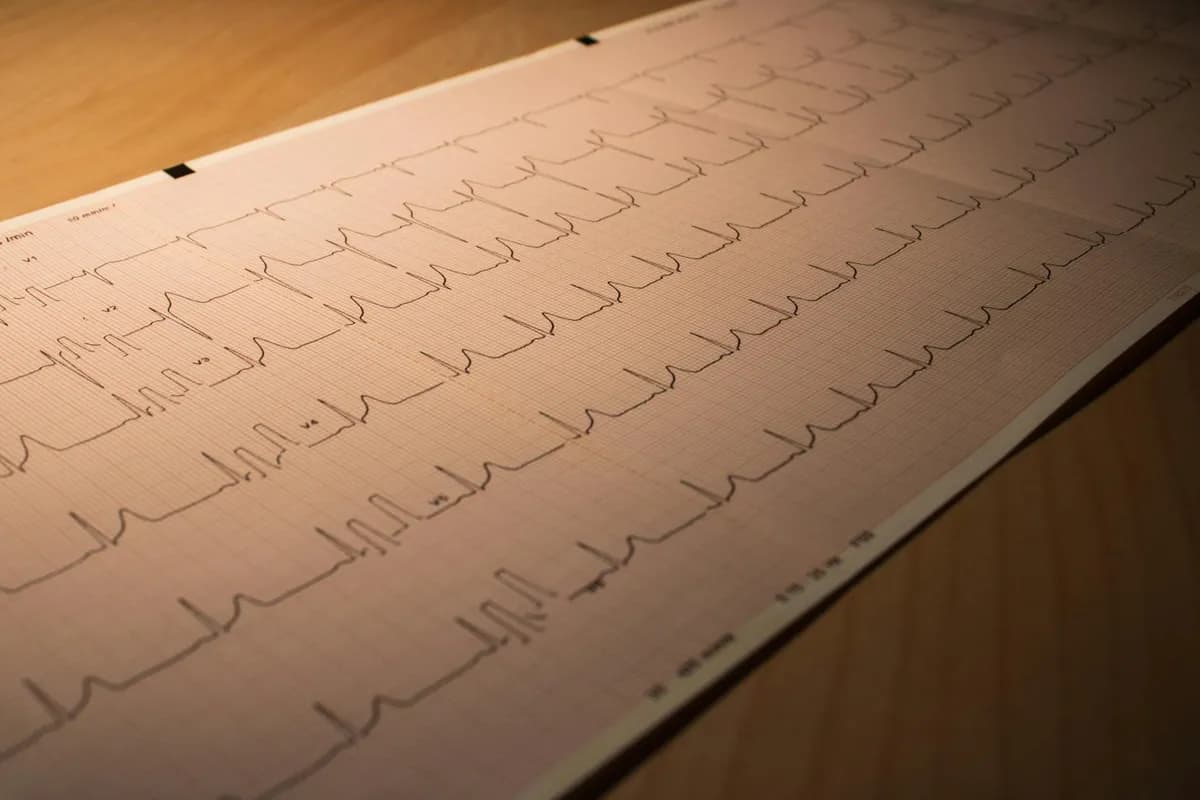
Palpitations describe the subjective experience of being aware of the heartbeat in an unpleasant, noticeable, or alarming way. They may be perceived as rapid (tachycardia), irregular (ectopic beats, atrial fibrillation), forceful (high-output states), or skipping (premature ventricular or atrial contractions). The vast majority of palpitations presenting in primary care are benign — most commonly ectopic beats, sinus tachycardia driven by anxiety or caffeine, or normal exertional heart rate increase. However, palpitations may represent paroxysmal atrial fibrillation, SVT, ventricular arrhythmias, or other cardiac conduction abnormalities requiring investigation. Risk stratification is guided by associated symptoms (presyncope, syncope, chest pain, breathlessness), structural heart disease history, and ECG findings.
Could this be you
Palpitations shows up differently for everyone. Browse by how it tends to be felt — these are common experiences, not a checklist or a diagnosis.
Common experiences people describe — not a diagnostic checklist.
Explore next
The Evidence
Most palpitations are benign, but some require prompt assessment. Understanding the evidence helps you know when to act and when to reassure yourself.
Usually benign, but always worth investigating properly
Palpitations are common and most often caused by ectopic beats, anxiety, or lifestyle factors. A proportion reflect underlying cardiac or thyroid conditions requiring professional assessment — context and associated symptoms determine urgency.
Seek same-day assessment if palpitations occur with fainting, near-fainting, chest pain, or breathlessness. Palpitations during exercise, or in anyone with known heart disease or a prior cardiac event, also require prompt evaluation. These patterns may indicate a serious arrhythmia that needs investigation before any other approach is considered.
Standard investigation includes a 12-lead ECG, Holter or event monitoring for infrequent symptoms, thyroid function, electrolytes, and blood count. Benign ectopic beats typically need only reassurance and lifestyle adjustment. Atrial fibrillation, SVT, and other arrhythmias have clear evidence-based management pathways including medication and, where appropriate, ablation.
Caffeine, decongestants, and recreational stimulants should be minimised or avoided when palpitations are present. Using herbal cardiac agents without a prior ECG assessment is not appropriate for unexplained palpitations. Slow breathing and vagal manoeuvres have evidence support for certain arrhythmias, but should not replace professional assessment of the underlying cause.
Clinicians assess palpitations by considering associated symptoms, personal and family cardiac history, and ECG findings. Benign causes — ectopic beats, sinus tachycardia from anxiety or caffeine — are common in primary care. Paroxysmal atrial fibrillation and SVT may require longer monitoring to capture, as they can be absent at the time of a standard ECG.
TCM interprets palpitations as disturbances of heart qi or shen; Ayurveda may attribute them to pitta imbalance. European herbal traditions have used hawthorn, motherwort, and lemon balm for heart-calming effects. Naturopathic practice commonly investigates magnesium status. These approaches may complement conventional care but are not a substitute for professional cardiac assessment.
A GP or cardiologist should be the first point of contact for new or unexplained palpitations, particularly if they are frequent, prolonged, or associated with other symptoms. Once a serious cause has been excluded, complementary or holistic approaches may be explored alongside conventional care. Always inform all practitioners of any supplements or herbal products being used.
Safety first
General, informational guidance — not diagnostic. A qualified practitioner can advise on your own situation.
Top Practitioners
Practitioners are ranked using relevance, experience signals, reviews, and support-area fit.
Read next
References
Educational sources that inform this overview. Inclusion is for context and does not imply endorsement.
Full citations are maintained by the Gyfts editorial team and reviewed periodically.
Keep exploring
Browse practitioners, explore honest overviews, and take what you learn to a conversation — at your own pace.