What it is
Posture issues describe deviations from optimal spinal and body alignment — including forward head posture, rounded shoulders, hyperkyphosis, lordosis, and scoliosis — that may contribute to pain, fatigue, and musculoskeletal dysfunction.
Deviations from optimal spinal and body alignment — such as rounded shoulders, forward head, or spinal curvature — that may cause pain, fatigue, and movement dysfunction.
At a glance
What it is
Posture issues describe deviations from optimal spinal and body alignment — including forward head posture, rounded shoulders, hyperkyphosis, lordosis, and scoliosis — that may contribute to pain, fatigue, and musculoskeletal dysfunction.
Commonly experienced as
Evidence context
Emerging evidenceSee the evidence snapshotSafety
See staying safeContext
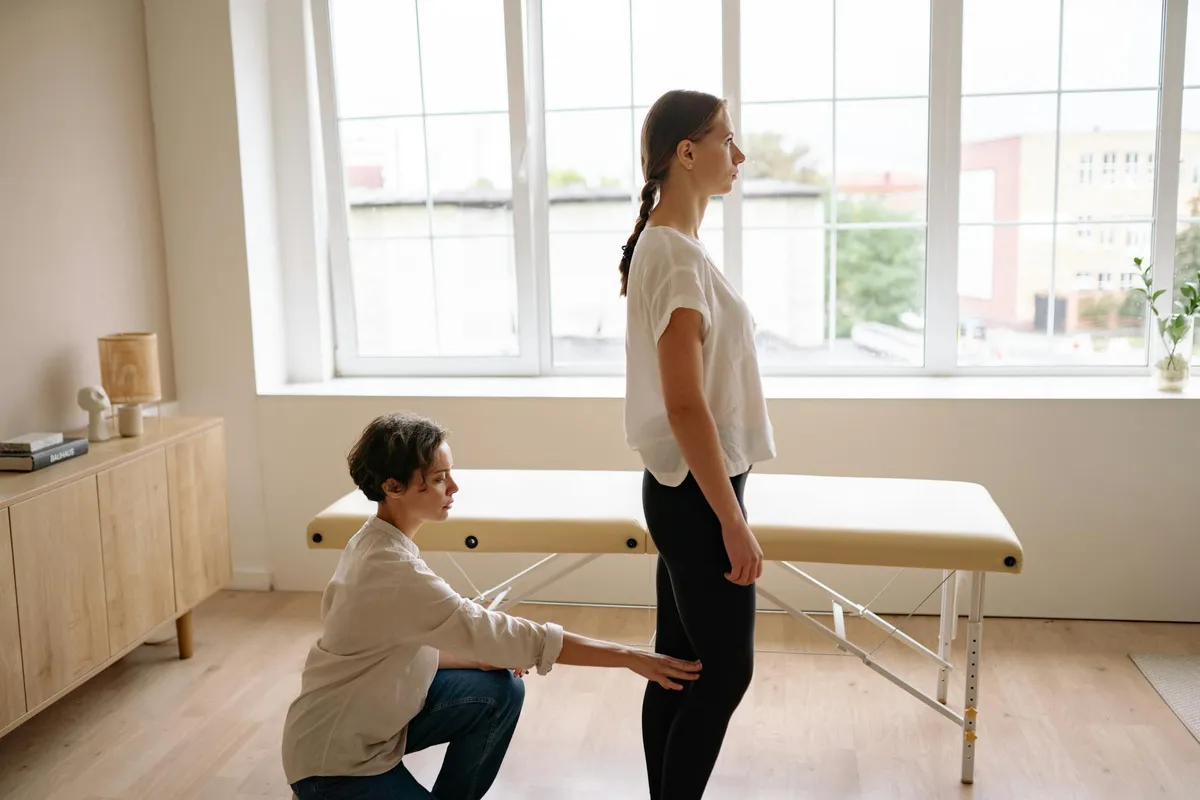
Posture issues encompass a broad range of alignment deviations from the body's optimal biomechanical baseline. Common presentations include forward head posture (FHP — where the head sits anterior to the shoulder girdle), rounded shoulders and hyperkyphosis (excessive thoracic curvature), hyperlordosis (excessive lumbar or cervical curve), flat back (loss of lumbar curve), and scoliosis (lateral spinal curvature). These may be structural (bony changes from growth or pathology), functional (muscle imbalance and adaptations to habitual posture), or psychosomatic (collapsed posture associated with depression, shame, or chronic stress). Modern sedentary and screen-based work has dramatically increased the prevalence of forward head posture and thoracic kyphosis. Postural deviations contribute to neck and back pain, headache, breathing restriction, fatigue, and — in severe cases — visceral compression.
Could this be you
Posture Issues shows up differently for everyone. Browse by how it tends to be felt — these are common experiences, not a checklist or a diagnosis.
Common experiences people describe — not a diagnostic checklist.
The Evidence
What research and clinical practice say about postural assessment, correction, and when professional input matters.
Exercise and assessment are the foundation of postural care
Targeted exercise addressing muscle imbalance has meaningful evidence for functional postural improvement. Passive interventions alone — such as posture braces — show limited benefit without accompanying movement work.
Progressive spinal curvature in a growing child warrants orthopaedic monitoring. Postural change accompanied by arm or leg weakness or numbness may indicate spinal cord involvement. Rapidly worsening upper-back curvature in an older adult with pain needs imaging to rule out vertebral fracture or other serious pathology.
Physiotherapy-led exercise targeting weak and shortened muscles is the gold standard for functional posture correction. For adolescent scoliosis, physiotherapeutic scoliosis-specific exercises have evidence for slowing curve progression. Ergonomic workplace changes reduce postural loading. Evidence for passive devices without exercise is limited.
Wearing posture braces without active exercise may gradually weaken the muscles they are meant to support — exercise remains essential. Spinal manipulation in the presence of osteoporosis or significant disc pathology should only follow professional clinical assessment to confirm it is appropriate.
A physiotherapist can identify whether postural deviation is functional, structural, or both, and tailor exercise accordingly. For scoliosis, management ranges from monitored exercise to bracing for moderate curves in growing adolescents, with surgical options reserved for severe progressive cases. Self-directed exercise without assessment may miss underlying contributors.
Yoga and Pilates both target spinal mobility and deep stabiliser activation with broad practitioner availability. Alexander Technique — a movement re-education method — has evidence supporting its use for back pain and habitual postural patterns. Rolfing works with connective tissue to address whole-body alignment. These complement but do not replace professional assessment where indicated.
For mild functional posture concerns, structured exercise, ergonomic adjustment, and movement practices are reasonable starting points. Where pain, neurological symptoms, or progressive curvature are present, professional assessment should come first. Combining clinical guidance with movement practice tends to produce better outcomes than either approach alone.
Safety first
General, informational guidance — not diagnostic. A qualified practitioner can advise on your own situation.
References
Educational sources that inform this overview. Inclusion is for context and does not imply endorsement.
Full citations are maintained by the Gyfts editorial team and reviewed periodically.
Keep exploring
Browse practitioners, explore honest overviews, and take what you learn to a conversation — at your own pace.