What it is
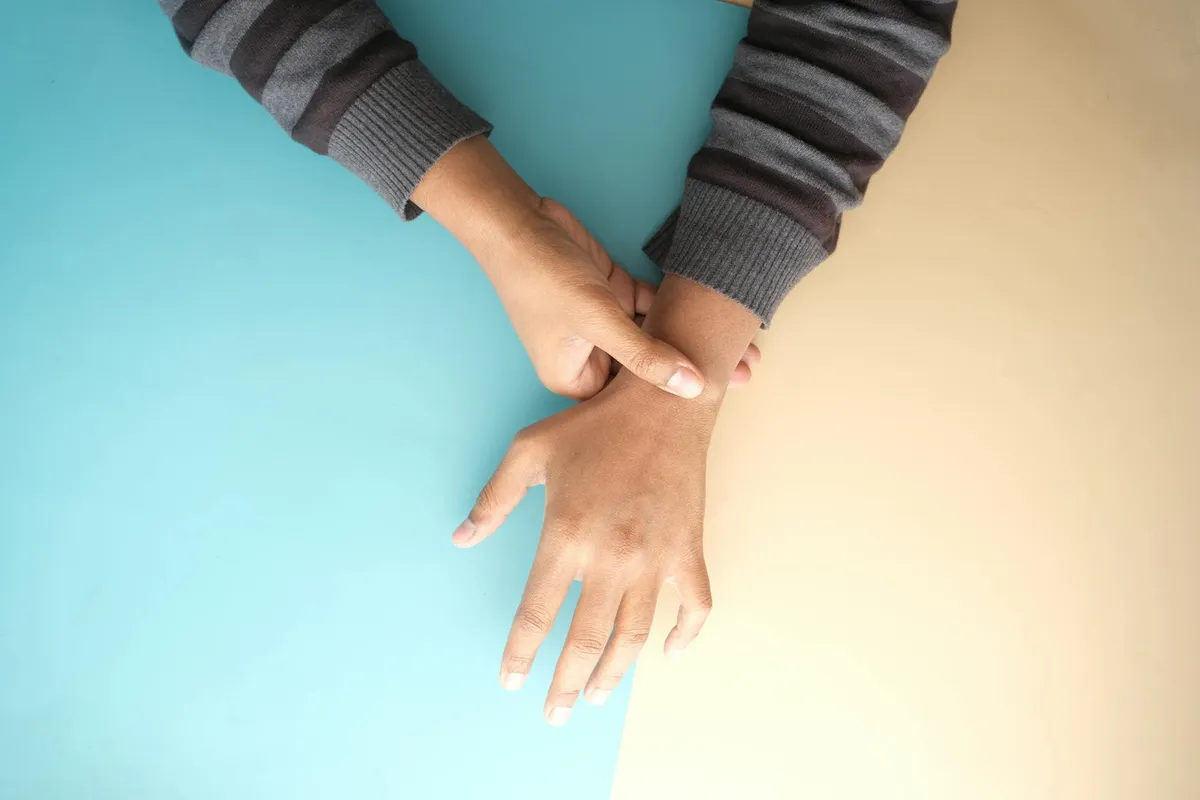
Swelling around the wrist joint.
Swelling around the wrist joint.
At a glance
What it is
Swelling around the wrist joint.
Commonly experienced as
Evidence context
Emerging evidenceSee the evidence snapshotContext
Wrist swelling describes visible or palpable enlargement of the wrist — arising from joint inflammation, fluid accumulation within the joint or tendon sheaths, ganglionic cysts, or post-traumatic oedema. Inflammatory wrist swelling — particularly bilateral, associated with morning stiffness and systemic symptoms — raises concern for rheumatoid arthritis and requires urgent blood testing and rheumatology assessment for early treatment to prevent joint damage. Ganglion cysts are the most common benign cause — fluid-filled swellings arising from joints or tendon sheaths that are typically painless and may resolve spontaneously. Post-traumatic wrist swelling following a fall or impact warrants X-ray to exclude fracture, particularly of the scaphoid bone (which can be initially subtle on imaging but risks significant complications if missed).
Could this be you
Wrist Swelling shows up differently for everyone. Browse by how it tends to be felt — these are common experiences, not a checklist or a diagnosis.
Common experiences people describe — not a diagnostic checklist.
The Evidence
What research and clinical practice say about wrist swelling, its causes, and when to seek professional assessment.
Wrist swelling has many causes — some need urgent attention
Wrist swelling can range from a benign ganglion cyst to early inflammatory arthritis or an undetected fracture. Identifying the cause matters, and some presentations require prompt professional assessment to prevent lasting joint damage.
Swelling following a fall or impact warrants imaging to rule out fracture, including scaphoid injuries that may not be immediately visible. Swelling with redness, heat, or fever may indicate infection or acute inflammation. Progressive loss of grip strength or wrist function should not be self-managed.
Bilateral wrist swelling with morning stiffness and fatigue raises concern for inflammatory arthritis and warrants blood testing and rheumatology review. Persistent swelling after trauma should be assessed with X-ray. A general practitioner or musculoskeletal specialist is the appropriate first point of contact for most presentations.
Ganglion cysts are the most common benign cause — fluid-filled swellings that often resolve without intervention. Post-traumatic oedema and joint inflammation are also frequent. Inflammatory causes, particularly rheumatoid arthritis, require early identification as timely management significantly reduces the risk of joint damage.
Anti-inflammatory dietary patterns and adequate rest are commonly discussed in holistic contexts and are generally low-risk supportive measures. Evidence for these approaches in wrist swelling specifically is limited. They are best considered alongside, not instead of, professional assessment — particularly where an underlying cause has not been established.
Research on holistic or complementary interventions for wrist swelling is early-stage and largely indirect, drawing from broader musculoskeletal literature. No complementary approach has been shown to resolve structural causes such as fracture, cyst, or inflammatory arthritis. Claims beyond general supportive benefit should be viewed with caution.
Conventional assessment — including imaging and blood tests where indicated — establishes the cause and guides safe management. Complementary or holistic approaches may offer supportive value once serious causes are excluded. Practitioners across modalities should be informed of any existing professional assessment findings before beginning additional care.
References
Educational sources that inform this overview. Inclusion is for context and does not imply endorsement.
Full citations are maintained by the Gyfts editorial team and reviewed periodically.
Keep exploring
Browse practitioners, explore honest overviews, and take what you learn to a conversation — at your own pace.