The Practice Revealed
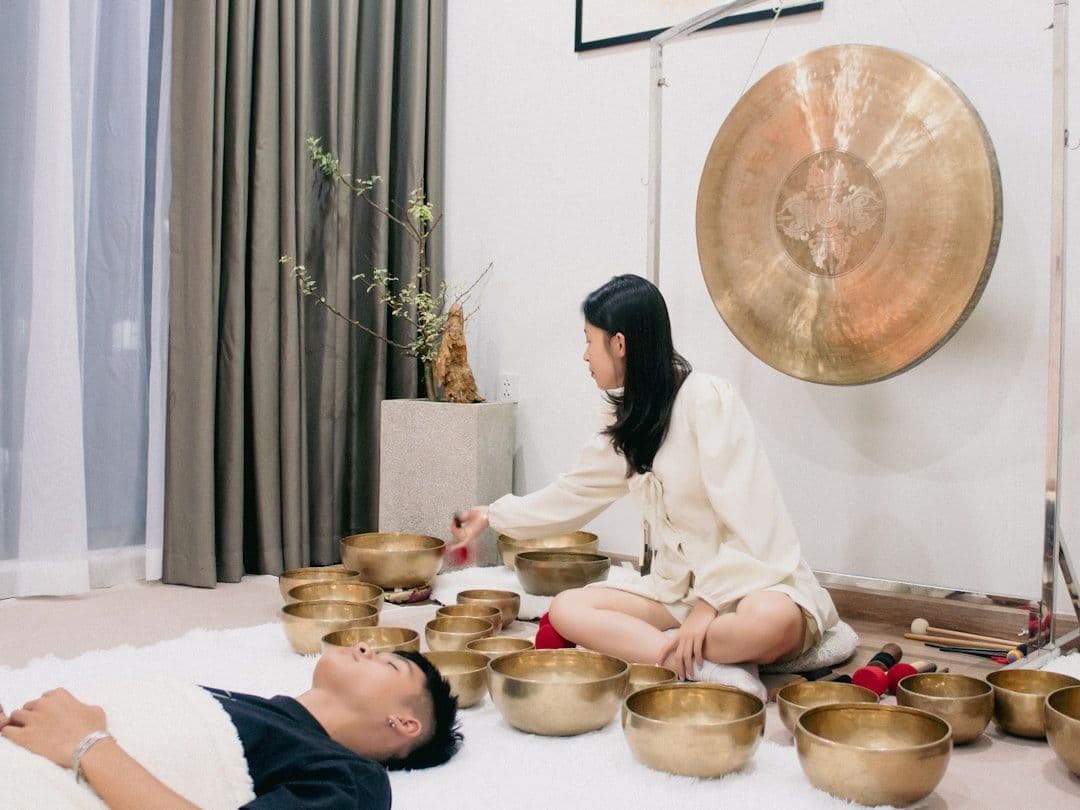
Picture an acupuncture session where the needles themselves become instruments. After fine needles are positioned along traditional meridian points, your practitioner approaches with a tuning fork, striking it gently before placing it against specific needles. The metal vibrates, sending frequencies through the needle into your tissue. Some practitioners use singing bowls positioned near treatment points, while others employ electronic devices generating precise hertz frequencies.
This is Acu Sound Therapy—a contemporary fusion that layers acoustic vibration onto classical acupuncture. The needles act as conductors, channelling sound waves directly into acupoints while the audible frequencies create an ambient healing environment. What emerges is a treatment that engages multiple senses while targeting the body's energetic architecture through both mechanical and vibrational stimulation.
Origins and Evolution
Traditional acupuncture has employed various enhancement techniques for centuries, including heat (moxibustion) and electrical stimulation. Sound integration represents a modern evolution, emerging in the late 20th century as practitioners began exploring how vibrational frequencies might amplify needle effects.
The practice draws from multiple traditions: Chinese acupuncture theory provides the meridian framework, Tibetan and Himalayan singing bowl traditions contribute harmonic principles, and contemporary sound therapy research informs frequency selection. Some practitioners incorporate concepts from cymatics—the study of visible sound—believing that specific frequencies create beneficial resonance patterns within body tissues.
Whilst not rooted in classical Chinese texts, Acu Sound Therapy reflects acupuncture's adaptive nature. Traditional practice has always incorporated available tools and contemporary understanding, making this acoustic integration a natural extension rather than a radical departure.
Mechanisms and Theories
From a traditional Chinese medicine perspective, sound vibrations are understood to enhance qi circulation through meridian pathways. Practitioners theorise that frequencies create resonance within organs and energy channels, with different hertz ranges corresponding to specific meridians or organ systems. The needles become antennae, transmitting vibrational information directly to targeted acupoints.
Biomedically, several mechanisms may explain reported effects. Sound vibrations can stimulate mechanoreceptors around needle sites, potentially amplifying the neurological responses that classical acupuncture generates. Frequencies might also influence the nervous system through bone conduction, reaching deeper structures than needles alone.
Some research suggests that specific sound frequencies can reduce cortisol levels and promote parasympathetic nervous system activation—the body's relaxation response. When combined with acupuncture's documented effects on neurotransmitter release and pain gate mechanisms, the acoustic enhancement may create synergistic benefits. However, these remain theoretical frameworks rather than proven mechanisms.
Who Might Explore This Approach
People experiencing chronic stress who find traditional acupuncture beneficial often report enhanced relaxation with sound integration. The auditory component can deepen the meditative quality of treatment, particularly helpful for those whose minds remain active during standard sessions.
Individuals with pain conditions—especially musculoskeletal tension, headaches, or fibromyalgia—may find the vibrational element addresses symptoms that needles alone don't fully reach. Some report that sound frequencies help them tune into subtle body sensations, enhancing their awareness of the treatment process.
Those drawn to sound healing modalities but seeking the structural framework of traditional medicine often appreciate this hybrid approach. The combination satisfies desires for both ancient wisdom and contemporary innovation, offering familiar acupuncture benefits within an expanded sensory experience.
Inside a Typical Session
Sessions usually begin with traditional consultation—discussing symptoms, examining tongue and pulse, and identifying treatment priorities. Your practitioner selects acupoints based on classical diagnosis, then inserts needles using standard techniques.
Once needles are positioned, the acoustic element begins. Some practitioners use tuning forks calibrated to specific frequencies, striking them and placing the vibrating stems against needle handles. Others employ singing bowls, either resting them on the body or playing them in proximity to treatment points. Electronic devices may generate precise frequencies delivered through speakers or direct contact instruments.
Treatment typically lasts 45-60 minutes, with sound applied intermittently rather than continuously. You might experience gentle vibrations through the needles, ambient harmonic tones, or both. Many people report deeper relaxation than with standard acupuncture, often describing sensations of warmth, tingling, or subtle energy movement enhanced by the acoustic input.
Evidence and Practitioner Experience
Robust clinical trials specifically examining Acu Sound Therapy remain notably absent from medical literature. The evidence base consists primarily of practitioner observations and patient testimonials rather than controlled research.
Practitioners consistently report enhanced patient relaxation responses compared to traditional acupuncture alone. Many describe improved treatment outcomes for stress-related conditions, with patients often requesting the sound integration after experiencing both approaches. Some observe that acoustic enhancement helps needle-sensitive individuals tolerate treatment more comfortably.
The limited research exists on acupuncture and sound therapy as separate modalities. Acupuncture has substantial evidence for various conditions, while sound therapy shows promise for stress reduction and pain management. However, their combined effects remain largely unexplored through rigorous scientific methodology.
This evidence gap doesn't negate reported benefits but highlights the need for systematic investigation. Until controlled studies emerge, the practice's value rests on accumulated clinical experience and individual patient responses rather than established scientific validation.
Practical Considerations
Sessions typically cost $60-120, reflecting both acupuncture and sound therapy components. Treatment frequency varies based on individual needs, usually starting with weekly appointments before transitioning to maintenance schedules.
Seek practitioners with recognized acupuncture qualifications from bodies like the British Acupuncture Council (BAcC), plus additional training in sound therapy techniques. Ask about their specific acoustic training, preferred frequency systems, and experience combining modalities.
Many practitioners offer initial consultations to discuss suitability and answer questions about their approach. Consider trying both traditional acupuncture and sound therapy separately before exploring their combination—this helps you understand your responses to each element.
As with any complementary therapy, maintain open communication with your primary care doctor, particularly if you're managing chronic conditions or taking medications. The acoustic component generally doesn't interfere with medical treatments, but your healthcare team should remain informed about all therapeutic approaches you're exploring.