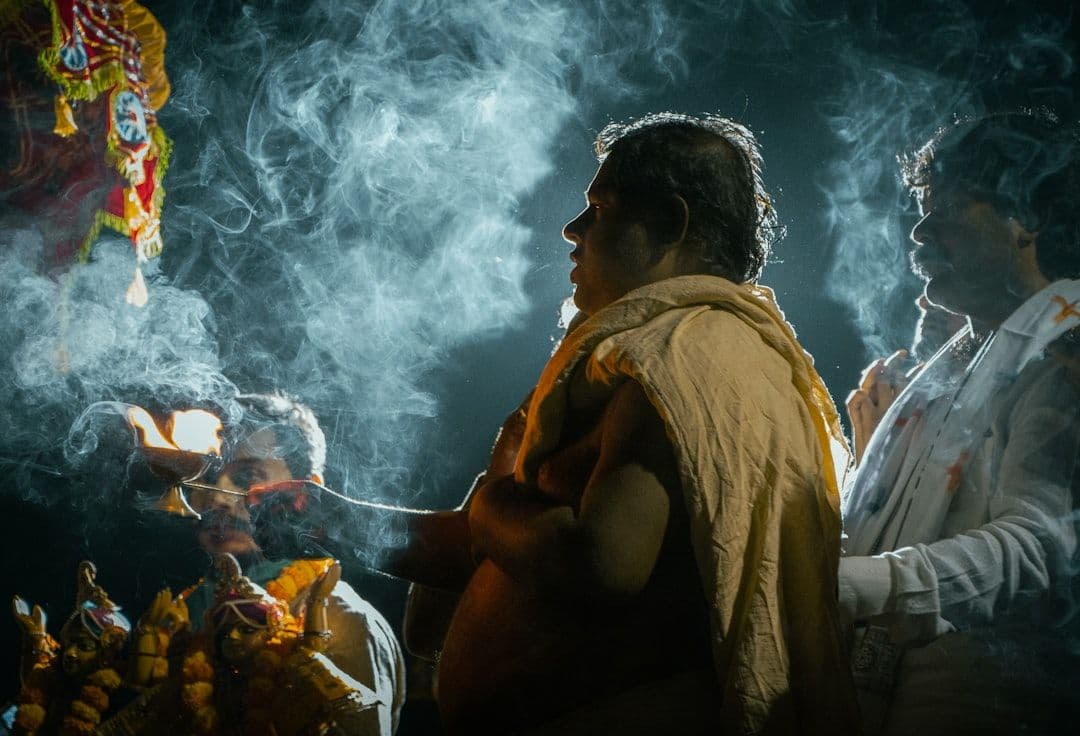
The Evidence Landscape for Devotional Practice
Bhakti occupies a unique position in the research landscape. As a devotional spiritual path rooted in Hindu tradition, it has not been subjected to Western clinical investigation in any systematic way. This absence reflects not a research oversight, but rather the fundamental mismatch between Bhakti's spiritual objectives and the measurable outcomes that clinical trials typically assess.
The limited research that touches on Bhakti-related practices focuses on individual components rather than the integrated devotional path. Studies on mantra repetition suggest potential benefits for stress reduction and emotional regulation, whilst research on group singing and chanting indicates possible improvements in mood and social connection. However, these investigations examine isolated techniques rather than the holistic devotional framework that defines authentic Bhakti practice.
Within Hindu philosophical texts and centuries of practitioner accounts, Bhakti's 'evidence base' lies in detailed descriptions of spiritual transformation, emotional purification, and the cultivation of divine love. This traditional knowledge system operates according to different validation methods than contemporary research, emphasising direct experience, spiritual authority, and the fruits of sustained practice over controlled measurement.
What Related Research Reveals
Whilst direct studies on Bhakti remain absent, research on its constituent practices offers some insight. A 2016 systematic review examining mantra-based practices found preliminary evidence for stress reduction and improved emotional regulation across 23 studies, though sample sizes remained small and methodological quality varied considerably.
Group chanting research shows more promising results. Studies involving kirtan (devotional chanting) sessions have found improvements in mood states and reduced anxiety levels immediately following practice sessions. One controlled trial with 60 participants found significant reductions in depressive symptoms after eight weeks of weekly kirtan sessions, though the study lacked proper randomisation and long-term follow-up.
Prayer research, whilst not specific to Hindu devotional practices, suggests that regular devotional prayer may support psychological resilience and stress management. However, these findings cannot be directly extrapolated to Bhakti practice, which involves specific theological frameworks, cultural contexts, and devotional attitudes that differ substantially from the prayer practices typically studied.
Limitations and Cultural Considerations
The scarcity of research on Bhakti reflects several fundamental challenges. Devotional practices resist the standardisation required for clinical trials—authentic Bhakti involves personal relationship with chosen deities, individualised devotional expressions, and deep cultural immersion that cannot be meaningfully reduced to controlled protocols.
Existing studies on related practices suffer from significant methodological limitations. Sample sizes remain small, control groups are often inappropriate or absent, and outcome measures focus on psychological symptoms rather than the spiritual development that Bhakti practitioners actually seek. Publication bias likely favours studies showing positive results, whilst the cultural specificity of devotional practices makes generalisation across populations problematic.
Perhaps most importantly, applying Western research frameworks to Bhakti may fundamentally misrepresent the practice. Bhakti's value lies not in symptom reduction or performance enhancement, but in spiritual transformation, devotional connection, and the cultivation of divine love—outcomes that resist quantification and may be diminished by attempts to measure them scientifically.
Understanding Bhakti's Traditional Framework
Within Hindu tradition, Bhakti's effectiveness is understood through different evidence standards than clinical research employs. Classical texts like the Bhagavata Purana and the writings of devotional saints provide detailed accounts of spiritual progression, emotional purification, and the development of divine love through sustained practice.
Traditional validation emphasises the quality of devotional experience, the guidance of qualified teachers, and the gradual transformation of consciousness from ego-centred concerns towards divine love and service. Practitioners report deepened emotional capacity, increased compassion, reduced attachment to material concerns, and profound experiences of spiritual connection—outcomes that hold meaning within the devotional framework regardless of clinical measurement.
This traditional knowledge system suggests that Bhakti's benefits unfold through sincere, sustained engagement rather than mechanical technique application. The practice requires cultural understanding, devotional intent, and often community support to reach its full potential—factors that make controlled research both practically difficult and potentially irrelevant to authentic engagement.
Future Research Considerations
Future investigation of devotional practices like Bhakti requires methodological innovation that respects both scientific rigour and spiritual authenticity. Qualitative research exploring practitioners' experiences could provide valuable insights without reducing the practice to measurable components. Longitudinal studies examining practitioners' psychological well-being and social relationships might offer more appropriate outcome measures than standard clinical assessments.
Cultural collaboration with Hindu spiritual communities would be essential for any meaningful research programme. Studies would need to account for the role of belief systems, community context, and authentic devotional motivation in determining outcomes—factors that conventional research typically controls for rather than embraces.
However, the most important recognition may be that Bhakti's value does not require scientific validation. As a complete spiritual path developed over centuries of practice and reflection, Bhakti offers its own forms of evidence through transformed lives, deepened compassion, and direct spiritual experience. Those drawn to explore Bhakti might benefit more from connecting with experienced practitioners and authentic traditional teachers than from waiting for clinical research that may never adequately capture the practice's essential qualities.