The Path of Sacred Emotion
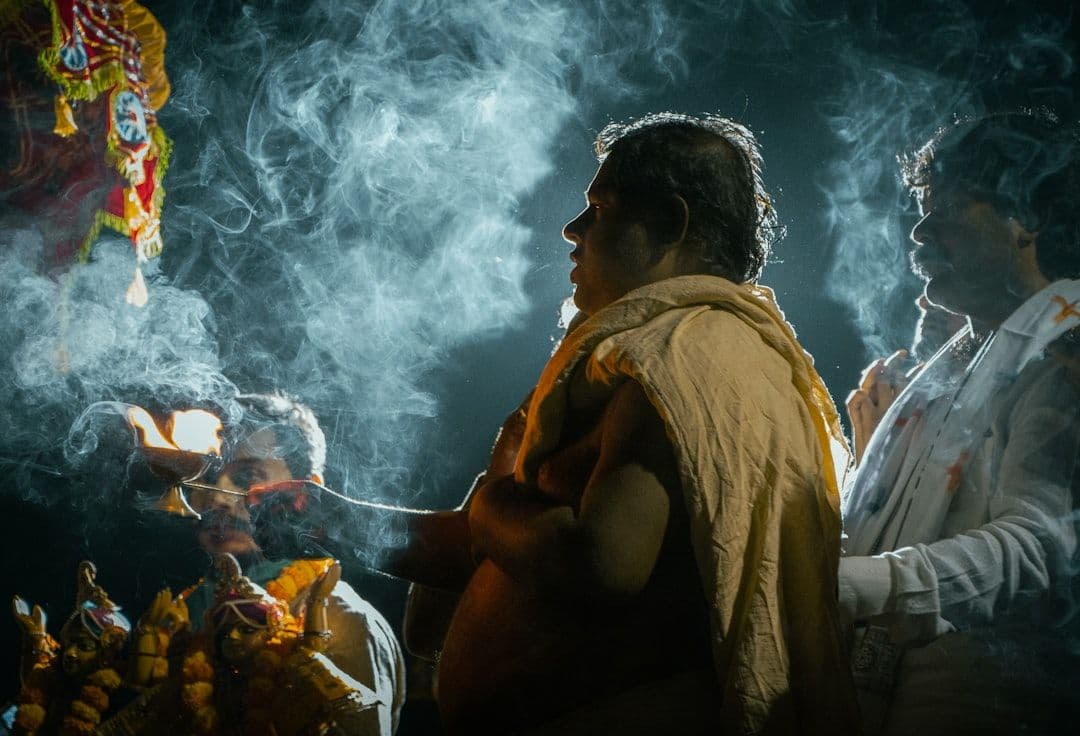
In a small temple room, voices rise in melodic chant as devotees sway gently, their hands pressed together at their hearts. Eyes closed, faces soft with concentration, they repeat ancient Sanskrit syllables that have echoed through generations. This is bhakti in practice — not merely intellectual study of divine concepts, but the cultivation of profound emotional connection to the sacred.
Bhakti translates as 'devotion' or 'loving participation' in Sanskrit. Rather than approaching the divine through philosophy or rigorous discipline, this path invites practitioners to engage their hearts fully. The practice recognises that love, when directed towards the sacred, becomes a transformative force that naturally dissolves the barriers between self and divine consciousness.
Unlike meditation practices that often emphasise stillness or detachment, bhakti welcomes emotion as the vehicle for spiritual realisation. Practitioners pour their longing, gratitude, and surrender into prayers, songs, and rituals directed towards their chosen form of divinity — whether Krishna, Devi, Shiva, or the formless absolute known as Brahman.
Ancient Roots in Living Tradition
Bhakti emerged within Hinduism over two millennia ago, reaching full flowering during medieval India's devotional renaissance. Saints and poets like Mirabai, Tulsidas, and the Tamil Alvars created a rich literature of devotional songs and teachings that remain central to practice today.
This wasn't merely an intellectual movement. Bhakti arose partly as a response to rigid caste hierarchies and exclusive priestly traditions, offering a direct path to divine connection regardless of birth or social status. Women, lower castes, and ordinary householders could participate fully — their sincere devotion considered more valuable than ritual expertise or Sanskrit scholarship.
The tradition crossed cultural boundaries early in its development. Sufism within Islam shares striking parallels, whilst Sikhism explicitly incorporated bhakti principles. Today, bhakti finds expression in Hindu temples worldwide, contemporary kirtan gatherings in Western cities, and personal practice adapted to diverse cultural contexts whilst maintaining its essential devotional character.
How Devotional Connection Unfolds
Within bhakti's understanding, the human heart naturally seeks connection with something greater than itself. Rather than viewing this longing as weakness or illusion, the tradition recognises it as the fundamental spiritual impulse that, when properly directed, leads to profound transformation.
Practitioners typically develop relationship with their chosen deity through what bhakti texts describe as the 'nine forms of devotion': listening to sacred stories, chanting names, remembering divine qualities, serving at temples, worship rituals, prostration, feeling oneself as servant to the divine, friendship with the sacred, and complete self-surrender. These practices gradually shift attention from ego-centred concerns towards love-centred awareness.
From a contemporary perspective, bhakti practices activate what neuroscientists recognise as the brain's reward and bonding circuits. Chanting produces rhythmic breathing that engages the parasympathetic nervous system, whilst group participation releases oxytocin and endorphins. However, bhakti practitioners understand these effects as natural byproducts of genuine spiritual engagement rather than the practice's primary purpose.
Who Finds Resonance in Devotional Practice
Bhakti particularly appeals to individuals whose spiritual inclination tends towards emotional expression rather than purely intellectual or physical approaches. Those who find themselves moved by music, ritual, or communal worship often discover natural affinity for devotional practices.
People navigating grief, relationship transitions, or profound life changes sometimes find bhakti's emphasis on surrender and divine support particularly meaningful. The practice offers framework for processing intense emotions whilst maintaining connection to something stable and loving beyond immediate circumstances.
Individuals from Christian, Jewish, or Islamic backgrounds may find familiar elements in bhakti's devotional approach, whilst those seeking authentic engagement with Hindu traditions appreciate its deep cultural roots and continuing vitality within Indian spiritual life.
Experiencing Devotional Practice
A typical bhakti practitioner begins each day with morning prayers or chanting, often before a small shrine containing images or symbols of their chosen deity. This might involve lighting incense, offering flowers or food, and reciting traditional prayers or spontaneous words of gratitude and petition.
Many practitioners attend weekly kirtan sessions — group chanting gatherings where traditional devotional songs are sung in call-and-response format, often accompanied by harmonium, tabla, and other instruments. These sessions can last from one to several hours, building intensity as voices blend and individual consciousness merges into collective devotional experience.
Seasonal festivals play crucial roles, marking mythological events from the lives of various deities. Participants might fast, create elaborate decorations, prepare special foods, or engage in overnight vigils of continuous chanting. These celebrations reinforce community bonds whilst deepening personal devotional commitment through shared ritual experience.
Finding Authentic Guidance
Traditional bhakti unfolds through relationship with experienced practitioners rather than formal certification systems. Authentic teachers typically demonstrate deep devotional maturity alongside thorough knowledge of Sanskrit texts, devotional songs, and ritual practices. They should maintain clear boundaries whilst offering genuine spiritual guidance rather than claiming special powers or demanding excessive devotion to their person.
Many communities centre around established temples where experienced practitioners can offer guidance to newcomers. Quality temples maintain regular worship schedules, celebrate appropriate festivals, and welcome sincere seekers regardless of background whilst maintaining authentic traditional standards.
Personal practice can begin independently through daily prayer, studying devotional literature, or attending kirtan gatherings. Costs vary widely — temple participation often involves voluntary donations, whilst private guidance or intensive retreats might range from £50-200 per day. The tradition emphasises that sincere devotion matters more than financial contribution, with many temples offering sliding scale arrangements for those with limited resources.