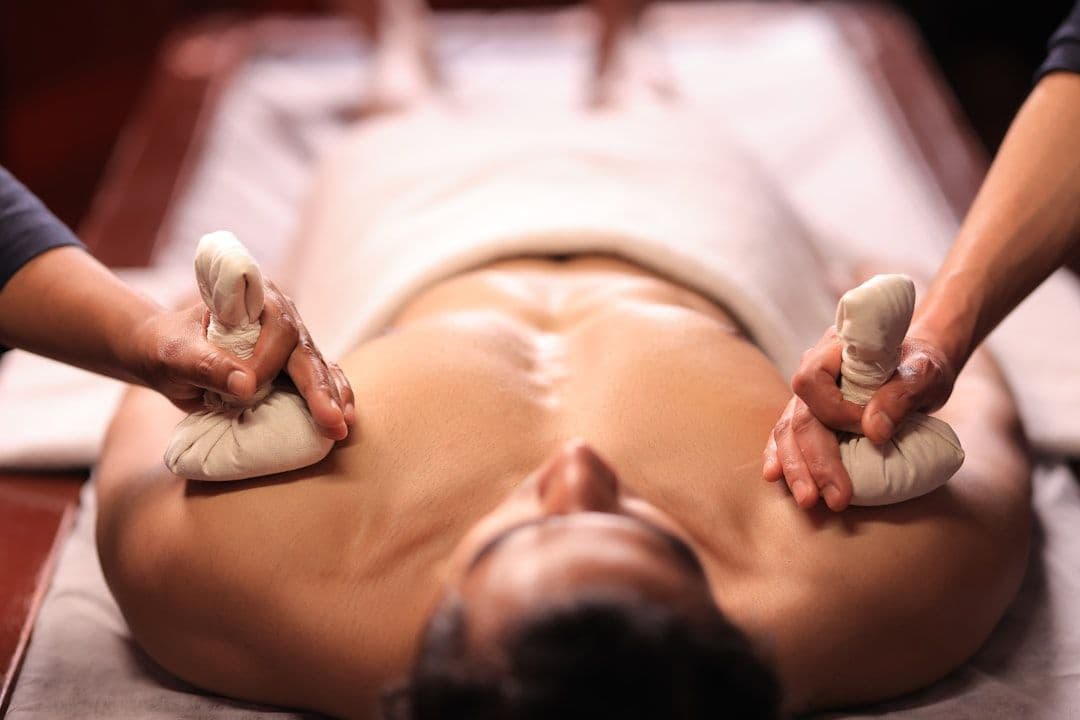
What Makes Deep Tissue Different
Your therapist's elbow presses steadily into the knot beside your shoulder blade, holding the pressure as your breath deepens and the tissue gradually softens. This isn't the flowing effleurage of Swedish massage or the gentle lymphatic drainage of other modalities. Deep tissue massage works differently—applying sustained, focused pressure to reach muscle layers that lighter touch cannot access.
The technique targets what practitioners call "holding patterns"—areas where muscle fibres have shortened and adhered to surrounding fascia through repetitive use, poor posture, or compensation patterns following injury. Unlike massage aimed at relaxation, deep tissue work specifically addresses these mechanical restrictions, often requiring the client to breathe through momentary discomfort as chronically tight areas begin to release.
Practitioners use their forearms, elbows, and reinforced fingertips rather than just palms, allowing them to penetrate through superficial muscle layers to reach deeper structures. The pressure is firm but controlled, applied along the direction of muscle fibres rather than across them.
From Swedish Roots to Modern Practice
Deep tissue massage evolved from Swedish massage techniques developed by Per Henrik Ling in the early 19th century, but diverged significantly in the 1960s when American practitioners began emphasising deeper pressure and structural work. Therese Pfrimmer, an American massage therapist, pioneered many contemporary approaches after using deep pressure techniques to address her own paralysis following a car accident.
The practice gained momentum alongside the sports medicine boom of the 1970s and 80s, as athletes and physiotherapists recognised its potential for addressing overuse injuries and chronic tension patterns. Today's approach incorporates insights from myofascial release, trigger point therapy, and neuromuscular re-education, creating a more targeted intervention than its historical predecessors.
Modern deep tissue work has also been influenced by structural integration methods like Rolfing, borrowing concepts about fascial restrictions and postural compensation patterns whilst maintaining massage therapy's regulatory framework and accessibility.
The Dual Mechanism of Relief
Deep tissue massage operates through both mechanical and neurological pathways. Mechanically, the sustained pressure helps lengthen shortened muscle fibres and break down adhesions between muscle and fascia—the connective tissue wrapping that can become sticky and restrictive. This physical manipulation can genuinely increase range of motion and reduce muscular stiffness.
Simultaneously, the pressure stimulates nerve fibres that activate the body's pain-inhibiting systems through what researchers call the "gate control" mechanism. Essentially, the sensory input from deep pressure can override pain signals travelling to the brain, providing relief that outlasts the treatment itself.
The technique also triggers measurable changes in stress hormones. Studies show that deep tissue massage reduces cortisol levels whilst increasing oxytocin—biochemical shifts that promote both pain relief and general relaxation. This neurochemical response explains why people often feel both physically and emotionally lighter after treatment, even when addressing purely mechanical problems.
Who Finds Relief Through Deep Work
Deep tissue massage shows particular promise for people with chronic low back pain, with several randomised controlled trials demonstrating significant improvements compared to usual care. Office workers with persistent neck and shoulder tension from postural strain often report meaningful relief, especially when treatments address both the tight areas and their underlying muscular imbalances.
Athletes use deep tissue work both for injury recovery and performance maintenance. Research supports its effectiveness for delayed onset muscle soreness and some overuse injuries, though timing matters—it's most beneficial during recovery phases rather than immediately before competition.
People with fibromyalgia represent another group who may benefit, though responses vary considerably. Some find the pressure exacerbates their sensitivity, whilst others report that regular deep tissue work helps reduce their overall pain levels. The key lies in finding a practitioner experienced with chronic pain conditions who can modify pressure appropriately.
What to Expect in a Session
A typical session begins with the therapist assessing your posture, range of motion, and specific areas of concern. This isn't a full-body relaxation massage—expect to spend most of the 60-90 minutes focused on particular problem areas rather than receiving general coverage.
The work itself involves sustained pressure applied gradually. Your therapist will often ask you to breathe deeply and may request feedback about pressure levels, as the goal is therapeutic discomfort rather than pain. You might feel immediate relief in some areas, whilst others may feel temporarily tender before improving over the following days.
Communication throughout the session is essential. Effective deep tissue work requires collaboration between you and your therapist to find the pressure level that challenges tight tissues without overwhelming your nervous system. Many people describe the sensation as "good pain"—uncomfortable but clearly beneficial.
The Evidence Landscape
Research on deep tissue massage shows moderate-quality evidence for several conditions. A 2014 systematic review found it more effective than Swedish massage for chronic low back pain, with benefits lasting several weeks post-treatment. Studies on delayed onset muscle soreness consistently show reduced pain and improved function compared to no treatment.
However, methodological challenges limit our understanding. Many studies compare deep tissue massage to other massage types rather than to no intervention, making it difficult to isolate its specific benefits. Individual variation in response is considerable—what works well for one person may be ineffective or uncomfortable for another.
The evidence is weaker for conditions like tension headaches and arthritis, where preliminary studies show promise but larger trials are needed. Much of the supporting evidence comes from clinical practice rather than controlled research, reflecting both the personalised nature of the work and the challenges of standardising such treatments for research purposes.
Finding Skilled Practitioners
Effective deep tissue massage requires significant skill and experience. Look for therapists registered with the Complementary & Natural Healthcare Council (CNHC) or members of professional bodies like the Federation of Holistic Therapists (FHT). These organisations require continuing education and maintain professional standards.
Expect to pay £40-80 per session in most UK locations, with London practitioners typically charging more. Initial treatments may require 90 minutes to allow for assessment and education about self-care, whilst maintenance sessions often work well at 60 minutes.
Frequency depends on your specific condition and goals. Chronic issues may benefit from weekly sessions initially, tapering to fortnightly or monthly maintenance once improvements stabilise. Acute problems might resolve within 2-4 sessions, whilst postural issues often require longer-term management alongside strengthening exercises and ergonomic adjustments.