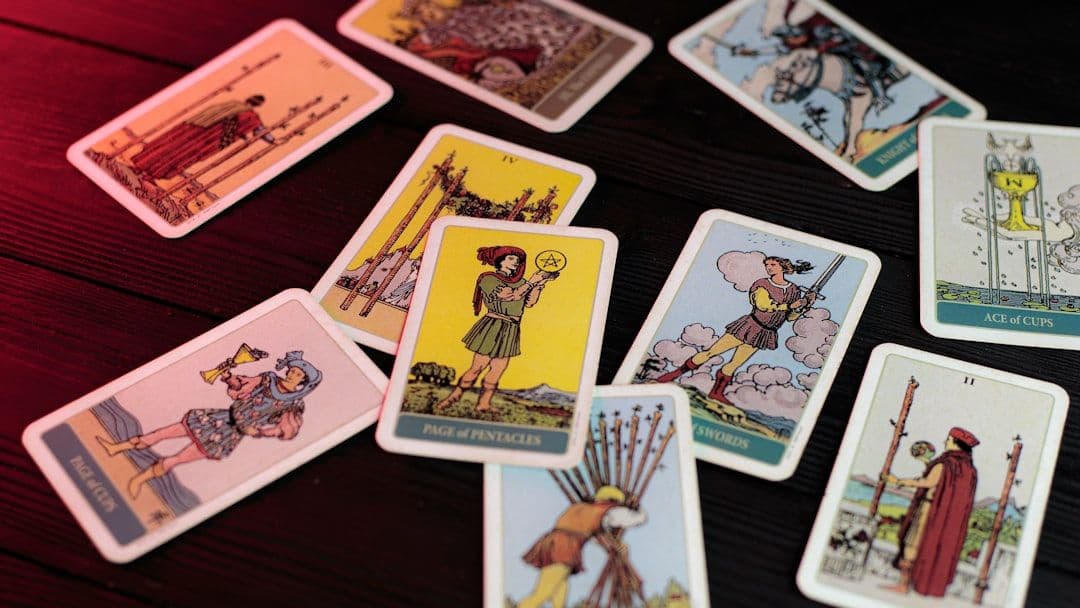
The Research Landscape
Divination occupies a unique position in the research world. Unlike many complementary practices that have transitioned into clinical investigation, divination resists conventional study design by its very nature.
No randomised controlled trials examine whether tarot readings predict future events, nor do systematic reviews analyse the accuracy of astrological forecasts. This absence reflects not a research oversight, but a fundamental mismatch between divination's purpose and conventional scientific methodology.
The limited academic literature that does exist approaches divination through psychology, anthropology, and religious studies rather than clinical medicine. These disciplines recognise divination as a cultural practice with its own internal logic, rather than a therapeutic intervention requiring validation through clinical trials.
Psychological Research Findings
The strongest research evidence comes from psychological studies examining how people use divination tools for reflection and decision-making. Several small-scale studies suggest that engaging with symbolic systems like tarot can enhance introspective thinking.
Research on cognitive psychology indicates that divination practices may function as sophisticated projection techniques, allowing people to externalise internal conflicts and examine them from new angles. One study of 60 participants found that those using structured symbolic frameworks reported clearer thinking about personal dilemmas compared to unstructured reflection.
Anthropological research documents divination's role across cultures as a decision-making support system, suggesting these practices serve consistent psychological functions regardless of their predictive accuracy. This research treats divination as a form of cultural technology for processing uncertainty and ambiguity.
Methodological Challenges and Gaps
Traditional research methodology struggles with divination for several fundamental reasons. Controlled studies typically require standardised interventions, but divination readings are inherently personalised and interpretive. Double-blinding becomes meaningless when the practice explicitly involves subjective interpretation.
Moreover, divination's value doesn't depend on objective accuracy. A tarot reading that helps someone clarify their feelings serves its purpose whether or not it predicts specific outcomes. This creates a category error when applying medical research frameworks to metaphysical practices.
The few studies that attempt to measure divination's predictive accuracy often misunderstand the practice's function. They test for literal prediction rather than examining how symbolic interpretation influences thought processes, decision-making, or emotional processing.
Traditional Knowledge vs. Clinical Evidence
Within divination traditions, effectiveness is measured differently than in clinical research. Practitioners evaluate success through the quality of insights generated, the clarity brought to decision-making, and the sense of connection or meaning experienced by clients.
These traditions operate on principles that don't require scientific validation. Jungian psychology offers some theoretical framework through concepts like synchronicity and archetypal symbolism, but divination practitioners often work from entirely different paradigms about consciousness, intuition, and meaning-making.
The evidence that matters within these traditions comes from centuries of cultural transmission, practitioner experience, and user testimony. This represents a parallel knowledge system rather than a gap in scientific understanding.
Future Research Directions
Meaningful research on divination would likely come from fields other than clinical medicine. Psychological studies could explore how symbolic thinking affects problem-solving and creativity. Neuroscience might examine brain activity during intuitive interpretation processes.
Anthropological research could further document divination's role in different cultural contexts, while qualitative studies might explore how people integrate divination insights into their decision-making processes. These approaches would respect the practice's own framework rather than imposing inappropriate clinical standards.
The most productive research questions focus not on whether divination predicts the future, but on how engaging with symbolic systems affects human cognition, emotion, and behaviour. This represents a fundamentally different research paradigm that honours the practice's actual function and cultural significance.