What it is
Divination uses symbols like tarot or runes as frameworks for reflection and personal insight.
Divination is a metaphysical practice that uses symbolic systems and intuitive methods—such as tarot, astrology, runes, and oracle card...
At a glance
What it is
Divination uses symbols like tarot or runes as frameworks for reflection and personal insight.
Why explore it
Many find divination helpful for self-discovery, decision-making, and gaining fresh perspective during life transitions.
How it’s experienced
A reader interprets symbols around your questions, sparking reflection and prompts for deeper personal exploration.
Evidence context
No scientific studies support predictive accuracy, but many find its reflective, symbolic framework personally meaningful.
See the evidence snapshotSafety
Generally low-risk, but rely on qualified professionals for medical or mental health concerns, not divination.
See staying safeHistory & Origin
Divination involves using mystical practices to gain insights, answers, and guidance for various aspects of life.
Divination practices have ancient roots spanning virtually all human cultures. Archaeological evidence suggests forms of divination existed in ancient Mesopotamia, Egypt, China, and Greece, where priests and shamans used methods like bone casting, animal entrails reading, and star observation to interpret divine will and natural patterns. These practices were often intertwined with religious beliefs, healing traditions, and governance, reflecting humanity's fundamental desire to understand the future and navigate uncertainty.
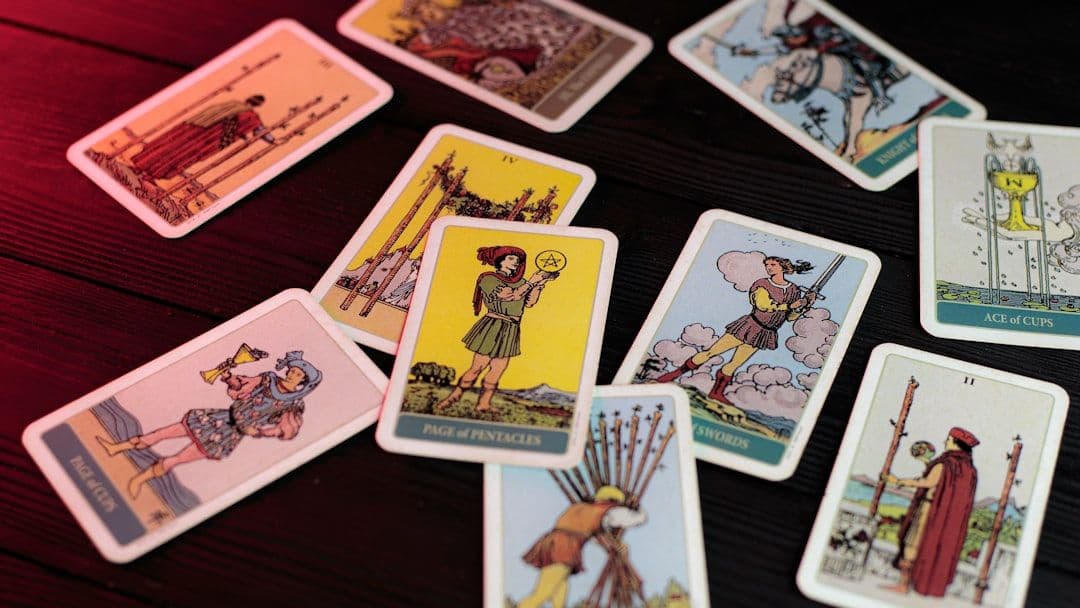
Tarot cards evolved during the Renaissance in Italy as playing cards before being adapted for divination in the 18th century, particularly in France and occult circles. Astrology, one of the oldest divination systems, developed in Babylon and Hellenistic Greece, blending astronomical observation with mythological interpretation. The modern divination revival gained momentum during the 19th and 20th centuries through the Spiritualist movement and the rise of New Age philosophy, which reframed these practices as tools for personal insight rather than fortune-telling.
Key figures in modern divination include Arthur Edward Waite and Pamela Colman Smith, who created the influential Rider-Waite tarot deck in 1909, and contemporary teachers who have brought divination into mainstream wellness spaces. The spread of divination practices accelerated through popular media, online communities, and the integration of these tools into broader complementary health and spiritual practices. Today, divination exists in diverse forms across cultures, adapted to individual and contemporary spiritual frameworks while maintaining connections to historical roots.
Approaches
Divination isn’t a single method. Practitioners may train in one tradition or blend several — here are the styles you’re most likely to meet.
Uses symbolic cards as prompts for reflection, meaning-making, or spiritual guidance.
Uses hexagrams and traditional commentary to explore a question or situation.
Uses rune symbols from Germanic traditions for reflection or divinatory interpretation.
Uses a pendulum or rod to seek yes/no or directional responses, usually within a spiritual or intuitive framework.
Mechanism
Divination is best framed as a traditional, symbolic, energetic, reflective, or spiritual practice rather than a validated medical mechanism. Practitioners may use ritual, attention, sound, imagery, touch-free work, cards, symbols, prayer, or intention to support meaning-making and a sense of connection. People may explore it for reflection, calm, or spiritual context, while health claims should remain cautious and personal. Divination operates on the principle that meaningful patterns or messages can be accessed through specific tools or practices — whether tarot cards, astrology, runes, or other symbolic systems — which serve as frameworks for interpreting hidden or intuitive knowledge.
Your first visit
A typical session outline to help you feel prepared
A divination session guides you through a symbolic reading using tools like tarot or runes, offering reflection and insight into your questions and path.
Your practitioner greets you and helps you feel at ease, often in a quiet, softly lit space. There's no rush — take a breath and arrive fully.
You'll talk briefly about what's on your mind — a question, a life area, or simply an openness to whatever comes. This helps your practitioner focus the reading meaningfully.
Your practitioner will explain the divination system they use, whether tarot, astrology, runes, oracle cards, or another tradition. They may ask if you have a preference or familiarity.
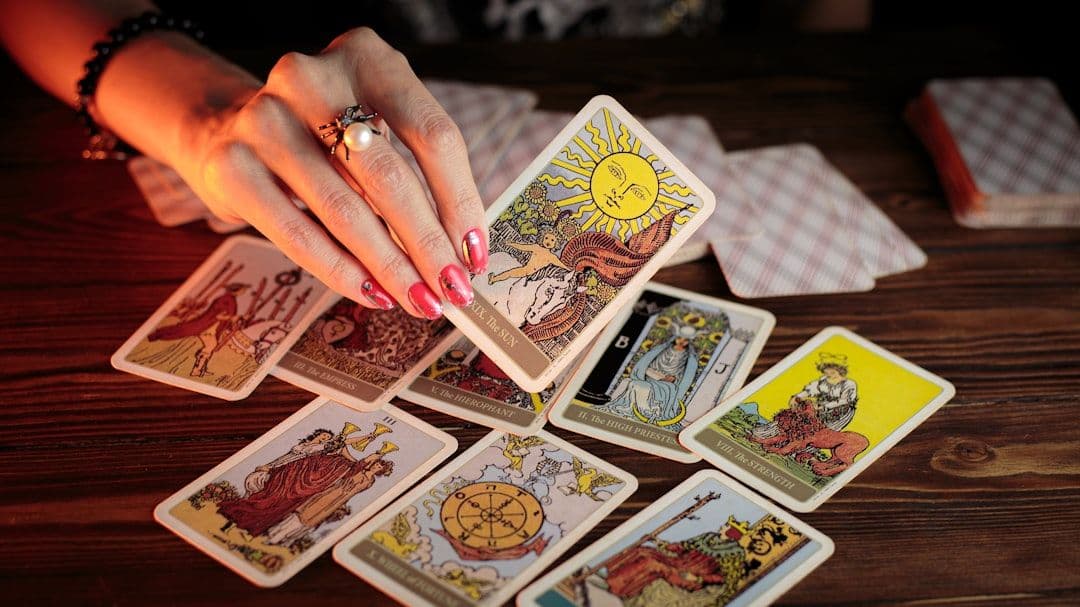
Your practitioner draws, casts, or arranges the chosen symbols in a specific spread or pattern. This is a quiet, intentional moment — some practitioners invite you to shuffle or handle the tools yourself.
Your practitioner interprets each card, rune, or symbol aloud, weaving them into a narrative around your question. This is the heart of the session and typically takes 20 to 40 minutes.
You're encouraged to respond, ask follow-up questions, or share what resonates. This is a conversation, not a performance — your reactions help deepen the interpretation.
Your practitioner summarizes key themes and any patterns that emerged, offering a grounded takeaway you can carry with you. Some will pull a final card as a closing message.
You may be offered notes or photos of your spread to revisit later. Journaling after your session can help you process what landed, and many people return periodically as new questions arise.
The Evidence
What research and tradition tell us about divination as a reflective and metaphysical practice.
A metaphysical practice valued for reflection, not prediction
Divination sits outside conventional scientific frameworks and cannot be evaluated by standard research methods. Its reported value lies in structured reflection and meaning-making rather than any empirically measurable mechanism.
As a Metaphysical modality, divination is not evaluated against biomedical standards. Its value is understood through personal meaning, symbolic interpretation, and spiritual or intuitive frameworks. Gyfts presents it as a tool for self-exploration, not as a health intervention.
Divination cannot be studied using randomised controlled trials or standard empirical methods. The subjective nature of symbolic interpretation makes measurement impossible by conventional means. Evidence for benefit is limited to self-report and traditional use, not clinical research.
Research on reflective practices indicates that pausing to consider a question symbolically can prompt perspective shifts and reduce decision fatigue. Any benefit from divination likely arises from this reflective process rather than a supernatural mechanism. Similar effects are observed in journaling and guided conversation.
From Mesopotamian bone casting to Hellenistic astrology and Renaissance tarot, divination has served as a tool for navigating uncertainty and seeking meaning. These traditions reflect a longstanding human need to find pattern and guidance — a context worth understanding even when the mechanisms are not scientifically established.
Those experiencing severe anxiety, depression, or difficulty distinguishing reality from fantasy should consult a mental health professional before engaging with divination. Healthy practice supports your own reflection and decision-making — it should not create dependency on a practitioner or be used to guide serious medical decisions.
Look for practitioners who are clear about what divination is and is not, who avoid inflated outcome claims, and who encourage your own agency rather than dependency. A reputable practitioner will not discourage you from seeking professional care for health or mental health concerns alongside their sessions.
Safety first
General guidance to help you decide whether this approach is appropriate for you. This is informational only and not a substitute for medical, psychological, or professional advice.
If you are pregnant, managing a health condition, recovering from injury or surgery, or taking medication, consult a qualified healthcare professional first.
Some situations call for extra care or a different approach. Share any conditions, injuries, or sensitivities with your practitioner before your first session.
Look for clear boundaries, transparent pricing, and practitioners who avoid fear-based claims or pressure to book frequent sessions.
Mild, short-lived effects such as tenderness, tiredness, or temporary soreness can occur. Rest, hydrate, and tell your practitioner how you respond.
For you?
A simple, human way to weigh it up. This is general guidance, not personal medical advice — a qualified practitioner can advise on your situation.
Gyfts is a discovery platform, not a medical provider. Nothing here diagnoses, treats or replaces professional care. In an emergency, contact your local emergency number.
Explore approaches
Other practices people often explore alongside divination.
In their words
FAQ
A typical session begins with conversation about your questions or areas of focus. The practitioner then uses their chosen method—tarot, astrology, runes, oracle cards, or another system—to generate symbols or information. They interpret these symbolically in relation to your situation, sharing observations and asking reflective questions. Sessions typically last 30 minutes to an hour and are collaborative, with space for your questions and reactions.
This is entirely personal. Some people have a single reading for specific guidance, while others visit regularly—monthly, quarterly, or annually—as part of their spiritual practice. There is no prescribed number; frequency depends on your goals, preferences, and budget. Many practitioners recommend spacing readings to allow time for reflection and integration between sessions.
Divination operates outside the scientific paradigm and cannot be tested using standard scientific methods. No randomized controlled trials support divination as a predictive tool. However, many people report that divination sessions provide valuable reflection and perspective. Its value lies in the reflective process rather than supernatural prediction, similar to journaling or conversation with a trusted advisor.
Divination is not designed to predict fixed future outcomes. Rather, it offers perspectives on current patterns, energies, or symbolism related to your situation. The future remains open and shaped by your choices. Divination practitioners typically frame readings as reflective tools that help clarify your thinking, not as prophecies.
Ethical divination practitioners present insights and perspectives without directing your choices. The purpose is to support your own reflection and decision-making, not to replace your judgment. Divination works best when you remain the active agent in your life, using insights as information rather than commands.
Seek practitioners who are transparent about their methods, offer clear pricing with no hidden costs or pressure for repeat readings, and have positive reviews or referrals. Ethical practitioners maintain professional boundaries, do not make guarantees about outcomes, and encourage you to use divination as part of a balanced approach to decision-making and wellness.
Skepticism is healthy and entirely compatible with exploring divination. Many people benefit from divination as a reflective tool regardless of belief in supernatural mechanisms. If you approach it with openness to the process while maintaining critical thinking, you may find value in how it prompts self-reflection and new perspectives on your situation.
References
Educational sources that inform this overview. Inclusion is for context and does not imply endorsement.
Full citations are maintained by the Gyfts editorial team and reviewed periodically.
Keep exploring
Browse practitioners, explore honest overviews, and take what you learn to a conversation — at your own pace.