What Divination Actually Involves
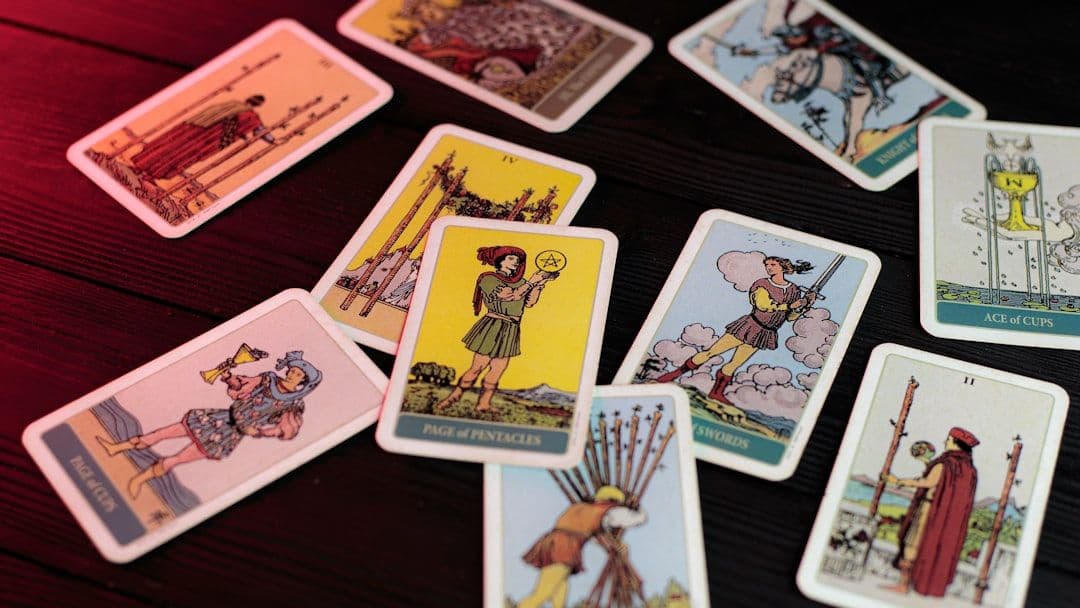
Watch a tarot reader lay out the Celtic Cross spread, and you'll see something quite specific: ten cards arranged in a precise pattern, each position representing different aspects of a question — past influences, present circumstances, potential outcomes. The reader doesn't claim to see a fixed future written in the cards. Instead, they're using the imagery and symbolism that emerges to create a framework for reflection.
Divination encompasses numerous practices that use symbolic systems to explore questions about life, relationships, career, and personal growth. Tarot and oracle cards offer visual metaphors through archetypal imagery. Astrology maps personality traits and life themes through planetary positions. Runes draw on ancient Nordic symbols. I Ching uses hexagram patterns from Chinese philosophy. Each system provides its own vocabulary for examining situations from different angles.
The common thread isn't supernatural prediction but rather structured contemplation. A skilled practitioner helps you explore what the symbols might mean for your particular situation, often revealing perspectives you hadn't considered.
Ancient Systems, Modern Applications
Divination traditions stretch back millennia across virtually every culture. Ancient Mesopotamians read omens in bird flight patterns and sheep livers. The Chinese I Ching emerged over 3,000 years ago as a philosophical system for understanding change. Tarot evolved from 15th-century Italian playing cards, developing its divinatory associations through Renaissance esoteric traditions.
What's fascinating is how these practices have adapted to contemporary life whilst retaining their symbolic frameworks. Modern astrology blends psychological insights with traditional planetary meanings. Tarot readers might discuss career transitions using imagery that would have mystified medieval practitioners. Oracle card decks address everything from business decisions to environmental consciousness.
This evolution reflects divination's core function: providing metaphorical language for examining life's complexities. The symbols remain constant, but their interpretations shift with cultural understanding and personal needs.
How the Process Unfolds
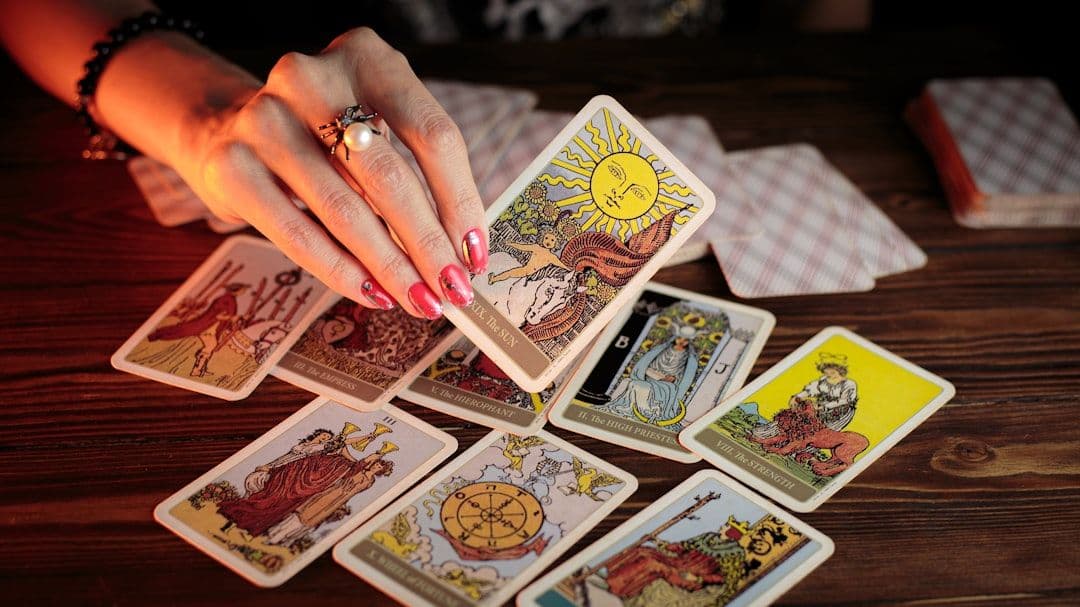
Within divinatory traditions, the practice works through symbolic resonance — the idea that meaningful patterns emerge when you focus intention on a question whilst engaging with a symbolic system. A tarot reader shuffles cards whilst you hold your question in mind, then draws cards whose imagery and position create a narrative framework for exploration.
Astrological divination calculates planetary positions at significant moments — your birth, a decision point, or current transits — then interprets how these celestial patterns might reflect earthly themes. Rune casting involves drawing carved symbols from a bag or casting them onto a cloth, with their positions and combinations suggesting different perspectives on your question.
The interpretive process relies heavily on pattern recognition and metaphorical thinking. A skilled practitioner combines knowledge of their chosen system's traditional meanings with intuitive responses to what emerges, helping you explore how the symbols might relate to your specific circumstances. The value lies not in literal prediction but in the insights that arise through this reflective dialogue.
Who Seeks Symbolic Guidance
People often turn to divination during transition periods — career changes, relationship decisions, or times when conventional analysis feels insufficient. It appeals particularly to those who think metaphorically and find meaning in symbolic connections.
Creative professionals frequently use divination for inspiration and perspective-shifting. Business owners might consult tarot when facing strategic decisions, using the cards' imagery to explore options they hadn't fully considered. People navigating relationship complexities often find the structured reflection helpful for understanding their own patterns and motivations.
Divination also serves those interested in contemplative practices that combine personal insight with traditional wisdom. Unlike purely analytical approaches, it engages imagination and intuition, offering a different pathway to self-understanding.
What to Expect in Practice
A typical divination session begins with clarifying your question or area of focus. Good practitioners spend time helping you articulate what you're really asking, as vague questions tend to produce unhelpful responses regardless of the symbolic system used.
For tarot, you'll watch the reader shuffle and lay out cards in specific patterns — simple three-card spreads for straightforward questions or complex layouts like the Celtic Cross for deeper exploration. They'll explain each card's traditional meaning, then discuss how its imagery might relate to your situation. Astrology sessions involve calculating your birth chart or examining current planetary transits, with interpretation focusing on themes and potential rather than fixed outcomes.
The best sessions feel like guided conversations where the symbols serve as starting points for deeper reflection. You might find yourself making connections you hadn't expected or seeing familiar situations from fresh angles. Sessions typically last 45-90 minutes and often include written summaries or photos of card spreads for later contemplation.
Choosing Practitioners and Approaches
Divination practitioners vary enormously in training, approach, and philosophy. Some focus purely on traditional interpretations of their chosen system, whilst others blend psychological insights or spiritual counselling into their readings.
Look for practitioners who emphasise empowerment rather than dependency — they should help you develop your own relationship with the symbols rather than positioning themselves as mystical authorities. Avoid anyone who claims to predict specific events or encourages major decisions based solely on a reading.
Sessions typically cost £30-80 per hour, with experienced practitioners often charging more. Many cities have metaphysical shops offering consultations, and online sessions have become increasingly common. Some practitioners offer teaching sessions where you learn to work with the symbols yourself.
Whilst formal qualifications don't exist for most divination practices, look for practitioners with substantial experience in their chosen system, good communication skills, and clear ethical boundaries. The best readers help you explore possibilities rather than claiming to reveal absolute truths.