The Sound of Healing
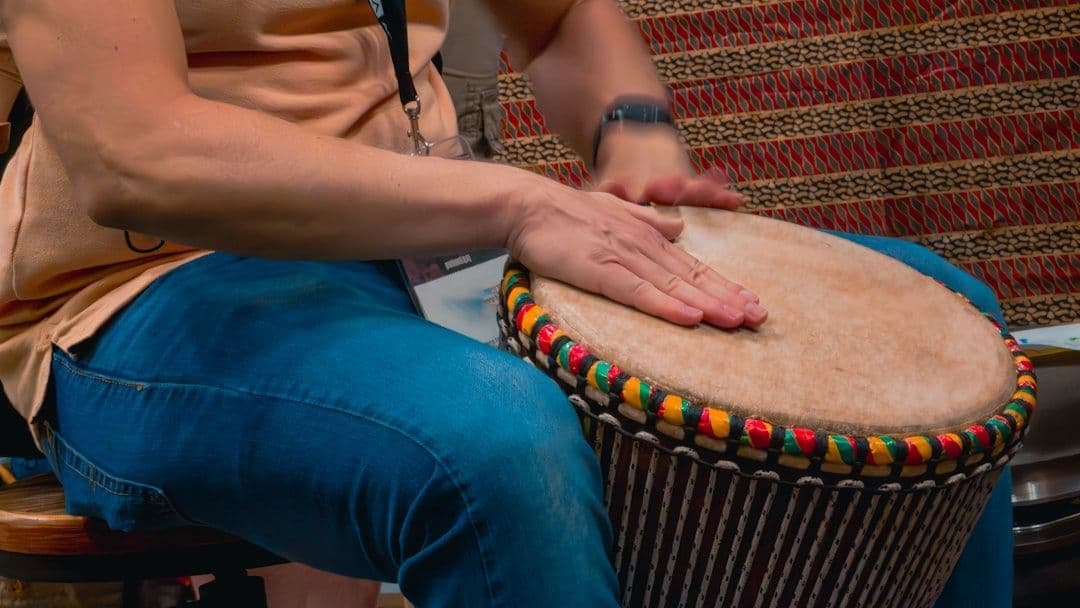
The steady thrum of a hand drum fills the therapy room as participants find their rhythm. Some beat slowly, methodically. Others build intensity, their hands moving faster as emotions surface and release. This is drum therapy — a practice that transforms simple percussion into a pathway for emotional processing and mental wellbeing.
Unlike music therapy's focus on melody and composition, drum therapy centres entirely on rhythm and vibration. Participants use frame drums, djembes, or even simple hand percussion to create repetitive patterns that gradually shift their mental state. The drums become both instrument and outlet — a way to express what words cannot capture whilst simultaneously receiving the neurological benefits of rhythmic entrainment.
From Ancient Ritual to Modern Practice
Rhythmic drumming for healing spans virtually every culture on Earth. Indigenous communities across the Americas, Africa, and Australia have long recognised drumming's capacity to facilitate altered states of consciousness and emotional release. Shamanic traditions use sustained drumming to induce trance states for spiritual healing, whilst West African griots employ polyrhythmic patterns to process community trauma and celebration alike.
The contemporary therapeutic application emerged in the 1980s through the work of music therapists and ethnomusicologists who began documenting drumming's measurable effects on stress and mood. Unlike traditional ceremonial drumming, modern drum therapy adapts these ancient techniques for clinical settings, removing cultural specifics whilst preserving the core mechanism of rhythmic entrainment.
How Rhythm Changes the Brain
Drum therapy operates through entrainment — the fascinating process by which your brainwave frequencies synchronise with external rhythms. When you engage with sustained, repetitive beats around 4-8 cycles per second, your nervous system naturally aligns with this pattern, shifting towards the slower alpha and theta brainwave states associated with deep relaxation and introspective awareness.
This neurological shift bypasses your usual cognitive processing. Rather than thinking through emotions, you access them directly through the body. The physical act of drumming provides what researchers call 'bilateral stimulation' — coordinated movement that activates both brain hemispheres whilst offering a somatic outlet for stored tension. Many participants report feeling emotions 'move through' them during sessions, as if the rhythm helps process what talk therapy alone cannot reach.
Who Finds Rhythm Healing Helpful
Drum therapy particularly appeals to people who struggle with traditional verbal processing. Those who describe feeling 'stuck in their heads' often find the physical, non-verbal nature liberating. Creative individuals frequently gravitate towards drum therapy as it offers emotional expression without requiring artistic skill or self-judgment.
The practice shows particular promise for anxiety and stress-related conditions. The repetitive nature naturally calms an overactive nervous system, whilst the physical engagement helps discharge accumulated tension. Some trauma therapists integrate drumming into their practice, finding that rhythmic expression can help clients process experiences stored in the body rather than just the mind.
People with depression often benefit from the energising aspects of drumming. Unlike purely receptive therapies, drum therapy demands active participation, which can help counter the lethargy and disconnection that characterise depressive episodes.
Inside a Drum Therapy Session
A typical session begins quietly. Your practitioner might guide you through breathing exercises or gentle stretching before introducing the drums. You'll start with simple, slow rhythms — perhaps matching your heartbeat or breathing pattern. There's no 'correct' technique; the focus is on finding your natural rhythm and following where it leads.
As the session progresses, you might explore different tempos and intensities. Some practitioners incorporate guided imagery, inviting you to drum for specific emotions or life situations. Others maintain a more open structure, allowing your rhythm to evolve organically. Group sessions add the dimension of rhythmic dialogue — responding to others' beats and creating collective patterns.
Sessions typically last 60-90 minutes and conclude with quiet reflection or gentle discussion about what arose. Many people report feeling both energised and deeply relaxed afterwards — a paradoxical state that reflects drumming's unique combination of activation and release.
The Emerging Evidence Base
Research on drum therapy remains in early stages, though initial findings are encouraging. Small studies suggest that regular drumming can reduce cortisol levels, improve mood markers, and enhance immune function. A 2014 pilot study with 30 participants found significant reductions in anxiety and depression scores after six weeks of group drumming sessions.
Neuroimaging research reveals fascinating changes in brain activity during drumming, including increased connectivity between hemispheres and enhanced production of endorphins and dopamine. However, most studies involve small participant groups and lack the robust controls needed for definitive conclusions. The mechanisms around rhythmic entrainment show promise but require larger-scale investigation.
Clinically, many therapists report that clients who engage with drum therapy show improved emotional regulation and stress management. These observations, whilst not constituting formal evidence, suggest that drumming may offer genuine therapeutic benefits when integrated thoughtfully into treatment plans.
Finding Your Rhythm
Individual drum therapy sessions typically cost £40-80, whilst group sessions range from £15-25. Many practitioners offer both formats, allowing you to choose based on your comfort level and specific needs. Sessions are usually weekly initially, though frequency can be adjusted based on your response and goals.
Look for practitioners with training through recognised bodies like the Federation of Holistic Therapists or specific drum therapy qualifications from established programmes. Many qualified music therapists also incorporate drumming into their practice. Ask about their training background and experience working with your particular concerns.
Some areas offer community drumming circles as an introduction to rhythmic healing, though these differ from therapeutic sessions in their structure and intention. If you're dealing with significant mental health challenges, ensure any practitioner you choose has appropriate training to support emotional processing that may arise during sessions.