Preparing for Your Horse's Session
Book your equine Reiki session for a time when your horse is typically calm and the yard is quiet. Most practitioners prefer to work in the horse's familiar environment — their stable or usual field — rather than moving them to an unfamiliar location.
Ensure your horse has been fed and watered normally, but avoid scheduling immediately after a large meal when they might be sleepy. Remove any restrictive tack, though a well-fitting head collar is usually fine. The practitioner will need clear access around your horse, so tidy the area of tools, feed buckets, or anything that might create distractions.
You don't need to prepare anything special, though having your horse's usual grooming kit available can help if they enjoy being brushed as part of their relaxation routine. Some practitioners appreciate knowing your horse's recent history — any injuries, veterinary treatments, or behavioural concerns — so they can focus appropriately during the session.
How the Session Unfolds
The practitioner will begin by observing your horse from a distance, noting their posture, energy levels, and any areas of obvious tension or discomfort. This assessment phase typically lasts 5-10 minutes as they allow your horse to become accustomed to their presence.
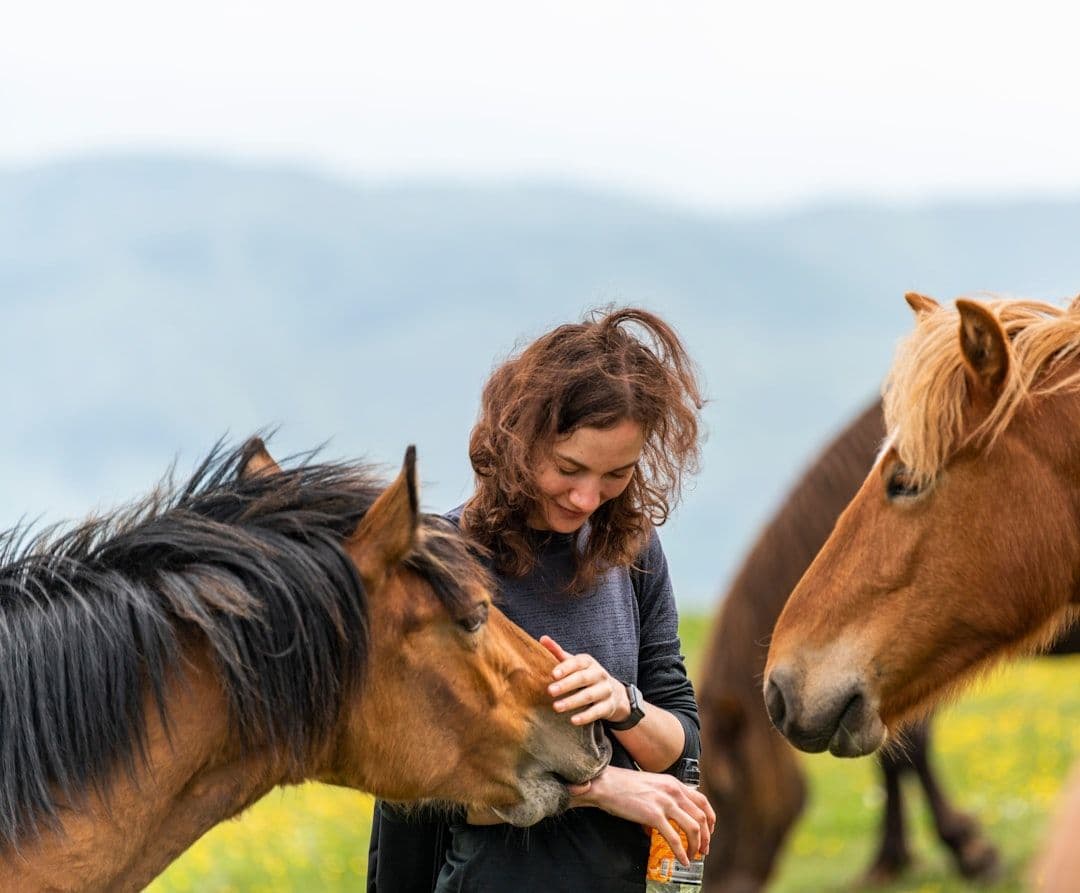
The hands-on portion begins gently. The practitioner will approach slowly, often starting with areas where horses commonly enjoy contact — the neck or shoulder. They place their hands lightly on your horse's body or hold them just above the coat surface. You might notice their hands remain stationary for several minutes at each position, working systematically across your horse's body.
Most horses respond within the first 15-20 minutes. You may observe your horse lowering their head, shifting weight to rest a hind leg, or developing a soft, relaxed expression around their eyes. Some horses lean into the practitioner's touch or position themselves to direct attention to specific areas. Others initially appear restless or fidgety before settling.
Sessions usually conclude with time spent near your horse's head and poll area, as many animals find this particularly soothing. The entire process typically spans 45-60 minutes, though sensitive horses may need shorter initial sessions.
What Your Horse Might Experience
During treatment, horses commonly display visible relaxation responses. You might notice deeper breathing, muscle softening, or your horse adopting a classic 'resting' posture with one hip dropped and a hind leg cocked. Some horses become so relaxed they appear almost meditative, with half-closed eyes and lowered heads.
Not all horses respond identically. Some remain alert throughout the session whilst still benefiting from the focused attention and gentle contact. Others may initially move away from certain hand positions, which practitioners interpret as the horse directing treatment to areas that feel more comfortable.
After sessions, many horses appear brighter and more engaged with their environment. Owners frequently report improved appetite, better sleep patterns, or positive changes in behaviour towards other horses or handlers. Some horses seek out their owners more actively or show increased willingness to be touched in previously sensitive areas.
Physical changes can be subtle but meaningful. A horse that typically holds tension in their neck might carry their head more naturally, or one that consistently favoured a particular leg might move with improved evenness.
Post-Session Care
Keep your horse's routine as normal as possible for the remainder of the day. Many animals benefit from quiet turnout time or staying in their familiar stable rather than intense exercise or training immediately afterwards.
Provide fresh water and their usual feed, as some horses show increased thirst following sessions. Others may be less interested in food initially, then show improved appetite over the following day or two.
Monitor your horse's behaviour and movement over the next 48-72 hours. Changes often develop gradually rather than appearing immediately. Some horses seem more settled within hours, whilst others show progressive improvement over several days.
Avoid introducing stressful situations — intensive training, veterinary procedures, or significant routine changes — for at least 24 hours when possible. This allows time for any energetic shifts to integrate without additional pressure.
Treatment Plans and Expectations
Most practitioners recommend an initial course of 3-4 sessions spaced one week apart, particularly for horses with ongoing behavioural or comfort concerns. This allows time to observe cumulative effects whilst maintaining momentum.
For horses recovering from injury or illness, sessions might continue alongside veterinary treatment until improvement plateaus. Competition horses often benefit from monthly maintenance sessions during their competitive season, with additional support before major events.
Acute issues — such as stress from yard moves or mild training setbacks — sometimes resolve within 1-2 sessions. Chronic conditions typically require patience, with meaningful changes developing over 4-6 weeks of regular treatment.
Response patterns vary significantly between individuals. Some horses show immediate positive changes that build progressively. Others may have one or two sessions with minimal obvious response before showing marked improvement. Your practitioner should help you assess whether the approach suits your particular horse after the initial course.