What it is
Apitherapy uses bee products like venom, honey, propolis, and pollen for healing.
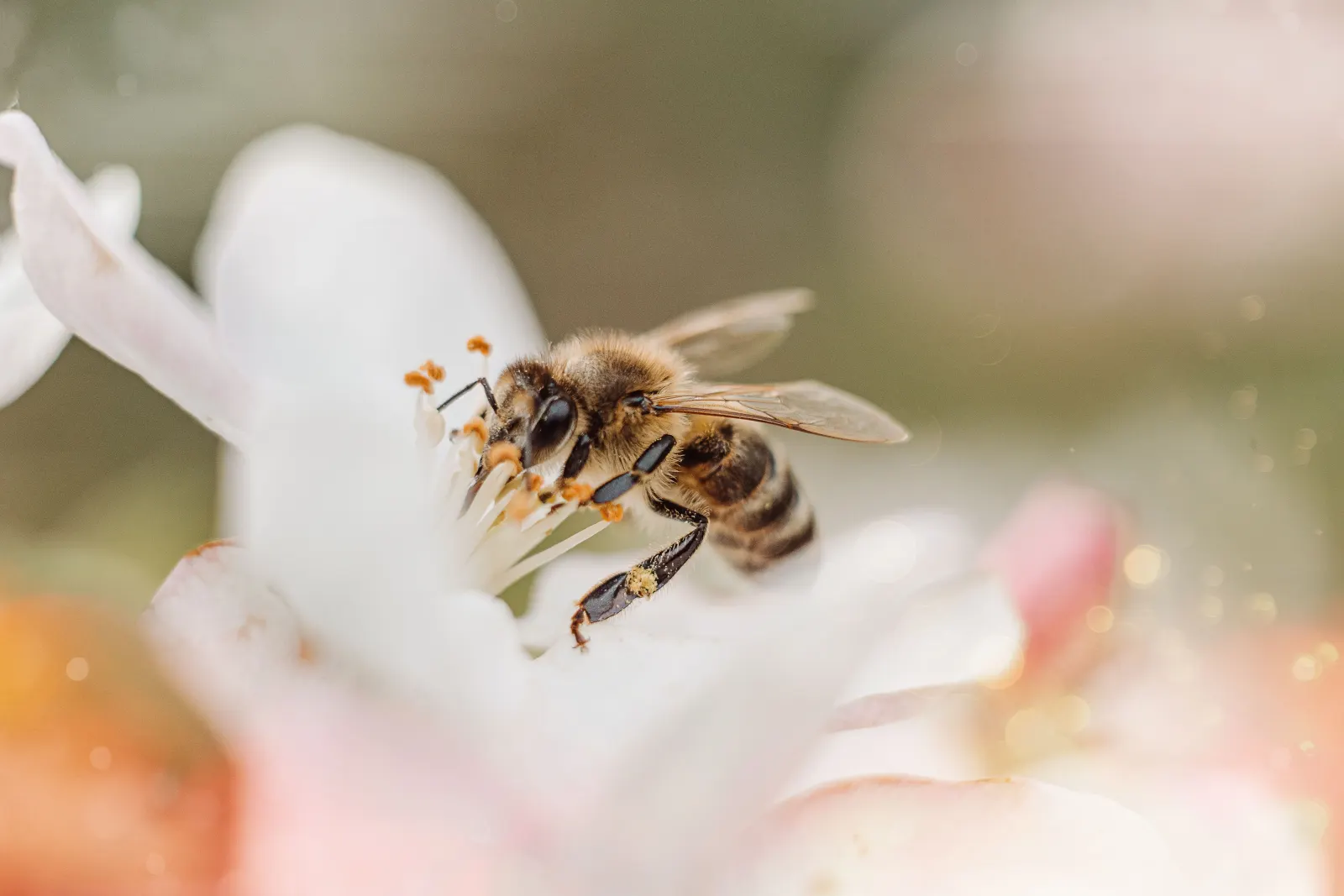
Ancient bee wisdom, explored through a modern lens.
At a glance
What it is
Apitherapy uses bee products like venom, honey, propolis, and pollen for healing.
Why explore it
Bee venom may ease joints, honey supports wound care, and propolis offers antioxidant benefits.
How it’s experienced
Sessions range from controlled bee stings to topical honey, propolis tinctures, or pollen supplements.
Evidence context
Topical honey has solid research support, while bee venom therapy shows early promise but needs more study.
See the evidence snapshotSafety
Bee venom therapy requires allergy screening and epinephrine on-site, so always loop in your doctor first.
See staying safeHistory & Origin
Apitherapy is a branch of alternative medicine that uses products derived from honeybees for therapeutic purposes. These products include bee venom, honey, propolis, royal jelly, beeswax, bee pollen, and bee bread. Rooted in ancient healing traditions and practiced across cultures for thousands of years, apitherapy has attracted renewed interest in recent decades as researchers investigate the biological properties of bee-derived compounds. Practitioners may offer it as a stand-alone approach or as a complement to conventional care, depending on the condition and the individual.
The most widely discussed and clinically studied form is bee venom therapy (BVT), in which small quantities of bee venom are introduced into the body — either through live bee stings applied to specific points on the skin or via injections of purified venom. Other forms, such as topical honey for wound care or propolis as an antimicrobial supplement, carry a considerably lower risk profile and have a longer track record of everyday use. The spectrum of apitherapy ranges from these gentler applications to the more medically complex practice of BVT.
Apitherapy sits within the broader category of alternative medicine and is considered a holistic practice in the sense that many of its traditions address the whole person rather than isolated symptoms. It is important to note that apitherapy is not a replacement for conventional medical treatment, and anyone considering it — particularly bee venom therapy — should consult a qualified healthcare provider first. The evidence base is still developing, and as with many alternative modalities, the quality and quantity of research varies considerably depending on the specific application.
The use of bee products for healing is one of humanity's oldest documented therapeutic traditions. References to honey as a medicine appear in ancient Egyptian papyri dating back more than 3,000 years, and Ayurvedic texts from ancient India reference both honey and bee stings in medicinal contexts. Ancient Greek and Roman physicians, including Hippocrates, are said to have used bee stings to treat arthritis and other joint conditions, though direct attribution requires caution given the historical record.
In folk medicine traditions across Europe, Asia, and the Americas, beekeepers who sustained frequent stings were often observed anecdotally to have lower rates of certain inflammatory conditions — an observation that fueled popular interest in venom as a therapeutic agent long before modern science could investigate it. In the late 19th and early 20th centuries, physicians in Europe began documenting case reports of bee venom use for rheumatism and related conditions, laying the groundwork for more formal investigation.
Today, apitherapy is practiced in many countries and is particularly prominent in parts of Eastern Europe, China, South Korea, and Latin America, where it is more integrated into mainstream and traditional medical systems. International organizations dedicated to apitherapy promote standardized education and safety practices, though the field remains largely outside the mainstream of Western medicine.
Mechanism
Apitherapy draws on the bioactive compounds found in bee-derived products, each of which is thought to interact with the body through distinct mechanisms.
Your first visit
A typical session outline to help you feel prepared
An apitherapy session uses bee-derived substances — from raw honey to live bee venom — to support your wellness, with each visit tailored carefully to your health history and comfort level.
Your practitioner begins by reviewing your full health history, current medications, and any known allergies, since bee venom carries real allergy risk and safety comes first here.
Before any venom-based work, a small test sting or skin sensitivity check is performed to confirm you don't have a severe allergic reaction. An epinephrine kit is kept on hand as a standard precaution.
Based on your intake and goals, your practitioner decides which bee products to use — honey, propolis, royal jelly, beeswax, or live venom — and maps out the specific body points or areas to focus on.
The skin area to be worked on is gently cleansed. If live bees are being used, the practitioner uses tweezers to guide each bee carefully onto the chosen point on your skin.
You'll feel a brief sharp pinch as the bee stings the targeted site, followed by a warm, tingling sensation that spreads outward. Most people find this intensity eases within a few minutes.
Your practitioner monitors you closely for 15 to 20 minutes after stings are applied, watching for any signs of adverse reaction and checking in on how the treated areas feel to you.
Stingers left in the skin are gently removed if needed, and the area may be soothed with raw honey or a cool compress to calm any localized redness or swelling.
Before you leave, your practitioner walks you through what to expect over the next 24 to 48 hours — some swelling is normal — and discusses how future sessions may gradually increase in dosage or frequency.
The Evidence
What research currently shows about bee-derived therapies, where the evidence is strongest, and what remains uncertain.
Promising early research, but high-quality trials remain limited
Apitherapy has a growing body of preliminary research, with topical honey for wound care holding the strongest clinical footing. Most other applications — including bee venom therapy — are supported mainly by small trials, animal studies, and observational data.
Medical-grade honey for wound care has the most established clinical literature and regulatory recognition in some countries. Bee venom therapy for musculoskeletal and neurological conditions has attracted research interest, but most studies are small, methodologically varied, or early-stage. For many traditional uses, robust evidence from large randomised controlled trials is still absent.
Compounds in bee venom — including melittin, apamin, and adolapin — are being studied for potential effects on inflammatory pathways and nerve signalling. Propolis and royal jelly are also under investigation for antimicrobial and antioxidant properties. Most findings to date come from laboratory or animal models, and translation to human clinical outcomes requires further study.
Allergy screening before bee venom therapy is considered mandatory, and epinephrine must be immediately available during sessions. BVT is contraindicated in pregnancy, known venom allergy, and immunocompromised individuals. Honey should not be given to infants under 12 months. All bee-derived supplements should be disclosed to a primary healthcare provider, particularly if medications are in use.
Honey appears in ancient Egyptian medical texts over 3,000 years old, and Ayurvedic traditions reference both honey and bee stings in therapeutic contexts. Anecdotal observations among beekeepers — noting lower rates of certain inflammatory conditions — fuelled popular interest in venom therapy long before modern research began. This historical depth informs contemporary practice but does not substitute for clinical evidence.
As an alternative modality, apitherapy is typically sought outside conventional medical pathways, though some applications — such as medical-grade honey — have crossed into clinical use in certain settings. Practitioners vary widely in training and approach. Individuals considering apitherapy are encouraged to inform their primary healthcare provider and to evaluate practitioners carefully, particularly for venom-based therapies.
Apitherapy is not a substitute for professional assessment or evidence-based care for serious conditions. Many claimed benefits lack sufficient human trial data to draw firm conclusions. Study quality, small sample sizes, and inconsistent methodologies limit confidence across most applications. Individuals should approach practitioner claims critically and maintain open communication with qualified healthcare providers.
Safety first
General guidance to help you decide whether this approach is appropriate for you. This is informational only and not a substitute for medical, psychological, or professional advice.
If you are pregnant, managing a health condition, recovering from injury or surgery, or taking medication, consult a qualified healthcare professional first.
Some situations call for extra care or a different approach. Share any conditions, injuries, or sensitivities with your practitioner before your first session.
Look for clear boundaries, transparent pricing, and practitioners who avoid fear-based claims or pressure to book frequent sessions.
Mild, short-lived effects such as tenderness, tiredness, or temporary soreness can occur. Rest, hydrate, and tell your practitioner how you respond.
For you?
A simple, human way to weigh it up. This is general guidance, not personal medical advice — a qualified practitioner can advise on your situation.
Gyfts is a discovery platform, not a medical provider. Nothing here diagnoses, treats or replaces professional care. In an emergency, contact your local emergency number.
In their words
Before you book
FAQ
Bee venom therapy (BVT) does involve the controlled application of bee stings or purified venom, but apitherapy as a whole encompasses a much wider range of practices using products like honey, propolis, and bee pollen. Many people engage with apitherapy through these lower-risk products without ever undergoing venom therapy. BVT specifically requires careful allergy screening and should only be administered by a trained practitioner in a setting equipped to handle allergic reactions.
The evidence for apitherapy is considered emerging — meaning there is early-stage and preliminary research that has generated interest, but large-scale, high-quality clinical trials are still limited for most applications. Some research on bee venom for arthritis and on medical-grade honey for wound care is more developed than other areas. It is important to approach apitherapy with realistic expectations and to discuss it with a healthcare provider rather than using it as a substitute for evidence-based treatment.
Apitherapy is not a licensed profession in most US states, so practitioners typically come from related backgrounds such as naturopathic medicine, acupuncture, or integrative health. Some practitioners pursue specialized training through apitherapy organizations that promote safety and education standards. When evaluating a practitioner, it is reasonable to ask about their training, whether they conduct allergy screening, whether they have emergency epinephrine on hand, and whether they coordinate with your primary care physician.
References
Educational sources that inform this overview. Inclusion is for context and does not imply endorsement.
Full citations are maintained by the Gyfts editorial team and reviewed periodically.
Keep exploring
Browse practitioners, explore honest overviews, and take what you learn to a conversation — at your own pace.