What it is
A centuries-old Balinese Hindu practice blending prayer, massage, and energy healing.
Balinese Spiritual Healing is an ancient Indonesian practice that combines prayer, massage, and energy work to address physical and emoti...
At a glance
What it is
A centuries-old Balinese Hindu practice blending prayer, massage, and energy healing.
Why explore it
May ease stress, grief, anxiety, and fatigue while nurturing a deeper sense of inner peace.
How it’s experienced
A healer guides you through prayer, ritual, and hands-on energy work in a ceremonial setting.
Evidence context
Rooted in centuries of cultural tradition, though formal clinical research remains very limited.
See the evidence snapshotSafety
Low-risk for most, but avoid any practitioner who dismisses conventional care or promises cures.
See staying safeHistory & Origin
Balinese Spiritual Healing uses traditional methods for emotional and physical well-being.
Balinese Spiritual Healing has its roots in the ancient Hindu-Balinese spiritual traditions that have flourished on the Indonesian island of Bali for over a thousand years. This healing system developed from the intersection of Hindu philosophy, indigenous animistic beliefs, and Buddhist influences that arrived through Indian traders and monks. The practice became deeply integrated into Balinese culture, where it is known as 'usada' or traditional medicine, passed down through generations of healers called 'balian'.
Traditional Balinese healers, or balian, were historically chosen through spiritual calling or hereditary lineage, often receiving their knowledge through meditation, dreams, or direct transmission from elder practitioners. These healers were respected community figures who served as intermediaries between the physical and spiritual worlds. The healing practices incorporated elements of the Balinese Hindu cosmology, including the concept of 'Tri Hita Karana' - the harmony between humans, nature, and the divine.
During the colonial period and into modern times, Balinese Spiritual Healing faced challenges from Western medical practices and changing social structures. However, the practice has experienced a resurgence in recent decades, partly due to Bali's emergence as a global wellness destination. Western practitioners and seekers have increasingly sought out authentic Balinese healers, leading to both preservation of traditional methods and adaptation for international audiences.
Today, Balinese Spiritual Healing has spread beyond Indonesia through the migration of Balinese practitioners and the training of Western practitioners who have studied in Bali. While maintaining its spiritual foundation, the practice has adapted to contemporary wellness contexts while striving to preserve its cultural authenticity and traditional methodologies.
Mechanism
Balinese Spiritual Healing is best framed as a traditional, symbolic, energetic, reflective, or spiritual practice rather than a validated medical mechanism. Practitioners may use ritual, attention, sound, imagery, touch-free work, cards, symbols, prayer, or intention to support meaning-making and a sense of connection. People may explore it for reflection, calm, or spiritual context, while health claims should remain cautious and personal. Balinese Spiritual Healing typically involves a practitioner assessing imbalances in the body's energy and spiritual state through intuition, prayer, and sometimes divination before employing techniques such as massage, herbal remedies, and ritual practices to restore equilibrium.
Your first visit
A typical session outline to help you feel prepared
A sacred blend of prayer, energy work, and ancient Balinese ritual, this session tends to the whole self — body, mind, and spirit — through ceremony and intuitive healing arts.
You're welcomed into a sacred space adorned with offerings, incense, and shrines. The healer may say a brief opening prayer to invite protective and benevolent energies before you begin.
The healer asks about your physical symptoms, emotional state, and life circumstances. This isn't clinical — expect a conversational, intuitive exchange that may touch on relationships, stress, or spiritual concerns.
Using traditional Balinese methods, the healer reads your energy, sometimes by holding your wrist to feel your pulse, observing your presence, or using prayer and intuition to identify where imbalance may lie.
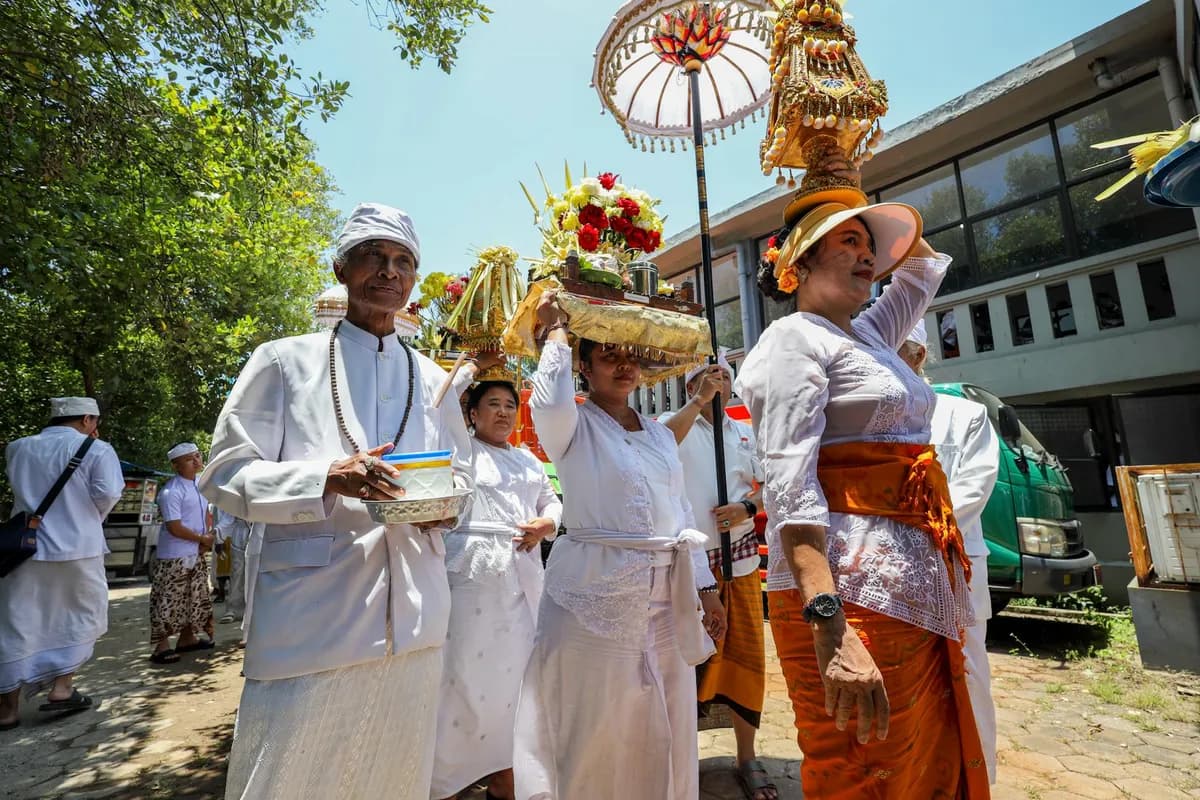
The healer prepares the space with incense, holy water, and sacred offerings called canang sari. You may be asked to sit or lie down, and blessed oils are readied for use during the session.
Healing prayers in Balinese or Sanskrit are spoken aloud as the healer channels energy toward areas of imbalance. You may feel warmth, tingling, or a deep sense of calm during this part of the session.
The healer may apply gentle hands-on work using traditionally blessed oils, focusing on areas where tension or spiritual blockage was sensed. Pressure is generally light and intentional rather than th
Tirta, or holy water that has been ceremonially blessed, may be applied to your head, hands, or body, or offered for you to drink. This is considered one of the most sacred and cleansing parts of the session.
The healer shares impressions, recommendations, or spiritual guidance based on what arose during the session. You may be sent home with a blessed item, herbal preparation, or a simple daily ritual to
The Evidence
What research and tradition tell us about Balinese Spiritual Healing, and where the evidence is limited.
Rooted in tradition; limited formal research
Balinese Spiritual Healing draws on over a thousand years of cultural practice, but has minimal formal scientific study. Related practices like meditation and therapeutic touch have some supporting evidence, though the spiritual dimensions remain outside conventional research frameworks.
Balinese Spiritual Healing works within a Hindu-Balinese framework where illness reflects spiritual disharmony. These concepts — energy, ancestral influence, ritual restoration — are not measurable by standard scientific methods. Engaging with this practice means engaging with its cultural and spiritual logic, not a clinical protocol.
No clinical trials exist for Balinese Spiritual Healing as a defined practice. Adjacent research on meditation, mindfulness, and therapeutic touch suggests modest benefits for stress, anxiety, and psychological well-being. These findings cannot be directly applied to Balinese healing, but they offer partial context for some of its component elements.
Known locally as usada, Balinese healing is carried by practitioners called balian, selected through hereditary lineage or spiritual calling. It integrates Hindu philosophy, animist belief, and Ayurvedic influence. Long-standing cultural continuity is the primary evidence base here — not clinical trials.
Standard research methods isolate variables, which is poorly suited to practices involving ritual, intention, and spiritual relationship. This does not invalidate the practice for those who find meaning in it, but it does mean evidence-based claims cannot be made about outcomes. Approach reported benefits as experiential rather than clinically verified.
People with serious mental health conditions, acute medical needs, or pregnancy should consult a qualified health professional before or alongside this practice. Be cautious of practitioners making inflated outcome claims or discouraging conventional care. Hygiene standards matter if physical contact or herbal preparations are involved.
Seek practitioners with genuine cultural grounding and community standing. A trustworthy healer will respect your boundaries, not pressure you toward ongoing sessions, and will not position their work as a substitute for professional assessment or medical care. Outside Bali, verify the practitioner's background and training carefully.
Safety first
General guidance to help you decide whether this approach is appropriate for you. This is informational only and not a substitute for medical, psychological, or professional advice.
If you are experiencing severe distress, suicidal thoughts, psychosis, acute trauma, or another serious mental health concern, seek qualified support first.
This approach is not suitable for diagnosis, treatment instructions, or decisions that require medical, legal, financial, or professional advice.
Look for clear boundaries, transparent pricing, and practitioners who avoid fear-based claims or pressure to book frequent sessions.
Treat any insight as one reflective perspective, not absolute truth. Important decisions should be considered with appropriate professional support.
For you?
A simple, human way to weigh it up. This is general guidance, not personal medical advice — a qualified practitioner can advise on your situation.
Gyfts is a discovery platform, not a medical provider. Nothing here diagnoses, treats or replaces professional care. In an emergency, contact your local emergency number.
Explore approaches
Other practices people often explore alongside balinese spiritual healing.
In their words
FAQ
A typical session begins with consultation and assessment, followed by a combination of prayer, energy work, gentle massage, and spiritual cleansing techniques. The practitioner may use traditional items like holy water, incense, or oils while channeling healing energy and removing energetic blockages. Sessions conclude with integration time and spiritual guidance.
The number of sessions varies greatly depending on your individual needs and the complexity of your concerns. Some people experience benefits after one session, while others may need multiple sessions over weeks or months. Your practitioner will assess your progress and recommend a treatment plan, which may range from 3-6 sessions for acute issues to ongoing periodic sessions for spiritual maintenance.
While an open mind is helpful, you don't need to adopt specific religious beliefs. However, respect for the spiritual nature of the practice and the cultural traditions it represents is important. Many practitioners can adapt their approach to work with your existing belief system while maintaining the integrity of the healing methods.
Most people experience gentle, positive effects, though some may have temporary emotional releases, vivid dreams, or shifts in energy levels as part of the healing process. These are generally considered normal responses to spiritual healing work. Serious adverse effects are rare, but you should discontinue treatment and consult a healthcare provider if you experience persistent negative symptoms.
Balinese healing draws on a synthesis of Hindu, Buddhist, and animist traditions unique to Bali, where the spiritual and physical are inseparable aspects of daily life. Balian (traditional healers) work with prayer, holy water, offerings, and plant medicine to restore balance between the individual, community, ancestral realm, and spirit world. Diagnosis may involve trance, divination, or reading of the patient's energy. Unlike many Asian healing systems that developed distinct medical texts, Balinese healing is deeply ceremonial, community-embedded, and locally transmitted — making it one of the most contextually specific of the world's healing traditions.
References
Educational sources that inform this overview. Inclusion is for context and does not imply endorsement.
Full citations are maintained by the Gyfts editorial team and reviewed periodically.
Keep exploring
Browse practitioners, explore honest overviews, and take what you learn to a conversation — at your own pace.