What it is
26 postures and 2 breathing exercises practiced in a heated 105°F studio.
Bikram Yoga is a standardized sequence of 26 postures and 2 breathing exercises performed in a heated room (approximately 105°F)
At a glance
What it is
26 postures and 2 breathing exercises practiced in a heated 105°F studio.
Why explore it
Many practitioners gain flexibility, better posture, and a real sense of calm over time.
How it’s experienced
Expect 90 sweaty minutes guided through the same 26-pose sequence in an intense heated room.
Evidence context
Research shows promising benefits for flexibility and well-being, though findings are still emerging.
See the evidence snapshotSafety
Healthy adults do well here—just hydrate, listen to your body, and check with your doctor if needed.
See staying safeHistory & Origin
Bikram Yoga involves a rigorous series of 26 postures in a hot environment to promote flexibility and detoxification.
Bikram Yoga was developed by Bikram Choudhury, who was born in Calcutta, India in 1944. Choudhury began practicing yoga at age four under the guidance of his guru, Bishnu Ghosh, who was the younger brother of Paramahansa Yogananda. After winning the National India Yoga Championship for three consecutive years, Choudhury founded the Yoga College of India at age 20. Following a knee injury, he worked with Ghosh to develop a therapeutic sequence of 26 postures specifically designed to systematically work every part of the body.
In 1971, Choudhury moved to the United States and began teaching his method in Beverly Hills, California. The practice gained popularity among celebrities and fitness enthusiasts throughout the 1970s and 1980s. The heated environment, set at precisely 105°F with 40% humidity, was designed to replicate the climate of India where yoga originated. Choudhury standardized the sequence and began training teachers worldwide, leading to the establishment of hundreds of Bikram studios globally.
The practice became widely known as "hot yoga," though Bikram Yoga specifically refers to Choudhury's exact 26-posture sequence. By the 1990s and 2000s, Bikram studios had spread internationally, with the practice becoming a popular form of heated yoga. The method emphasizes discipline, breathing, and mental focus alongside the physical postures, maintaining its roots in traditional Hatha yoga while adapting to modern fitness preferences.
Top symptoms
Mechanism
Bikram Yoga is best framed as a traditional, symbolic, energetic, reflective, or spiritual practice rather than a validated medical mechanism. Practitioners may use ritual, attention, sound, imagery, touch-free work, cards, symbols, prayer, or intention to support meaning-making and a sense of connection. People may explore it for reflection, calm, or spiritual context, while health claims should remain cautious and personal. Bikram Yoga uses sustained heat (approximately 40°C) during a standardised sequence of 26 postures and two breathing exercises to intensify physical exertion and physiological response.
Your first visit
A typical session outline to help you feel prepared
A 90-minute heated yoga journey through 26 set postures practiced twice in sequence, designed to challenge your body and calm your mind in a 105°F room.
Arrive 30 minutes early to complete a health history form and meet your instructor, who will walk you through what to expect in the heated room and answer any questions.
You'll step into the studio, kept at 105°F with 40% humidity, find a spot on the floor with your mat and towel, and begin acclimating to the heat before class starts.
Class opens with a standing breathing exercise called Pranayama, where you inhale and exhale deeply with arms raised, warming your lungs and signaling your body that practice has begun.
You'll move through 12 standing postures twice each, including Eagle, Triangle, and Balancing Stick, building strength, balance, and focus over roughly the first 50 minutes.
A brief rest in Savasana on your back marks the transition to the floor series, giving your heart rate a chance to settle before the second half begins.
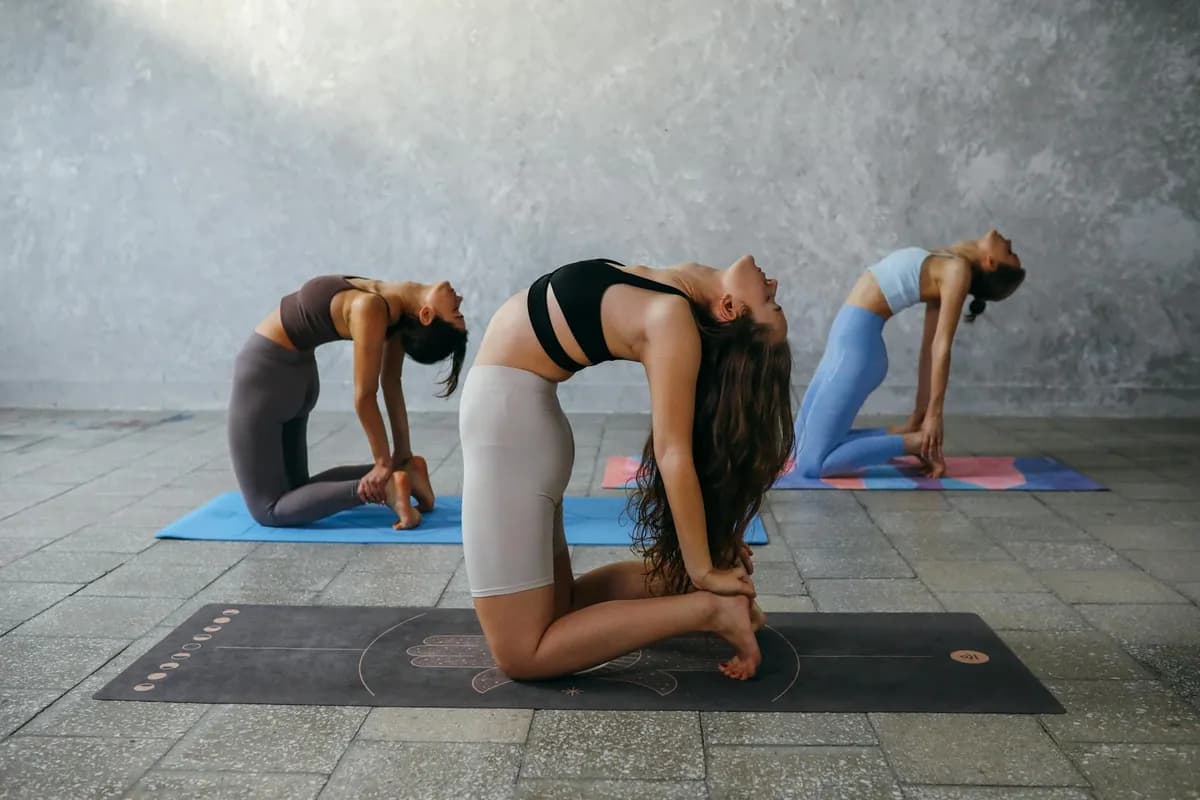
You'll work through 14 floor postures twice each, including Cobra, Locust, and Camel, targeting the spine, hips, and core while the heat deepens your range of motion.
Class closes with a two-minute Savasana where you lie completely still, allowing your nervous system to absorb the session and your body temperature to begin cooling naturally.
After class, rehydrate steadily with water or electrolytes, change out of damp clothing when you can, and expect to feel deeply relaxed and possibly tired for the rest of the day.
The Evidence
What research says about Bikram Yoga, where the evidence is strong, and where gaps remain.
Growing research base with promising physical and wellbeing findings
Controlled studies show measurable gains in flexibility, balance, and strength, with positive signals for stress and mood. Most trials are small and short-term, so findings should be interpreted with appropriate caution.
Studies consistently report improvements in flexibility, balance, and muscular strength compared to control groups. Positive signals for stress reduction and mood have also emerged. The standardised sequence makes Bikram Yoga more straightforward to study than many yoga forms, though most trials run only 8–24 weeks and involve relatively small samples.
Research specifically examining the heated setting suggests the elevated temperature increases muscle pliability and elevates heart rate in ways that resemble moderate aerobic exertion. These findings are promising but not yet definitive. Larger, longer studies are needed before strong conclusions can be drawn about heat-specific effects.
Developed by Bikram Choudhury under the guidance of Bishnu Ghosh, the 26-posture sequence was designed to systematically engage major muscle groups and joints. The heated room was intended to replicate the Indian climate. The practice's standardised format distinguishes it from broader hot yoga styles and has supported more consistent research.
Follow-up periods rarely exceed six months, and sample sizes limit statistical power. Results from Bikram Yoga research do not automatically generalise to other heated yoga formats. Long-term effects on cardiovascular health and other outcomes remain under-studied. Inflated outcome claims beyond what current evidence supports should be viewed critically.
People with cardiovascular conditions, blood pressure concerns, diabetes, or heat sensitivity should seek professional guidance before starting. Absolute caution is advised for those with active heart conditions, a history of heat-related illness, or acute injuries. Staying hydrated, pacing gradually, and leaving the room if dizzy or nauseated are essential practices.
Bikram Yoga teachers typically complete a specific certification programme. Verifying instructor credentials and ensuring the studio maintains appropriate temperature and ventilation standards supports a safer experience. If you have any health concerns, discussing them with both your healthcare provider and the instructor before your first class is advisable.
Safety first
General guidance to help you decide whether this approach is appropriate for you. This is informational only and not a substitute for medical, psychological, or professional advice.
If you are experiencing severe distress, suicidal thoughts, psychosis, acute trauma, or another serious mental health concern, seek qualified support first.
This approach is not suitable for diagnosis, treatment instructions, or decisions that require medical, legal, financial, or professional advice.
Look for clear boundaries, transparent pricing, and practitioners who avoid fear-based claims or pressure to book frequent sessions.
Treat any insight as one reflective perspective, not absolute truth. Important decisions should be considered with appropriate professional support.
For you?
A simple, human way to weigh it up. This is general guidance, not personal medical advice — a qualified practitioner can advise on your situation.
Gyfts is a discovery platform, not a medical provider. Nothing here diagnoses, treats or replaces professional care. In an emergency, contact your local emergency number.
Explore approaches
Other practices people often explore alongside bikram yoga.
In their words
FAQ
Each 90-minute session follows the same sequence: breathing exercise, 26 postures performed twice each in a room heated to 105°F, and final breathing exercise. The instructor guides you through proper alignment and timing while you work through standing and floor series systematically designed to work every part of your body.
Most practitioners notice increased flexibility and mental clarity within 2-3 weeks of regular practice (3-4 times weekly). Significant strength and flexibility improvements typically develop over 2-3 months of consistent attendance. The standardized sequence allows for clear progress tracking as you deepen your practice over time.
When practiced properly with adequate hydration and gradual acclimatization, Bikram Yoga is generally safe for healthy individuals. The heat helps muscles warm quickly for deeper stretching, but it's essential to listen to your body, stay hydrated, and exit the room if you feel dizzy or nauseous.
Bring a large absorbent towel to cover your mat, a water bottle, and wear minimal, moisture-wicking clothing. Most studios provide mats for rent or purchase. Avoid eating large meals 2-3 hours before class and ensure you're well-hydrated throughout the day.
Yes, beginners are welcome, though the heat and 90-minute duration can be challenging initially. Most studios offer beginner orientations and encourage new students to rest when needed while acclimatizing to the environment. Instructors provide modifications and emphasize that simply staying in the room is an achievement.
References
Educational sources that inform this overview. Inclusion is for context and does not imply endorsement.
Full citations are maintained by the Gyfts editorial team and reviewed periodically.
Keep exploring
Browse practitioners, explore honest overviews, and take what you learn to a conversation — at your own pace.