What it is
Card reading uses symbolic decks to prompt reflection and explore your life questions.
Card Reading uses various card decks like Tarot or oracle cards to provide insights, guidance, and reflection on life questions through s...
At a glance
What it is
Card reading uses symbolic decks to prompt reflection and explore your life questions.
Why explore it
Many turn to card reading for fresh perspective during life changes or emotional uncertainty.
How it’s experienced
A practitioner draws and interprets cards around your question in a conversational 30–90 minute session.
Evidence context
Its value is experiential and self-reported, with no clinical trials supporting specific outcomes.
See the evidence snapshotSafety
Low risk for most adults, but it should complement not replace medical or mental health care.
See staying safeHistory & Origin
Card Reading uses various decks to offer insights into life's questions and paths.
Card reading has ancient roots spanning multiple cultures, with playing cards first appearing in China during the Tang dynasty (618-907 CE) before spreading along trade routes to the Middle East and Europe. The modern Tarot deck evolved in 15th century Italy, originally used for card games before being adapted for divination purposes during the 18th and 19th centuries.
The practice gained significant momentum in the late 19th century through occultists like Éliphas Lévi and later the Hermetic Order of the Golden Dawn, who developed systematic interpretations and spreads. Arthur Edward Waite and artist Pamela Colman Smith created the iconic Rider-Waite Tarot deck in 1909, which became the foundation for most modern Tarot interpretation.
Oracle cards emerged as a more accessible alternative in the 20th century, offering themed decks with positive messaging and simpler interpretation methods. The New Age movement of the 1960s-80s popularized card reading as a tool for personal development and spiritual guidance.
Today, card reading has experienced a renaissance, particularly among younger generations seeking alternative forms of self-reflection and guidance, with modern practitioners often combining traditional symbolism with contemporary psychological insights.
Mechanism
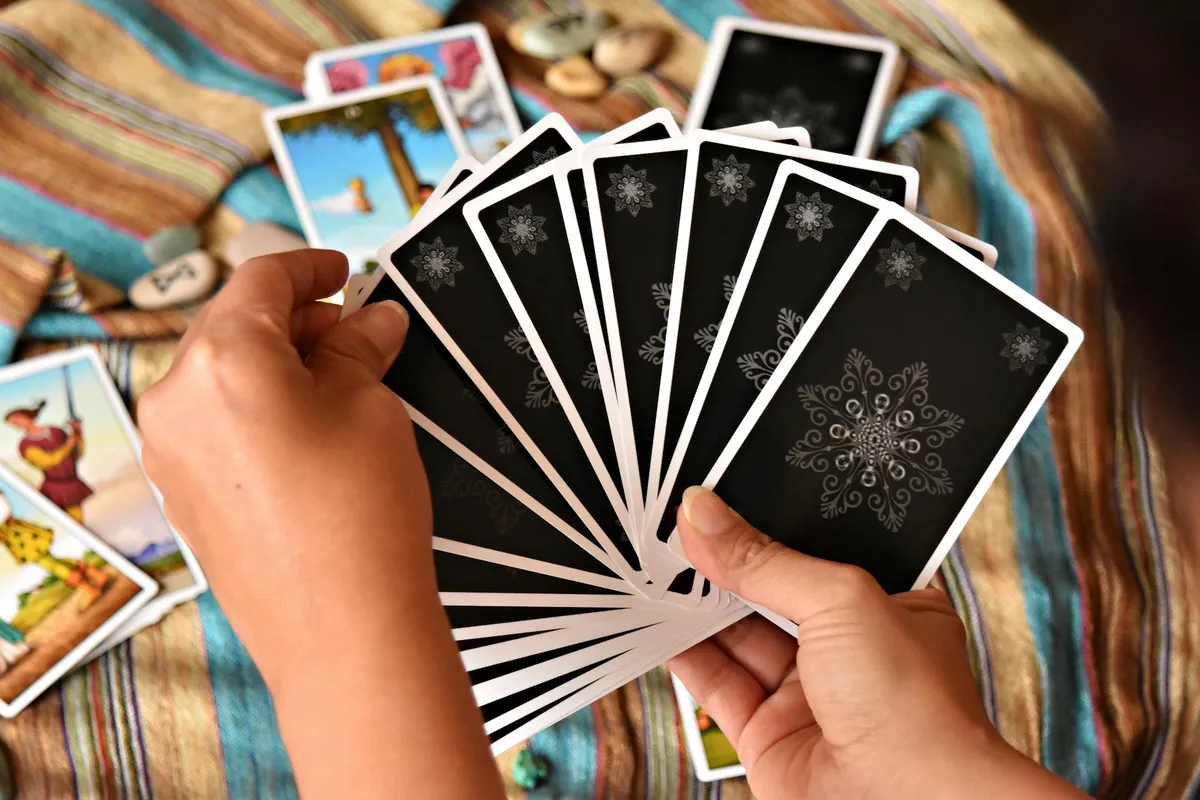
Card Reading is best framed as a traditional, symbolic, energetic, reflective, or spiritual practice rather than a validated medical mechanism. Practitioners may use ritual, attention, sound, imagery, touch-free work, cards, symbols, prayer, or intention to support meaning-making and a sense of connection. People may explore it for reflection, calm, or spiritual context, while health claims should remain cautious and personal. A practitioner shuffles a chosen deck (typically Tarot, oracle, or other symbolic cards) while you focus on a question or intention.
Your first visit
A typical session outline to help you feel prepared
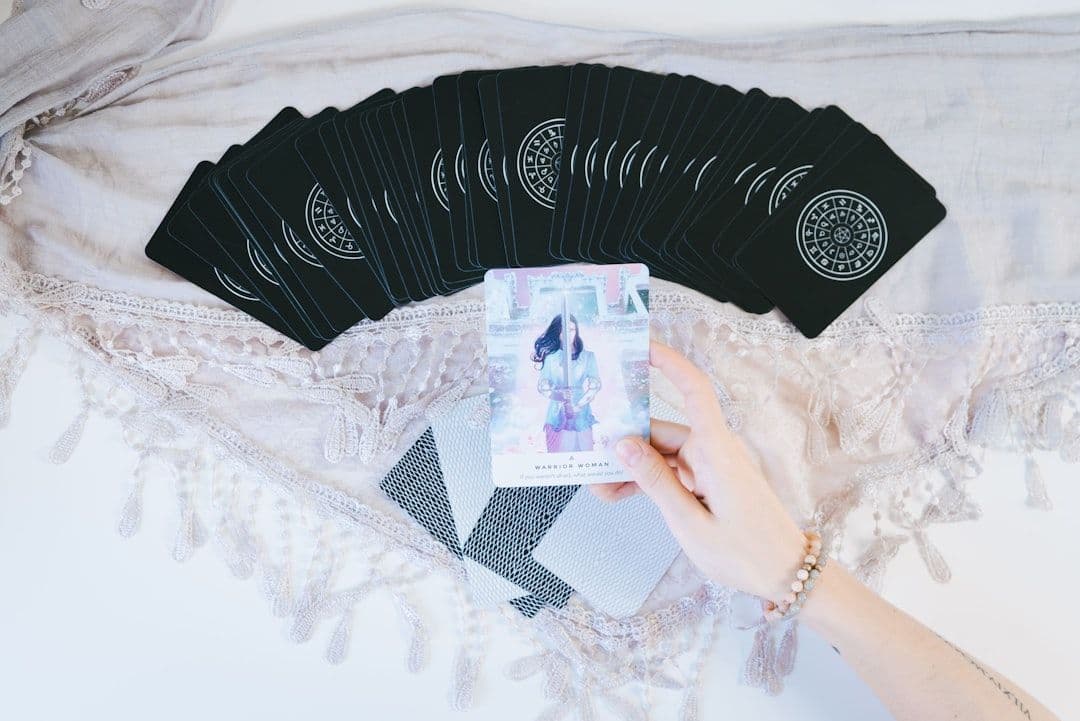
A card reading session is a guided, conversational experience where cards are drawn and interpreted together to offer insight and reflection on what's unfolding in your life.
Your practitioner greets you warmly and takes a few minutes to help you feel comfortable, explaining how the session will flow and what kind of deck they use.
You share what's on your mind — a question, a situation, or simply an openness to guidance. There's no wrong answer; even a general curiosity works perfectly.
The practitioner shuffles the cards, sometimes inviting you to hold or cut the deck. This step helps attune the reading to your energy and the intention you've set.
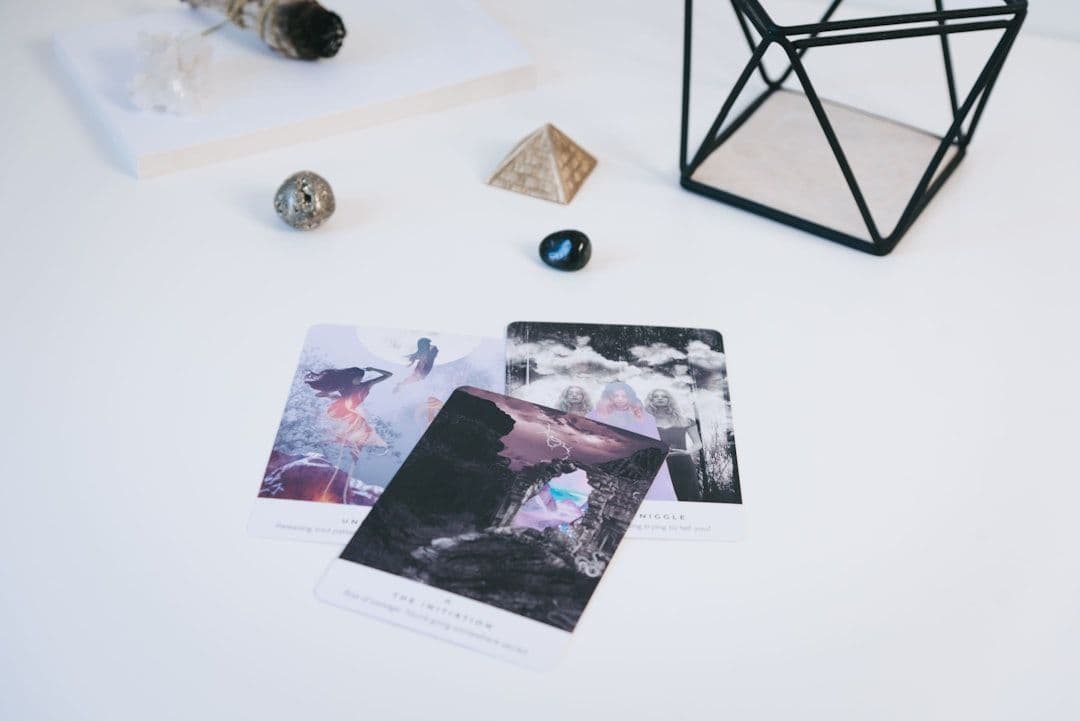
Cards are drawn and placed in a specific spread — a pattern where each position holds a meaning, such as past influences, present circumstances, or possible paths ahead.
Your practitioner walks through each card's imagery and symbolism, weaving the cards together into a narrative that speaks to your situation in a clear, accessible way.
You're encouraged to share what resonates or surprises you. Your instincts and gut responses are treated as valuable information, not just background noise.
Together you explore how the insights connect to your real life, discussing practical takeaways and any patterns or themes that emerged across the reading.
The session wraps up with a summary of key insights and time for final questions. Many practitioners offer notes or a photo of the spread for you to revisit later.
The Evidence
What research and tradition tell us about card reading as a reflective and personal development practice.
Rooted in tradition, not clinical research
Card reading has not been studied in clinical trials and is not evaluated as a medical intervention. Its value is understood through centuries of traditional use, personal meaning-making, and reflective practice rather than measurable health outcomes.
Card reading is a metaphysical practice oriented around personal insight, symbolic interpretation, and self-reflection. It does not claim to function through mechanisms measurable by conventional research methods. Its value is experiential and subjective, and it is best understood on those terms rather than through a clinical lens.
Playing cards emerged in Tang dynasty China before spreading to Europe, where Tarot evolved in 15th-century Italy. Systematic divination use developed through the 18th and 19th centuries. The Rider-Waite deck (1909) shaped modern practice. This long history represents substantial experiential tradition, though not clinical evidence.
While card reading itself lacks clinical trials, research on narrative therapy, symbolic processing, and reflective practices suggests these approaches can support psychological well-being and decision-making. Card reading may function similarly as a structured prompt for self-examination, though direct evidence for the practice remains limited.
No randomised controlled trials exist for card reading, and its benefits are not measurable in conventional health terms. Interpretations are inherently subjective and vary between practitioners and sessions. Users should approach readings as one reflective tool among many, not as a source of definitive guidance or professional assessment.
Those managing active mental health conditions should keep qualified professional care primary. Be cautious of practitioners making inflated outcome claims or encouraging dependency on readings. Avoid sessions during periods of acute emotional distress. Card reading is not a substitute for professional psychological, medical, or legal assessment.
Card reading is largely unregulated, so practitioner skill, ethics, and approach differ considerably. Look for practitioners who frame sessions as exploratory and empowering rather than predictive or directive. A good practitioner will not encourage over-reliance on readings or make claims beyond what the practice can reasonably offer.
Safety first
General guidance to help you decide whether this approach is appropriate for you. This is informational only and not a substitute for medical, psychological, or professional advice.
If you are experiencing severe distress, suicidal thoughts, psychosis, acute trauma, or another serious mental health concern, seek qualified support first.
This approach is not suitable for diagnosis, treatment instructions, or decisions that require medical, legal, financial, or professional advice.
Look for clear boundaries, transparent pricing, and practitioners who avoid fear-based claims or pressure to book frequent sessions.
Treat any insight as one reflective perspective, not absolute truth. Important decisions should be considered with appropriate professional support.
For you?
A simple, human way to weigh it up. This is general guidance, not personal medical advice — a qualified practitioner can advise on your situation.
Gyfts is a discovery platform, not a medical provider. Nothing here diagnoses, treats or replaces professional care. In an emergency, contact your local emergency number.
Explore approaches
Other practices people often explore alongside card reading.
In their words
FAQ
A typical card reading session begins with discussing your questions or areas of focus. The practitioner will draw cards using various spread patterns and interpret their symbolic meanings in relation to your situation. You'll participate in the interpretation process by sharing your thoughts and feelings about the cards. Sessions usually last 30-90 minutes and conclude with a summary of insights and suggestions for reflection.
There's no set number of sessions needed, as card reading is typically used for guidance rather than ongoing treatment. Some people have single sessions for specific questions, while others enjoy monthly or seasonal readings for regular reflection. The frequency depends entirely on your personal preferences and what feels helpful for your growth and decision-making process.
While belief can enhance the experience, it's not necessary to have strong faith in card reading. Many people find value in the reflective process and symbolic thinking, regardless of their beliefs about prediction or divination. The cards can serve as prompts for self-reflection and consideration of different perspectives, which can be beneficial even for skeptical participants.
Card reading is better understood as a tool for reflection and exploring possibilities rather than predicting specific future events. The cards offer symbolic representations that can help you consider different perspectives, potential outcomes, and your own feelings about situations. Most ethical practitioners emphasize that you have free will and the power to shape your future through your choices and actions.
Tarot cards follow a structured 78-card system with specific meanings and traditional spreads, offering deep symbolic interpretation. Oracle cards are more varied, with different themes and numbers of cards in each deck, typically designed to be more intuitive and accessible. Both can provide insights and reflection opportunities, with Tarot offering more systematic interpretation and oracle cards allowing for more flexible, intuitive readings.
References
Educational sources that inform this overview. Inclusion is for context and does not imply endorsement.
Full citations are maintained by the Gyfts editorial team and reviewed periodically.
Keep exploring
Browse practitioners, explore honest overviews, and take what you learn to a conversation — at your own pace.