What it is
Dry cupping uses gentle suction on skin to relax muscles and support circulation.
Ancient suction therapy, rediscovered for modern recovery.
At a glance
What it is
Dry cupping uses gentle suction on skin to relax muscles and support circulation.
Why explore it
It may help ease back tightness, post-workout soreness, or myofascial tension alongside other care.
How it’s experienced
Cups create a lifting suction on target areas during a relaxing 20 to 40 minute session.
Evidence context
Early research shows short-term pain relief, though it works best alongside conventional care.
See the evidence snapshotSafety
Low-risk with a trained provider, but check with your doctor before starting, especially if pregnant.
See staying safeHistory & Origin
Dry cupping is a traditional therapeutic practice in which specially designed cups are placed on the skin and a vacuum is created — either by heating the air inside the cup or by using a mechanical pump — to gently lift the skin and underlying soft tissue. Unlike wet cupping, which involves small skin incisions, dry cupping is entirely non-invasive and relies solely on suction to interact with the body's surface tissues. The cups, which may be made of glass, silicone, bamboo, or plastic, are typically left in place for a few minutes or moved along the skin in a technique known as sliding or gliding cupping.
Practitioners across a range of traditions have used dry cupping as part of broader wellness protocols, often targeting areas of perceived tension, reduced circulation, or discomfort — most commonly the back, shoulders, and neck. Some practitioners suggest it may be associated with temporary relief from muscle tightness and localized soreness, though individual experiences vary widely.
Dry cupping has seen a notable rise in mainstream interest in recent years, partly due to its visibility among athletes and wellness communities. It is increasingly offered in integrative health clinics, massage therapy settings, and acupuncture practices. While growing in popularity, it remains important to approach dry cupping with informed expectations: the evidence base is still emerging, and it is best understood as a complementary practice rather than a standalone medical treatment.
Dry cupping has roots stretching back thousands of years across multiple ancient cultures. Some of the earliest documented references to cupping therapy appear in ancient Egyptian texts, including the Ebers Papyrus, dated to around 1550 BCE, which describes the use of cupping for a range of ailments. Ancient Greek physicians also referenced cupping as a therapeutic technique, and it became a notable element of Unani and Islamic medicine throughout the medieval period.
In traditional Chinese medicine, cupping has been practiced for well over two millennia and is understood within the framework of qi — the concept of vital energy flowing through pathways in the body. Cupping is traditionally believed to help restore the flow of qi and dispel what practitioners call stagnation. Similar practices developed independently across South Asian, African, and Middle Eastern healing traditions, suggesting that the basic concept of using suction for therapeutic purposes arose across multiple cultures without direct contact.
Today, dry cupping occupies an interesting space between ancient tradition and modern wellness culture, having been adopted by integrative medicine practitioners, physical therapists, and sports medicine professionals who often frame its effects in contemporary physiological terms rather than traditional energetic models.
Mechanism
Dry cupping is thought to interact with the body's soft tissues through localized suction, though the precise mechanisms are still being studied.
Your first visit
A typical session outline to help you feel prepared
A dry cupping session uses gentle suction cups on your skin to encourage relaxation and ease muscle tension, typically lasting 30 to 60 minutes.
Your practitioner will greet you and ask about your health history, areas of discomfort, and any skin conditions or medications, so the session can be tailored safely to you.
You'll share what you're hoping to get from the session, whether that's relief from tight shoulders, general relaxation, or something else, and your practitioner will explain what to expect from the cups.
You'll be asked to undress to your comfort level for the target area, usually the back or legs, and lie on a padded massage table, covered with a drape for privacy and warmth.
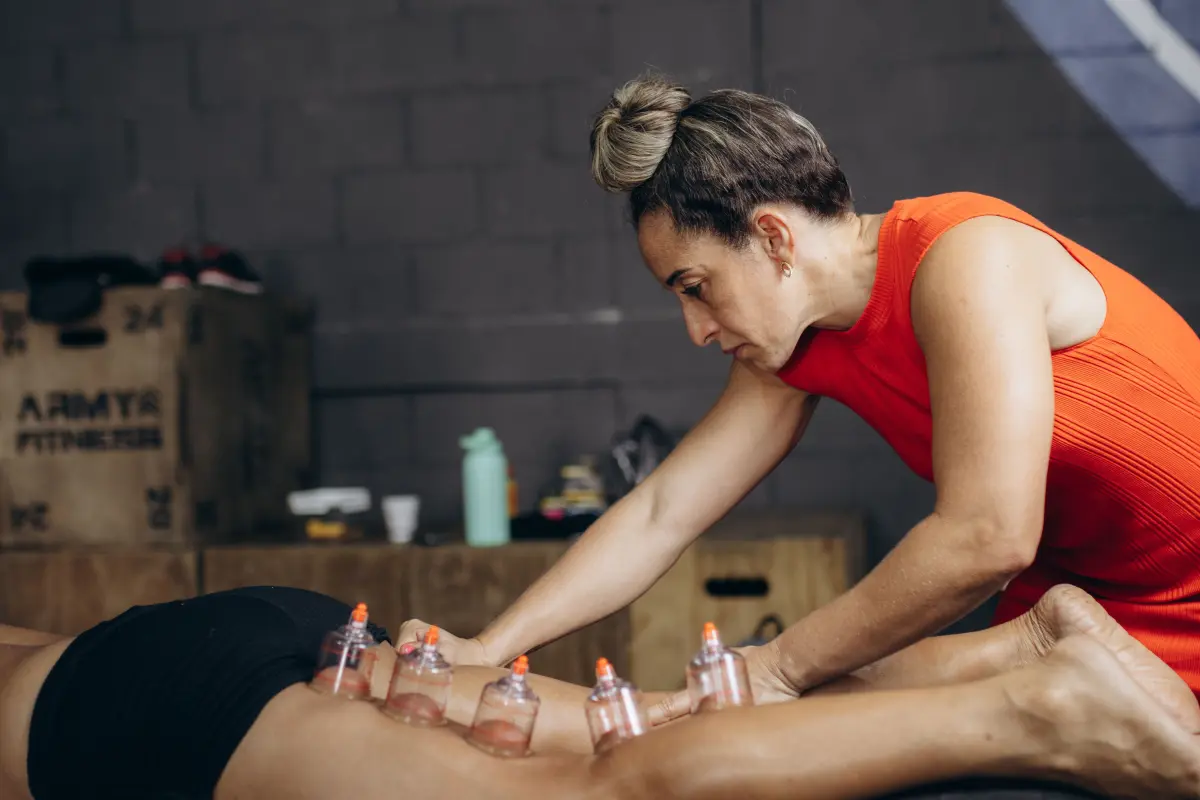
Your practitioner places silicone or pump-style cups directly onto your skin, creating a gentle suction that draws the tissue upward. You'll feel a pulling or tugging sensation, which is normal and sh
The cups typically remain in place for 5 to 15 minutes. Many people find this deeply relaxing, and some practitioners may slowly glide the cups across the skin rather than leaving them stationary.
You may feel warmth, a mild stretching feeling, or a sense of pressure lifting in the areas being cupped. Let your practitioner know at any point if the suction feels too strong.
Each cup is gently released by pressing the skin at its edge or releasing a valve, which breaks the suction quickly and comfortably. You may notice circular marks ranging from pink to deep red on your skin afterward.
Your practitioner will advise you to drink plenty of water, avoid cold temperatures on the cupped areas, and let you know that any circular marks typically fade within a few days and are not bruises.
The Evidence
What current research says about dry cupping, where the evidence stands, and what to keep in mind before exploring this practice.
Early findings are promising, but the evidence base is still developing
Small studies suggest dry cupping may offer short-term relief from muscle tension and localized discomfort, particularly in the back and neck. The overall evidence is limited by study size and methodological variability, and firm conclusions cannot yet be drawn.
Systematic reviews and small clinical trials have explored dry cupping for musculoskeletal concerns such as neck pain, low back pain, and myofascial tension. Some studies report short-term associations with reduced pain and muscle tightness. However, small sample sizes, inconsistent protocols, and limited blinding mean these findings should be interpreted cautiously.
Most dry cupping trials lack standardized outcome measures and adequate control conditions, making it difficult to separate specific effects from general relaxation or placebo responses. Replication in larger, well-controlled trials is needed. Emerging evidence does not confirm ineffectiveness — it reflects an incomplete picture rather than a settled one.
References to cupping appear in ancient Egyptian texts dating to around 1550 BCE, in Greek medical writings, and across Islamic, South Asian, and African healing traditions. In traditional Chinese medicine, cupping is understood within a framework of vital energy and flow. These traditions developed largely independently, reflecting a widespread historical interest in suction-based therapy.
Practitioners often integrate dry cupping alongside movement, manual therapy, or stress-support practices rather than as a standalone intervention. Its holistic framing emphasizes tissue decompression, relaxation, and recovery support. Individual responses vary, and it is best understood as a complementary layer within a wider health approach rather than a primary intervention.
Temporary circular skin discoloration is common and typically resolves within days. Mild soreness or lightheadedness may occur. Contraindications include active skin infections, bleeding disorders, anticoagulant therapy, pregnancy over the abdomen or lower back, and severe varicose veins. Always consult a qualified healthcare provider if you have an underlying health condition before starting.
Dry cupping is offered by a range of practitioners including physiotherapists, traditional Chinese medicine practitioners, and trained massage therapists. Standards and regulation vary by country. Seek a practitioner with verifiable training and experience, and ensure they conduct an intake assessment to identify any contraindications before your first session.
Safety first
General guidance to help you decide whether this approach is appropriate for you. This is informational only and not a substitute for medical, psychological, or professional advice.
If you are pregnant, managing a health condition, recovering from injury or surgery, or taking medication, consult a qualified healthcare professional first.
Mild, short-lived effects such as tenderness, tiredness, or temporary soreness can occur. Rest, hydrate, and tell your practitioner how you respond.
Some situations call for extra care or a different approach. Share any conditions, injuries, or sensitivities with your practitioner before your first session.
Look for clear boundaries, transparent pricing, and practitioners who avoid fear-based claims or pressure to book frequent sessions.
For you?
A simple, human way to weigh it up. This is general guidance, not personal medical advice — a qualified practitioner can advise on your situation.
Gyfts is a discovery platform, not a medical provider. Nothing here diagnoses, treats or replaces professional care. In an emergency, contact your local emergency number.
In their words
Before you book
FAQ
It is common for dry cupping to leave circular discolorations on the skin, which are caused by blood being drawn toward the surface through suction. These marks are not bruises in the traditional sense and typically fade within two to seven days. Most people find them painless, though the area may feel mildly tender afterward.
There is no standardized recommendation, as individual responses to dry cupping vary considerably. Some people report noticing a sense of relief or relaxation after a single session, while others undergo a series of sessions as part of an ongoing wellness routine. A qualified practitioner can help you determine what frequency may be appropriate for your specific goals.
Dry cupping shares a common lineage with cupping as practiced in traditional Chinese medicine, but the two are not identical. Traditional Chinese medicine cupping is understood within a framework of qi and energetic pathways, while modern practitioners may apply dry cupping using a physiological rationale focused on soft tissue and circulation. Both approaches use suction cups, but the theoretical framing, techniques, and clinical goals may differ depending on the practitioner's training.
References
Educational sources that inform this overview. Inclusion is for context and does not imply endorsement.
Full citations are maintained by the Gyfts editorial team and reviewed periodically.
Keep exploring
Browse practitioners, explore honest overviews, and take what you learn to a conversation — at your own pace.