What it is
The medical knowledge and healing practices of ancient Egypt, known from surviving papyri.
The medical knowledge and healing practices of ancient Egypt, known from surviving papyri, and the modern interest in its remedies and ideas
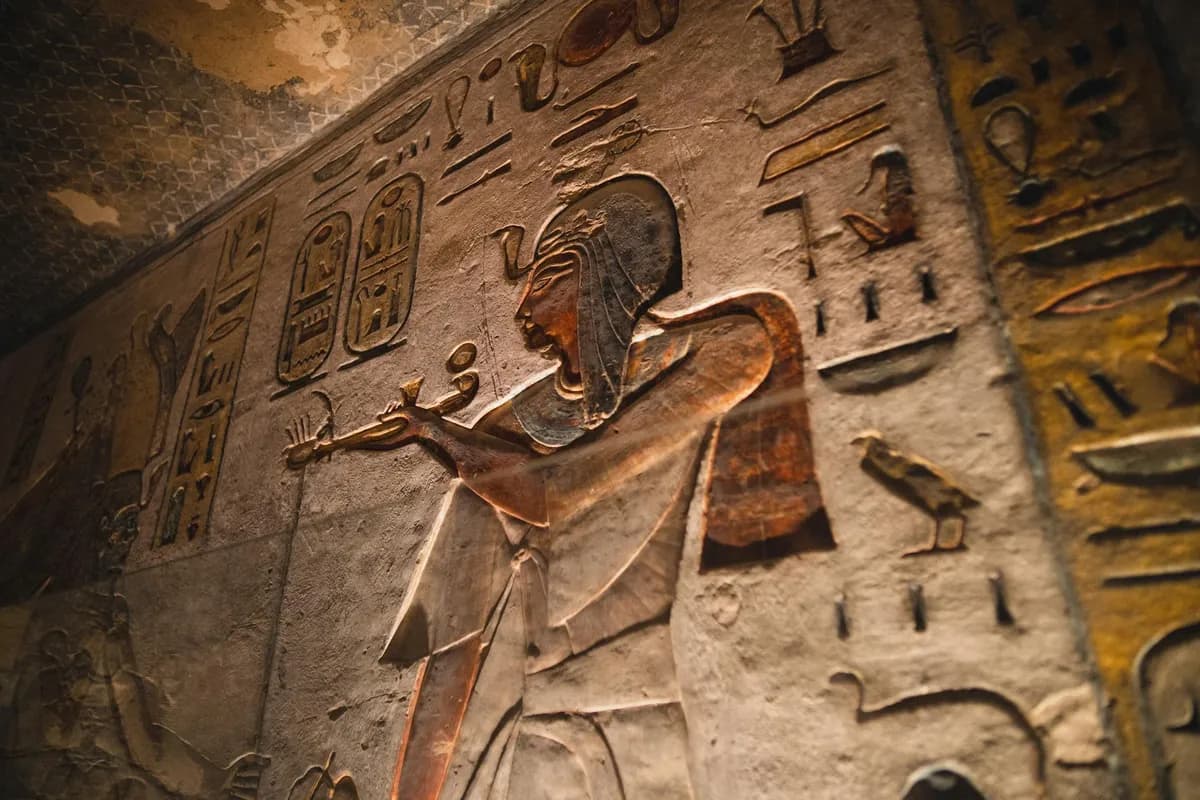
At a glance
What it is
The medical knowledge and healing practices of ancient Egypt, known from surviving papyri.
Why explore it
Some seekers value the history of medicine and calm, thematic cultural or aromatic experiences.
How it’s experienced
A talk, museum visit, or modern ritual or aromatic session inspired by ancient Egypt.
Evidence context
No clinical trials. Evidence is historical, from papyri and archaeology, not biomedical.
See the evidence snapshotSafety
Not a medical treatment. Do not ingest ancient-style remedies. Patch test any oils.
See staying safeHistory & Origin
Egyptian medicine refers to the medical knowledge and healing practices of ancient Egypt, a tradition that stretches across thousands of years. It is known from surviving texts, notably medical papyri, which were written on papyrus and carved on stone or clay. The records describe examination of the patient, remedies made from plants, animal products, and minerals, practical surgery for injuries, and spells and prayers that were used alongside treatment.
Today, Egyptian medicine is studied mainly as history, and it is a subject of interest for scholars, pharmacognosists, and museum visitors. Some modern practitioners and makers draw on it for inspiration, offering aromatic blends, oils, or ritual experiences with an ancient Egyptian theme. These are cultural and sensory offerings, not the same as the original practice, and they should not be confused with a continuous living tradition of treatment.
As a historical system, it is not a contemporary clinical therapy and nobody should rely on it for health decisions. Ancient remedies were never tested in modern trials, and some contained substances that are unsafe. A scholarly review notes that some plants used in ancient Egypt are still used today, but this is a statement about continuity of use, not proof of benefit. Read the topic as a window into the history of medicine and as inspiration, and keep health decisions with qualified clinicians.
Our knowledge of ancient Egyptian medicine comes mainly from a small number of surviving papyri. The Edwin Smith papyrus, a copy from about 1600 BCE, is the oldest known surgical treatise on trauma. It describes 48 cases of injuries, from head to spine, each with examination, diagnosis, prognosis, and treatment, and its main text is practical and observation-based, though its back side contains spells and prescriptions. The American Egyptologist Edwin Smith bought it in Luxor in 1862, James Henry Breasted published the first translation in 1930, and it has been held by the New York Academy of Medicine since 1948.
The Ebers papyrus, dated to about 1550 BCE, is a scroll roughly 20 meters long that is now at Leipzig University Library. Its provenance is unknown, and it is named for the German Egyptologist Georg Ebers, who acquired it in the 1870s and published a facsimile in 1875. It collects hundreds of remedies, mostly plant-based, along with magical formulas, and covers topics such as the eyes, skin, digestion, gynecology, dentistry, and mental health. Many of the texts may be copies of earlier works, and a modern review notes that much was lost, so what survives is only part of a wider tradition. The ancient Egyptians also left records on stone and clay, but many documents have been lost or destroyed. Today scholars in medical history and pharmacognosy study these texts.
Mechanism
Ancient Egyptian medicine worked through observation, remedies, and ritual, within a view of the body and the world that differs from modern biomedicine.
Your first visit
A typical session outline to help you feel prepared
Because this is a historical subject, experiences vary. A modern session inspired by it might follow a shape like this.
The practitioner explains whether the session is educational, aromatic, or ritual, and what it is based on.
You hear about the medical papyri, what they record, and where historical knowledge ends and interpretation begins.
Any oils or materials are named, and you mention allergies, pregnancy, or sensitive skin before anything is used.
You take part in a talk, a scented blend, or a quiet ritual, at your own pace and with the option to stop.
You discuss what you noticed and how it connects to your interest in history, culture, or personal ritual.
The session ends with a reminder that it is not medical care, and with practical notes on fees or further reading.
The Evidence
What the historical and academic record tells us about ancient Egyptian healing practices and how to interpret them today.
A rich historical record, not a clinical evidence base
Ancient Egyptian medicine is documented through papyri, archaeology, and academic scholarship rather than clinical trials. Its value today lies in historical understanding and cultural heritage, not as a validated modern health intervention.
Knowledge of ancient Egyptian medicine comes from primary sources such as the Ebers and Edwin Smith papyri, supported by archaeological findings and academic synthesis. No randomised trials or systematic clinical reviews exist. This places it firmly in the traditional-use category, valued for historical insight rather than evidence-based health application.
Egyptian medical practice combined herbal remedies, pulse-based assessment, and spiritual ritual within a unified framework. Contemporary practitioners who draw on these principles typically adapt them within modern holistic contexts rather than replicating classical protocols. This reflects a holistic orientation across physical, mental, and energetic dimensions, though the original system should be understood on its own historical terms.
Medical papyri describe observations, herbal preparations, surgical procedures, and ritual practices dating back thousands of years. This makes Egyptian medicine a significant subject in the history of medicine and comparative health scholarship. Its documented complexity reflects a sophisticated tradition, even where modern validation is absent.
Study of ancient Egyptian healing practices informs fields including medical history, Egyptology, archaeology, and comparative medicine. Engaging with this tradition in educational or museum contexts is well-established. Where it is presented as a contemporary wellbeing practice, claims should remain grounded in historical framing and avoid inflated outcome claims.
Ancient practices documented in papyri were developed without modern pharmacological or safety testing. Applying historical remedies to present-day health concerns without professional guidance carries risk. Any contemporary offering drawing on Egyptian medicine should be clearly positioned as educational or cultural, not as a substitute for professional assessment or qualified healthcare.
Gyfts does not assess, endorse, or validate individual practitioners offering Egyptian medicine-inspired services. If you are exploring this tradition for wellbeing or cultural interest, look for practitioners who are transparent about the historical nature of their approach. For any physical or mental health concern, always seek guidance from a qualified healthcare professional.
Safety first
General guidance to help you decide whether this approach is appropriate for you. This is informational only and not a substitute for medical, psychological, or professional advice.
If you are pregnant, managing a health condition, recovering from injury or surgery, or taking medication, consult a qualified healthcare professional first.
Some situations call for extra care or a different approach. Share any conditions, injuries, or sensitivities with your practitioner before your first session.
Look for clear boundaries, transparent pricing, and practitioners who avoid fear-based claims or pressure to book frequent sessions.
Mild, short-lived effects such as tenderness, tiredness, or temporary soreness can occur. Rest, hydrate, and tell your practitioner how you respond.
For you?
A simple, human way to weigh it up. This is general guidance, not personal medical advice — a qualified practitioner can advise on your situation.
Gyfts is a discovery platform, not a medical provider. Nothing here diagnoses, treats or replaces professional care. In an emergency, contact your local emergency number.
In their words
Before you book
FAQ
It is the body of medical knowledge and practice of ancient Egypt, known mainly from medical papyri such as the Ebers and Edwin Smith papyri. It combined observation, plant and mineral remedies, practical care of injuries, and ritual. It is a historical system rather than a current clinical therapy.
The Edwin Smith papyrus is a copy from about 1600 BCE, and the Ebers papyrus dates to about 1550 BCE. Both may copy older texts. The Edwin Smith papyrus covers injuries and surgery, while the Ebers papyrus gathers remedies and magical formulas. Dates are approximate and still discussed by scholars.
No evidence shows that it works as a modern treatment. It has not been tested in clinical trials, and the evidence is historical. Some plants used by the ancient Egyptians are still used today, but continuity is not proof of benefit. Use it as history and inspiration, not as health care.
No, it is not advisable to prepare or swallow ancient remedies, because they were never tested and some ingredients are unsafe. Modern aromatic products inspired by Egypt are generally low risk when diluted and used as directed, but check ingredients, avoid them in pregnancy, and stop if your skin reacts.
No, not as a continuous living tradition of treatment. Scholars study it as history, and some modern practitioners offer aromatic or ritual experiences inspired by ancient Egypt. These are interpretations, not the original practice. Egypt itself has modern medicine and its own living folk traditions, which are separate from the ancient system.
References
Educational sources that inform this overview. Inclusion is for context and does not imply endorsement.
Full citations are maintained by the Gyfts editorial team and reviewed periodically.
Keep exploring
Browse practitioners, explore honest overviews, and take what you learn to a conversation — at your own pace.

