What it is
A guided practice using vivid mental imagery to encourage relaxation and emotional balance.
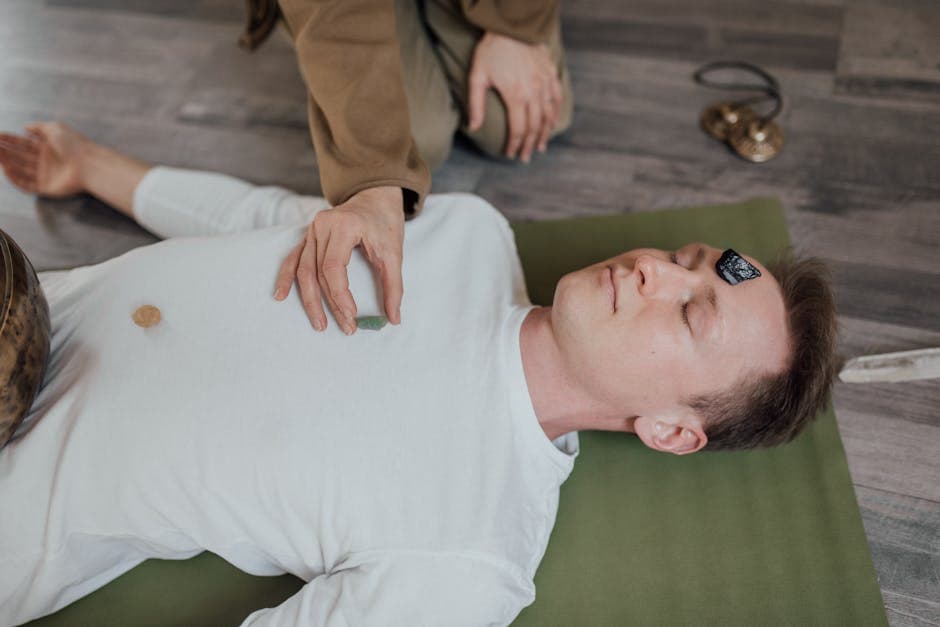
Guided Imagery is a mind-body technique that uses directed visualization and mental imagery, typically led by a practitioner or recording...
At a glance
What it is
A guided practice using vivid mental imagery to encourage relaxation and emotional balance.
Why explore it
It may ease stress, improve sleep, and reduce pain with real, measurable effects on the body.
How it’s experienced
You follow gentle verbal cues to visualize peaceful scenes, lying or sitting, for 15 to 45 minutes.
Evidence context
Research shows reduced heart rate and anxiety, though individual results vary and more studies are needed.
See the evidence snapshotSafety
Low risk for most, but those with PTSD or psychosis should check with a provider before trying it.
See staying safeHistory & Origin
Guided Imagery uses mental imagery to promote relaxation, reduce stress, and enhance well-being.
Guided Imagery emerged as a formal therapeutic technique in the mid-20th century, building on ancient visualization practices found in meditation, shamanism, and spiritual traditions across cultures. However, it gained scientific credibility in the 1970s and 1980s when pioneering researchers like Carl Simonton used mental imagery protocols with cancer patients, documenting measurable physiological changes. The technique drew from cognitive psychology, which recognized the brain's capacity to respond to imagined scenarios similarly to real experiences—a principle known as "mental rehearsal." As mind-body medicine gained mainstream acceptance, guided imagery became integrated into complementary health practices, hospital settings, and therapeutic programs worldwide. Today, it remains one of the most accessible and widely used relaxation techniques, supported by both research institutions and wellness practitioners.
Mechanism
Guided Imagery is best framed as a traditional, symbolic, energetic, reflective, or spiritual practice rather than a validated medical mechanism. Practitioners may use ritual, attention, sound, imagery, touch-free work, cards, symbols, prayer, or intention to support meaning-making and a sense of connection. People may explore it for reflection, calm, or spiritual context, while health claims should remain cautious and personal. Guided imagery works by engaging the mind's sensory pathways through directed visualization—typically facilitated by a practitioner's voice or audio recording that describes specific scenes, sensations, or scenarios in detailed narrative form.
Your first visit
A typical session outline to help you feel prepared
A guided imagery session gently leads you through relaxing visualizations using your imagination to ease stress and promote a sense of calm and wellbeing.
Your guide opens with a warm chat about what brought you in, your stress levels, and any imagery or settings that feel safe and appealing to you.
Together you identify a simple focus for the session, such as releasing anxiety or finding mental clarity, so the imagery is shaped around your personal goal.
You settle into a reclining chair or lie on a padded surface fully clothed, with soft lighting and quiet surroundings to help your body let go of tension.
Your guide leads you through slow, rhythmic breathing to calm your nervous system and signal to your mind that it is safe to soften and drift inward.
In a gentle, unhurried voice your guide paints a vivid mental scene, perhaps a sunlit meadow or quiet shoreline, inviting you to notice colors, sounds, textures, and scents.
As you settle into the imagery your guide may introduce a path, a figure, or a symbolic moment that connects to your intention, letting your imagination respond naturally.
Your guide slowly counts you back to waking awareness, encouraging you to bring the calm feeling with you as the imagery fades and the room comes back into focus.
You share any images or feelings that stood out, and your guide offers simple suggestions for carrying the practice home, such as a brief daily visualization on your own.
The Evidence
What research says about guided imagery, where the evidence is strong, and where gaps remain.
Meaningful research base with real limitations
Guided imagery has a substantial research history, with consistent findings on relaxation, anxiety, and pain. Study quality varies, and individual response differs widely, so results should be interpreted with appropriate caution.
Studies consistently document reduced heart rate, lower cortisol, and improved immune markers following guided imagery. Meta-analyses have found it effective for pre-procedure anxiety and post-operative pain. Evidence is strongest when guided imagery is used alongside conventional care rather than as a standalone approach.
Blinding practitioners to treatment is not possible, introducing potential bias. Individual response varies significantly based on imagination ability, belief, and consistency of practice — factors that are difficult to control in research settings. Findings should not be overstated, and inflated outcome claims are not supported by current evidence.
Guided imagery works through inner experience — the practitioner guides attention inward, and the nervous system responds to vividly imagined scenarios in ways that can parallel responses to real events. This inner, experiential dimension is why Gyfts places guided imagery within the Metaphysical category: its primary site of action is subjective and internal, shaped by imagination, intention, and the quality of inner attention brought to each session.
It is integrated into pain management programmes, oncology support, and pre-operative preparation in many healthcare settings. It is not a substitute for professional assessment or professional care, but evidence supports its role as a low-risk adjunct that may improve comfort and wellbeing during conventional care.
People managing PTSD, dissociative disorders, schizophrenia, or severe depression should consult a qualified health professional before beginning. It is not appropriate during acute psychotic episodes. Avoid driving immediately after sessions. For most healthy adults, guided imagery carries minimal risk when practised in a safe, quiet environment.
There is no single universal accreditation for guided imagery practitioners. Look for training through recognised mind-body or integrative health programmes, and check whether the practitioner has experience relevant to your specific needs. If you are managing a health condition, consider practitioners who work collaboratively with your existing healthcare team.
Safety first
General guidance to help you decide whether this approach is appropriate for you. This is informational only and not a substitute for medical, psychological, or professional advice.
If you are experiencing severe distress, suicidal thoughts, psychosis, acute trauma, or another serious mental health concern, seek qualified support first.
This approach is not suitable for diagnosis, treatment instructions, or decisions that require medical, legal, financial, or professional advice.
Look for clear boundaries, transparent pricing, and practitioners who avoid fear-based claims or pressure to book frequent sessions.
Treat any insight as one reflective perspective, not absolute truth. Important decisions should be considered with appropriate professional support.
For you?
A simple, human way to weigh it up. This is general guidance, not personal medical advice — a qualified practitioner can advise on your situation.
Gyfts is a discovery platform, not a medical provider. Nothing here diagnoses, treats or replaces professional care. In an emergency, contact your local emergency number.
Explore approaches
Other practices people often explore alongside guided imagery.
In their words
FAQ
Guided imagery does not require perfect visualization. Many people do not "see" images but instead sense, feel, or simply know about the imagined space. Some experience imagery as concepts or body sensations rather than visual pictures. Your practitioner can adapt the guidance to emphasize the sensory modality that works best for you—focusing on sounds, textures, emotions, or simply the feeling of being in a place.
Many people feel relaxation benefits immediately after a single session. However, sustained improvements in stress, sleep, or pain management typically require consistent practice over 4–8 weeks. Some practitioners recommend starting with weekly sessions and then transitioning to 2–3 times weekly or daily self-guided practice at home for optimal results.
Yes. After a few guided sessions, many people purchase or download recorded guided imagery programs tailored to their needs and practice independently at home. Self-guided practice is often more affordable and convenient. However, working with a practitioner initially helps you learn the technique and address any concerns.
While related, they differ. Meditation typically focuses on observing thoughts without judgment or achieving a blank mind. Guided imagery actively directs your attention toward specific mental scenes and sensory experiences. Both are relaxation techniques and often complement each other.
Yes, children often respond very well to guided imagery. Practitioners adapt language and imagery themes for age groups, using stories, adventures, or calming nature scenes. It can help children manage anxiety, improve focus, and develop emotional regulation skills.
Guided imagery has moderate research support, particularly for stress reduction, anxiety, and chronic pain management. Many studies show measurable physiological changes like reduced heart rate and cortisol levels. However, more high-quality research is needed to fully understand its mechanisms and long-term benefits for specific conditions.
References
Educational sources that inform this overview. Inclusion is for context and does not imply endorsement.
Full citations are maintained by the Gyfts editorial team and reviewed periodically.
Keep exploring
Browse practitioners, explore honest overviews, and take what you learn to a conversation — at your own pace.