What it is
A time-honored practice of applying warm, moist plant preparations directly to skin.
Ancient plant wisdom, applied where it matters most.
At a glance
What it is
A time-honored practice of applying warm, moist plant preparations directly to skin.
Why explore it
Poultices may gently ease minor swelling, dry skin, and insect bites as a simple self-care ritual.
How it’s experienced
Herbs wrapped in cloth rest on skin 15–30 minutes, offering warmth, cooling, or soothing comfort.
Evidence context
Rooted in centuries of traditional use worldwide, though clinical research remains limited.
See the evidence snapshotSafety
Generally safe on intact skin after a patch test — check with a practitioner if you have concerns.
See staying safeHistory & Origin
Herbal poultice therapy is a traditional healing practice in which plant-based materials — such as fresh or dried herbs, roots, leaves, and botanicals — are prepared into a moist, pliable mass and applied directly to the skin. The poultice is typically held in place with a cloth or bandage, allowing the plant compounds to make sustained contact with the body's surface. This approach has been used across cultures for thousands of years as a first-response measure for localized discomfort, skin irritation, and minor wounds.
Practitioners and herbalists who use poultice therapy today often work with plants that have long-standing reputations in traditional medicine systems, including comfrey, plantain, calendula, turmeric, and clay-based herbal mixtures. The selection of herbs is typically tailored to the individual's needs, with some combinations intended to address swelling or bruising, others aimed at drawing out splinters or impurities, and still others used to soothe dry, irritated, or inflamed skin.
Herbal poultice therapy sits within the broader category of alternative and traditional medicine. It is generally considered a low-risk, accessible practice when used with appropriate caution, though it is not a substitute for professional medical evaluation or treatment. Those interested in exploring this modality are encouraged to consult with a qualified herbalist or healthcare provider, particularly when addressing more than minor, self-limiting conditions.
The use of herbal poultices is among the oldest documented forms of plant-based medicine, with evidence of topical botanical applications appearing in ancient Egyptian papyri, Ayurvedic texts from the Indian subcontinent, and traditional Chinese medicine records dating back thousands of years. Indigenous healing traditions across the Americas, Africa, and the Pacific Islands have independently developed their own poultice practices, reflecting a near-universal human intuition to apply the natural world to sites of physical distress.
In European folk medicine, poultices made from plantain, comfrey, and mustard were common household remedies for wounds, swelling, and chest congestion well into the 19th century. As pharmaceutical medicine advanced through the 20th century, poultice use declined in clinical settings, though it continued within herbal and naturopathic traditions. Today, interest in traditional plant-based practices has seen a modest revival among those seeking integrative and nature-centered approaches to wellness, with herbalists and traditional practitioners continuing to pass down this knowledge through apprenticeship and community practice.
Mechanism
Herbal poultice therapy is thought to work by bringing plant compounds into direct, sustained contact with the skin and underlying tissues.
Your first visit
A typical session outline to help you feel prepared
A herbal poultice session is a hands-on, plant-based experience where botanicals are freshly prepared and applied to your skin to support your body's natural wellness.
Your practitioner greets you and reviews a short health form covering your concerns, skin sensitivities, allergies, and any medications, so the session can be tailored safely to you.
You'll have a relaxed conversation about what brought you in, whether that's muscle soreness, a localized area of tension, or general support, helping the practitioner understand exactly where and how
Based on your needs, the practitioner selects specific dried or fresh herbs, such as comfrey, turmeric, or plantain, explaining their properties and checking that you're comfortable with each ingredient.
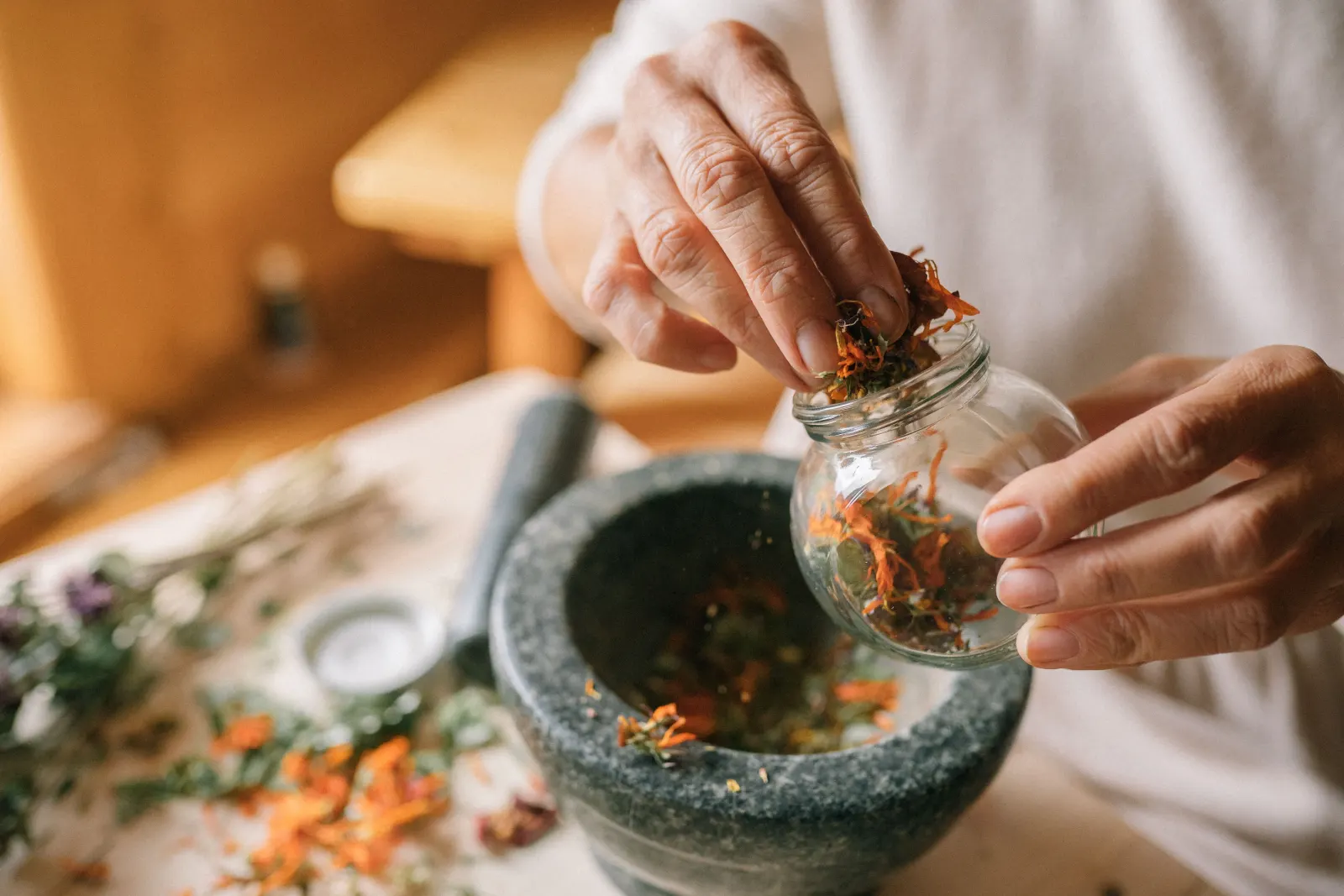
The chosen botanicals are crushed, ground, or moistened with warm water, oil, or herbal tea right in front of you, forming a fragrant paste with a texture similar to a thick compress.
You'll rest comfortably on a table with the relevant area exposed, and the warm paste is gently spread directly onto your skin, which may feel pleasantly warm, slightly tingling, or soothing depending on the herbs used.
A soft cloth or gauze bandage is laid over the poultice to hold it in place, and you'll rest quietly for anywhere from 20 minutes to a couple of hours while the botanicals do their work.
Your practitioner carefully removes the cloth and poultice, gently cleanses the area, and checks your skin, asking how you felt during the application and noting any reactions.
You'll receive simple aftercare suggestions, such as keeping the area clean, staying hydrated, and whether a repeated session over the coming days might be beneficial for your ongoing wellness routine.
The Evidence
What the evidence says about herbal poultice therapy, its traditional roots, and how to use it safely.
Rooted in tradition, limited by modern clinical research
Herbal poultice therapy has a long cross-cultural history but lacks robust clinical trial support. Some individual herbs used in poultices have been studied in isolation, though these findings do not directly validate the practice as a whole.
The evidence base is classified as traditional-use. Some herbs commonly used in poultices, such as calendula and turmeric, have been studied for their constituent compounds in laboratory settings. These findings are preliminary and do not directly validate poultice therapy as a practice. Well-designed clinical trials are limited.
Evidence of topical botanical applications appears in ancient Egyptian papyri, Ayurvedic texts, and traditional Chinese medicine records. Indigenous traditions across the Americas, Africa, and the Pacific Islands developed similar practices independently. In European folk medicine, poultices remained common household remedies well into the 19th century.
As an Alternative modality, herbal poultice therapy operates outside conventional medical systems and draws on plant-based knowledge traditions. It is typically used for localized, surface-level concerns rather than systemic conditions. It is not a substitute for professional assessment of wounds, infections, or persistent symptoms.
Always perform a patch test before applying a new herb to a larger skin area. Comfrey contains pyrrolizidine alkaloids and is not considered safe for long-term or large-area topical use. Poultices should not be applied over infected, ulcerated, or significantly broken skin without medical supervision. Those with chronic skin conditions should seek practitioner guidance first.
Herb selection in poultice therapy is typically tailored to the individual. A trained herbalist or naturopath can advise on suitable botanicals, preparation, and application duration. If you are taking prescription medications or have a chronic health condition, consult a qualified health professional before starting any herbal therapy.
This modality is not appropriate as a primary response to infected wounds, serious injuries, or conditions requiring medical attention. The absence of strong clinical evidence means that outcome claims should be viewed with caution. If symptoms worsen, persist, or are accompanied by fever or significant swelling, seek professional assessment promptly.
Safety first
General guidance to help you decide whether this approach is appropriate for you. This is informational only and not a substitute for medical, psychological, or professional advice.
Some situations call for extra care or a different approach. Share any conditions, injuries, or sensitivities with your practitioner before your first session.
If you are pregnant, managing a health condition, recovering from injury or surgery, or taking medication, consult a qualified healthcare professional first.
Look for clear boundaries, transparent pricing, and practitioners who avoid fear-based claims or pressure to book frequent sessions.
Mild, short-lived effects such as tenderness, tiredness, or temporary soreness can occur. Rest, hydrate, and tell your practitioner how you respond.
For you?
A simple, human way to weigh it up. This is general guidance, not personal medical advice — a qualified practitioner can advise on your situation.
Gyfts is a discovery platform, not a medical provider. Nothing here diagnoses, treats or replaces professional care. In an emergency, contact your local emergency number.
In their words
Before you book
FAQ
Many simple herbal poultices can be prepared at home using common botanicals, and they are generally considered low-risk for healthy adults when applied to intact skin. However, it is important to research the specific herbs you plan to use, perform a patch test first, and avoid applying poultices to broken, infected, or sensitive skin without professional guidance. When in doubt, consulting a qualified herbalist or healthcare provider is always a good step.
A poultice involves applying plant material — either fresh, crushed, or moistened — directly to the skin in a semi-solid form, typically covered with cloth. A compress uses a cloth soaked in an herbal liquid and applied to the skin without the plant material itself. A salve is a semi-solid preparation made with oils and waxes that is applied more thinly and does not involve the bulk plant material. Each method delivers plant compounds to the skin in different ways and may suit different needs.
The evidence for herbal poultice therapy as a practice is currently classified as traditional-use, meaning it is supported primarily by historical and cultural knowledge rather than modern clinical trials. Some individual herbs used in poultices have been studied in laboratory settings for specific properties, but these findings do not directly confirm the effectiveness of poultice therapy overall. Those interested in this modality should weigh the traditional evidence thoughtfully and discuss it with a healthcare provider.
References
Educational sources that inform this overview. Inclusion is for context and does not imply endorsement.
Full citations are maintained by the Gyfts editorial team and reviewed periodically.
Keep exploring
Browse practitioners, explore honest overviews, and take what you learn to a conversation — at your own pace.