What it is
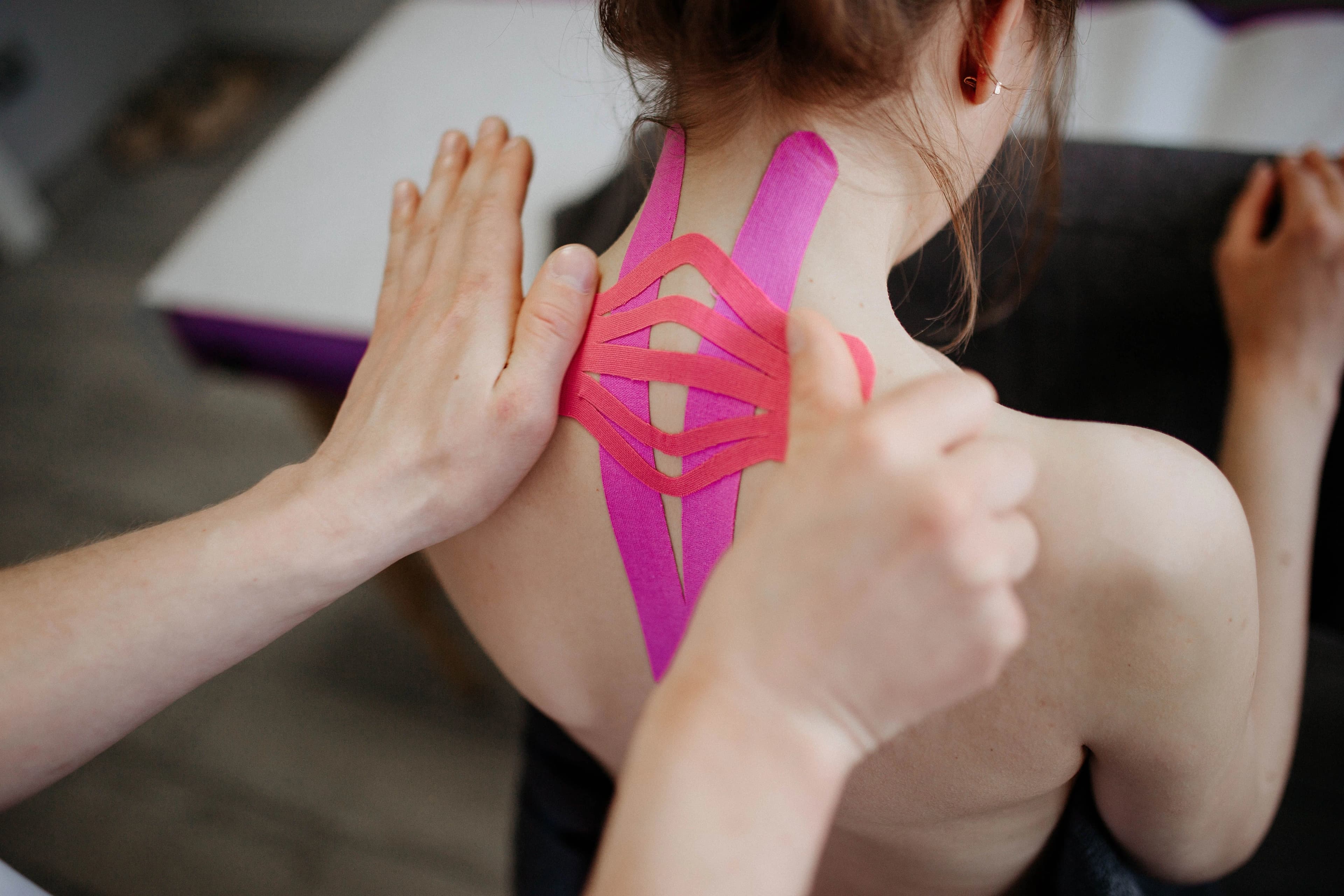
Elastic tape applied to skin to support muscles and joints while keeping you moving freely.
Support your body without holding it back.
At a glance
What it is
Elastic tape applied to skin to support muscles and joints while keeping you moving freely.
Why explore it
It may ease discomfort and boost body awareness for knees, shoulders, or back alongside regular care.
How it’s experienced
A practitioner tapes your area of concern in minutes, and you wear it comfortably for two to five days.
Evidence context
Research is mixed, with some modest benefits noted, so it works best as a complement to proven care.
See the evidence snapshotSafety
Generally safe with a pro, but watch for skin reactions and avoid it over wounds or adhesive allergies.
See staying safeHistory & Origin
Kinesiology taping is a rehabilitative technique that involves applying a specially designed elastic adhesive tape to the skin over and around muscles, joints, and soft tissues. Unlike rigid athletic tape, kinesiology tape is engineered to mimic the elasticity of human skin, allowing for a full range of motion while remaining in place. Originally developed as a tool for physical therapists and sports medicine practitioners, it has since become widely visible in professional athletics and recreational fitness communities alike.
Practitioners who use kinesiology taping suggest it may support the body in several ways — from providing mild structural support to muscles and joints, to potentially influencing how the nervous system perceives sensation in a given area. The tape is typically applied in specific patterns that vary depending on the condition or area being addressed. Some practitioners use it as part of a broader rehabilitation protocol alongside manual therapy, exercise, or other complementary modalities.
Kinesiology taping has grown significantly in popularity over the past few decades, moving well beyond the realm of elite sport into everyday wellness and recovery settings. It is considered a complementary approach, meaning it is most commonly used alongside — rather than in place of — conventional medical care. While many people report positive experiences with the technique, it is important to understand that the evidence base is still developing, and individual results can vary. As with any complementary modality, it is advisable to consult with a qualified healthcare provider before incorporating kinesiology taping into a care plan, particularly for those managing an existing medical condition.
Kinesiology taping was developed in Japan during the 1970s by Dr. Kenzo Kase, a chiropractor and acupuncturist who sought a taping method that could support injured tissues without limiting the natural range of motion that conventional rigid sports tape restricted. Conventional athletic taping had long been used to stabilize joints, but Kase observed that immobilization could interfere with circulation and slow the healing process. His goal was to develop an elastic tape that moved with the body rather than against it.
Kase introduced his technique, which he called Kinesio Taping, in Japan in the late 1970s and gradually refined the approach over the following decade. The method began gaining international visibility when it was introduced to the United States and parts of Europe during the 1980s and 1990s, primarily within sports medicine and physical therapy communities. Global awareness expanded dramatically during the 2008 Beijing Olympic Games, when brightly colored kinesiology tape was visibly worn by high-profile athletes across multiple sports, sparking widespread public curiosity.
Since then, the broader category of kinesiology tape has grown into a commercially diverse market, with numerous brands and variations now available both to professionals and consumers. The technique has also evolved beyond its sports origins, with practitioners applying it in clinical settings for lymphedema management, postural support, and pediatric rehabilitation, among other uses.
Mechanism
Kinesiology taping is thought to work through several proposed mechanisms involving the skin, nervous system, and soft tissue — though the science is still evolving.
Your first visit
A typical session outline to help you feel prepared
A kinesiology taping session is a hands-on experience where specially designed elastic tape is applied to your skin to support muscles and joints while you stay active.
Your practitioner starts by asking about your symptoms, activity level, and goals. This helps them understand which areas need support and choose the right taping technique for you.
You may be asked to move, stretch, or hold certain positions so your practitioner can observe how your body moves. This quick visual check guides exactly where and how the tape will be applied.
The target area is cleaned and dried thoroughly, and body hair may need to be trimmed for the tape to adhere well. Avoid applying lotion or oils before your session, as this helps the tape stick properly.
Your practitioner cuts strips of elastic kinesiology tape into specific shapes — often Y, I, or fan cuts — tailored to the area being addressed. Each shape serves a different purpose depending on your needs.
You will be guided into a gentle stretch or specific body position while each strip is applied with a precise amount of tension. You may feel a light tugging or warmth on the skin as the tape is smoothed down.
Your practitioner will rub the tape firmly to activate the heat-sensitive adhesive and ask you to move through your range of motion. This confirms the tape feels comfortable and is sitting correctly on the skin.
The tape is designed to stay on for two to five days through showers, sweat, and light activity. Your practitioner will walk you through how to pat it dry after water exposure and when to remove it safely.
Before you leave, you will discuss whether additional sessions or adjustments would be helpful based on how your body responds. Many people notice changes in comfort or movement within the first day of wearing the tape.
The Evidence
What the research currently shows about kinesiology taping, where the evidence is strong, and where important gaps remain.
Promising in some areas, but findings remain mixed
Kinesiology taping has a growing research base, with some studies showing short-term benefits for pain and movement. However, results are inconsistent across conditions, and placebo effects are difficult to rule out — making firm conclusions premature.
Systematic reviews of kinesiology taping show mixed results across conditions including knee pain, shoulder impingement, and lower back pain. Some studies report modest short-term improvements in pain and range of motion. Others find little difference compared to sham taping. The evidence is not yet strong enough to support broad clinical recommendations.
Blinding participants in taping studies is inherently difficult — most people know whether they are wearing real tape. This introduces expectation bias. Protocols, populations, and outcome measures also vary widely between studies, limiting comparability. Researchers generally agree that higher-quality, standardised trials are still needed.
In clinical and sports settings, kinesiology taping is typically one component of a broader rehabilitation plan that may include exercise, manual therapy, or physiotherapy. Its value is generally understood in this supporting role rather than as a standalone intervention. Using it in isolation for a significant injury or condition is not well supported by current evidence.
Kinesiology taping is a recognised tool within physiotherapy, sports medicine, and occupational therapy. Application technique, tension, and pattern vary by practitioner and condition. Outcomes are likely influenced by the skill and training of the person applying the tape, which is one reason self-application without guidance may produce different results.
Skin irritation and adhesive reactions are the most common adverse effects. Tape should not be applied over broken skin, active infections, or unassessed masses. Contraindications include known adhesive allergy, deep vein thrombosis, and active malignancy in the area. Removal should be done carefully to avoid skin tears, particularly in older adults or those with sensitive skin.
If you are experiencing persistent pain, swelling, or reduced function, a qualified healthcare professional should assess you before taping is considered. Kinesiology taping does not address underlying structural or medical causes of symptoms. It is a supportive tool, not a first-line response to unassessed or worsening conditions.
Safety first
General guidance to help you decide whether this approach is appropriate for you. This is informational only and not a substitute for medical, psychological, or professional advice.
If you are pregnant, managing a health condition, recovering from injury or surgery, or taking medication, consult a qualified healthcare professional first.
Some situations call for extra care or a different approach. Share any conditions, injuries, or sensitivities with your practitioner before your first session.
Look for clear boundaries, transparent pricing, and practitioners who avoid fear-based claims or pressure to book frequent sessions.
Mild, short-lived effects such as tenderness, tiredness, or temporary soreness can occur. Rest, hydrate, and tell your practitioner how you respond.
For you?
A simple, human way to weigh it up. This is general guidance, not personal medical advice — a qualified practitioner can advise on your situation.
Gyfts is a discovery platform, not a medical provider. Nothing here diagnoses, treats or replaces professional care. In an emergency, contact your local emergency number.
In their words
Before you book
FAQ
Pre-cut consumer kinesiology tape is widely available, and many people do apply it at home using instructional guides. However, the effectiveness of any taping application depends significantly on correct placement, tension, and technique. For best results — particularly for a specific injury or condition — it is advisable to have the initial application performed or supervised by a trained practitioner.
Most kinesiology tape is designed to be worn for two to five days, including during showering and light water exposure. The adhesive is typically water-resistant, though prolonged submersion may reduce adhesion. If the tape begins to peel, causes irritation, or produces any skin reaction before that time, it should be removed promptly.
This is a question that researchers are still actively exploring. Current evidence is considered emerging and mixed — some studies suggest modest short-term benefits for pain and range of motion, while others find results comparable to sham or no taping. Placebo and expectation effects are difficult to rule out in this type of research, and no definitive consensus has been established. Many practitioners view it as a useful adjunct within a broader treatment plan rather than a standalone solution.
References
Educational sources that inform this overview. Inclusion is for context and does not imply endorsement.
Full citations are maintained by the Gyfts editorial team and reviewed periodically.
Keep exploring
Browse practitioners, explore honest overviews, and take what you learn to a conversation — at your own pace.