What it is
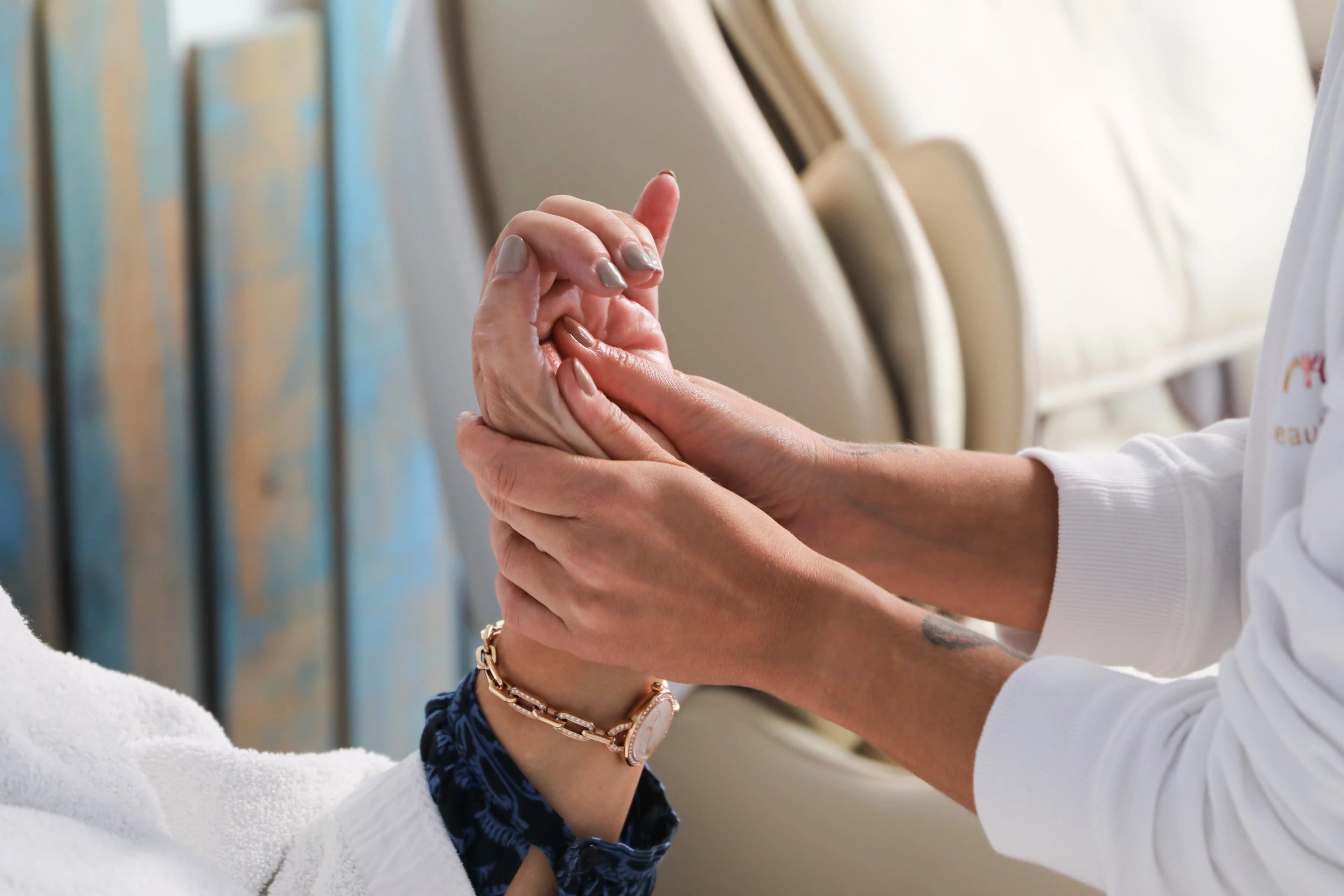
KHT treats the hand as a map of the whole body, using gentle point stimulation for balance.
Your hands, a map to whole-body harmony.
At a glance
What it is
KHT treats the hand as a map of the whole body, using gentle point stimulation for balance.
Why explore it
KHT may ease stress, improve sleep, and support digestion — and you can practice it anywhere.
How it’s experienced
A practitioner applies light pressure or tiny pellets to specific hand points tied to your wellness goals.
Evidence context
KHT is rooted in traditional practice with limited clinical research, so benefits aren't yet scientifically proven.
See the evidence snapshotSafety
KHT is gentle and low-risk, though pregnancy or bleeding disorders warrant a quick check with your provider first.
See staying safeHistory & Origin
Korean Hand Therapy (KHT), known in Korean as Koryo Sooji Chim, is a system of holistic healing developed in South Korea that treats the hand as a complete microsystem of the entire human body. Rooted in traditional East Asian medicine principles, KHT holds that specific points and zones on the hands correspond to every organ, limb, and bodily system. By stimulating these points through acupressure, miniature needles, magnets, seeds, or mild electrical stimulation, practitioners aim to encourage the body's natural balance and promote a sense of overall well-being.
KHT was formally developed and systematized in the early 1970s by a South Korean physician who mapped out hundreds of correspondence points across the hand. Since then, it has been practiced across South Korea, parts of Asia, and increasingly in holistic wellness communities worldwide. It is often positioned as a convenient, accessible complement to other wellness practices, partly because self-care techniques can be learned and applied at home with minimal equipment.
As a holistic modality, KHT is typically sought by individuals looking for gentle, non-invasive approaches to supporting their well-being alongside conventional healthcare. Practitioners and proponents suggest it may be associated with relaxation, stress reduction, and a general sense of balance. Like many traditional healing systems, it is considered by its advocates to address the whole person rather than isolated symptoms, though individuals are always encouraged to consult qualified healthcare providers for any medical concerns.
Korean Hand Therapy was formally developed and systematized in South Korea in the early 1970s. A South Korean practitioner with a background in medicine and East Asian healing traditions spent years mapping what he identified as hundreds of correspondence points across the surface of the hand, creating a detailed chart linking hand zones to every region of the body. This work drew heavily on the foundational principles of traditional Korean and Chinese medicine, including acupuncture meridian theory and the concept of microsystems — the idea that a small part of the body can reflect and influence the whole.
While hand acupuncture and hand-based healing concepts existed in broader East Asian medical traditions prior to this formalization, KHT as a distinct, codified system is considered a relatively modern development within the traditional medicine landscape. It gained popularity in South Korea and gradually spread to other parts of Asia, Europe, and North America, often carried by Korean diaspora communities and practitioners trained in integrative and holistic health. Today it is taught in some holistic health training programs and practiced within wellness and complementary medicine contexts internationally.
Mechanism
Korean Hand Therapy is based on the idea that the hand is a complete microsystem reflecting the entire body, with specific points linked to organs and body regions.
Your first visit
A typical session outline to help you feel prepared
Your session centers entirely on your hands, where a practitioner uses tiny needles, seeds, or magnets on specific points that correspond to your whole body.
Your practitioner will ask about your main concerns, health history, and any areas of discomfort. This helps them map out which hand points to focus on during your session.
The practitioner examines your hands closely, looking at color, texture, and sensitivity of specific zones. They may gently press certain points to identify areas of tenderness that correspond to your concerns.
Once key points are identified, the practitioner may use a small pen or marker to map out the specific hand points they plan to stimulate. Your hands stay in a relaxed, open position throughout.
Depending on your needs and sensitivity, the practitioner selects their tools, which may include tiny sterile single-use needles, small seeds, or magnets. They will let you know what to expect before beginning.
Tools are applied to precise points on your hand, which can feel like a mild pressure, a tiny pinch, or nothing at all. Many people find this phase deeply relaxing despite working only on the hands.
You rest quietly for 15 to 30 minutes while the points are active, remaining fully clothed and comfortable in your seat or a reclined position. Some people feel warmth, tingling, or a pleasant calm settling in.
The practitioner carefully removes any needles and checks in about what you noticed or felt. Seeds or magnets may be left in place with gentle tape so they can continue working between sessions.
Your practitioner may show you simple self-massage techniques or point locations you can press at home to support your wellbeing between visits. Sessions typically run 30 to 60 minutes from start to finish.
The Evidence
What the current evidence says about Korean Hand Therapy, and how to understand its traditional roots alongside its research limitations.
Rooted in tradition, limited by formal research
Korean Hand Therapy is supported by longstanding cultural practice and practitioner experience, but robust clinical research is currently lacking. It is best understood as a complementary wellness practice within a traditional East Asian healing framework.
Small-scale studies have explored KHT in areas such as pain perception and relaxation, but these are constrained by small sample sizes, lack of control groups, and absence of blinding. Large-scale randomized controlled trials are currently absent. The microsystem theories underlying KHT are not established within conventional biomedical science.
Its founder mapped hundreds of hand correspondence points using principles from traditional Korean and Chinese medicine, including acupuncture meridian theory and microsystem concepts. While hand-based healing existed in broader East Asian traditions, KHT as a codified system is a relatively modern development within that lineage.
Practitioners use the hand as a map of the whole body, applying acupressure, seeds, magnets, or fine needles to specific points. It is commonly explored for stress relief, relaxation, and self-care rather than as a standalone intervention. Its accessibility makes it a practical addition to broader wellness routines.
KHT should not be approached as a substitute for professional assessment or medical care. The correspondence and energy theories it relies on remain outside established biomedical frameworks. Anyone exploring KHT is encouraged to maintain open communication with their primary healthcare provider and treat it as a complementary, not primary, wellness option.
Those with bleeding disorders, anticoagulant therapy, active skin conditions, peripheral neuropathy, immune compromise, or pregnancy should consult a healthcare provider first. When needles or press-tacks are used, sterile single-use tools are essential to minimise skin irritation or infection risk. KHT does not replace professional medical care.
Look for practitioners who are transparent about their training, use sterile single-use tools, and do not make inflated outcome claims. KHT is sometimes offered alongside acupuncture or other East Asian medicine practices. Always inform your primary healthcare provider about any complementary practices you are exploring.
Safety first
General guidance to help you decide whether this approach is appropriate for you. This is informational only and not a substitute for medical, psychological, or professional advice.
If you are pregnant, managing a health condition, recovering from injury or surgery, or taking medication, consult a qualified healthcare professional first.
Mild, short-lived effects such as tenderness, tiredness, or temporary soreness can occur. Rest, hydrate, and tell your practitioner how you respond.
Some situations call for extra care or a different approach. Share any conditions, injuries, or sensitivities with your practitioner before your first session.
Look for clear boundaries, transparent pricing, and practitioners who avoid fear-based claims or pressure to book frequent sessions.
For you?
A simple, human way to weigh it up. This is general guidance, not personal medical advice — a qualified practitioner can advise on your situation.
Gyfts is a discovery platform, not a medical provider. Nothing here diagnoses, treats or replaces professional care. In an emergency, contact your local emergency number.
In their words
Before you book
FAQ
Korean Hand Therapy shares theoretical roots with traditional acupuncture, including concepts of energy flow and correspondence points, but it is a distinct practice focused exclusively on the hand. While some KHT practitioners use small needles, the system was developed separately and is considered its own codified modality. It is not a replacement for acupuncture or any other medical treatment.
Many KHT practitioners teach basic self-care techniques that individuals can use at home, often using acupressure, seeds, or press-tacks on specific hand points. However, it is generally recommended to first work with a trained practitioner to learn correct point locations and application methods. Self-care use should complement, not replace, professional guidance or conventional healthcare.
The current evidence base for Korean Hand Therapy is at the traditional-use level, meaning it is supported primarily by cultural practice and practitioner experience rather than large, rigorous clinical trials. Some small exploratory studies exist, but they have significant methodological limitations. Anyone considering KHT should understand it as a traditional wellness practice, not a clinically validated medical treatment.
References
Educational sources that inform this overview. Inclusion is for context and does not imply endorsement.
Full citations are maintained by the Gyfts editorial team and reviewed periodically.
Keep exploring
Browse practitioners, explore honest overviews, and take what you learn to a conversation — at your own pace.