What it is
A meditative art practice using circular patterns rooted in Hindu and Buddhist traditions.
Find stillness through the art of the circle.
At a glance
What it is
A meditative art practice using circular patterns rooted in Hindu and Buddhist traditions.
Why explore it
Offers a gentle, creative way to ease stress and build present-moment awareness.
How it’s experienced
You draw, color, or meditate on circular designs solo or with a guide in a calm setting.
Evidence context
Ancient roots, limited clinical research, though many report benefits for relaxation and focus.
See the evidence snapshotSafety
Generally very safe, though unexpected emotions can arise, so support is encouraged if needed.
See staying safeHistory & Origin
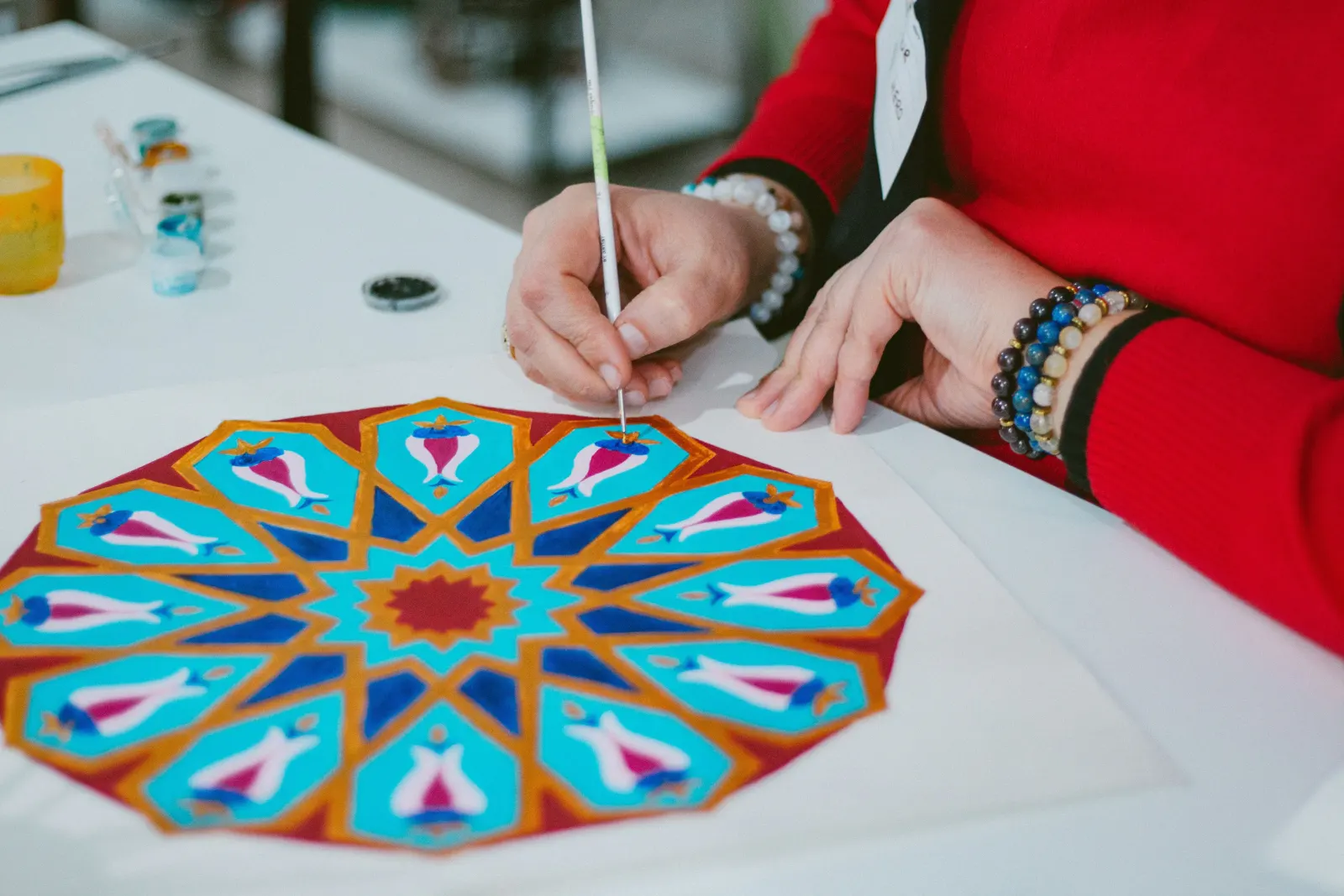
Mandala therapy is a creative and contemplative practice that uses the creation or focused observation of circular, symmetrical geometric designs — known as mandalas — as a tool for self-exploration, relaxation, and inner balance. Rooted in ancient spiritual traditions, the practice has been adopted by some art therapists, holistic health practitioners, and wellness educators as a means of supporting emotional expression and stress reduction. Participants may draw, paint, color, or simply meditate upon mandala forms as part of their session.
The word 'mandala' comes from the Sanskrit term for 'circle,' and these intricate patterns have been used ceremonially across Hindu, Buddhist, Jain, and Indigenous traditions for centuries. In contemporary wellness settings, mandala therapy is often blended with principles from art therapy, mindfulness, and mind-body practices, though it remains distinct from licensed clinical art therapy. Some practitioners suggest that the repetitive, focused nature of creating or contemplating mandalas may be associated with a calming of mental chatter and a gentle shift in emotional awareness.
It is important to understand that mandala therapy, as described here, sits within the metaphysical and creative wellness space rather than conventional medicine. It is not a substitute for mental health treatment, medical care, or psychotherapy. Those drawn to this practice are often seeking a gentle, reflective complement to their broader wellness routine — one that invites creativity, stillness, and symbolic self-inquiry.
The mandala has appeared across human cultures for thousands of years, with some of its earliest known uses tied to Hindu and Buddhist spiritual traditions in South and Southeast Asia. In these contexts, mandalas were — and continue to be — used as sacred diagrams representing the cosmos, divine energies, or the structure of the self. Tibetan Buddhist monks have long created intricate sand mandalas as acts of devotion, meditation, and impermanence — only to ceremonially dismantle them upon completion.
In the 20th century, Swiss psychiatrist Carl Jung became notably interested in mandala symbolism, incorporating circular drawings into his explorations of the unconscious mind. Jung himself drew mandalas and interpreted them as expressions of the psyche's drive toward wholeness. While Jung's work was theoretical rather than clinical in the modern sense, it helped introduce mandala imagery into Western psychological and wellness discourse. From there, mandala-making gradually found a home in art therapy, mindfulness programs, and holistic healing circles, where it continues to be used today as a gentle tool for self-reflection and inner exploration.
Mechanism
Mandala therapy is thought to work through focused creative engagement that may support a quieter, more reflective state of mind.
Your first visit
A typical session outline to help you feel prepared
A Mandala Therapy session blends gentle breathwork with intuitive circular drawing to help you access emotions and inner wisdom through color and form.
Your facilitator greets you warmly and invites you to get comfortable, briefly explaining how the session will unfold so nothing feels surprising.
You're gently asked what brought you in today — there's no wrong answer. This helps your facilitator understand what's on your mind and tailor any prompts they offer during the drawing process.
Before picking up a single crayon or pencil, you'll spend a few minutes on slow, guided breathing to quiet mental chatter and drop into a more receptive, present state.
You're invited to select colors from a tray or set of supplies based purely on instinct — no color theory required. What draws you in the moment is considered meaningful in itself.
Using a pre-printed circular template or a circle your facilitator lightly traces, you begin filling the space with lines, shapes, and color at your own pace. Soft background music often plays, and th
As the drawing continues — usually 20 to 40 minutes — many people notice a quiet, absorbing focus settle in. Emotions, images, or memories may surface naturally; there's no pressure to analyze them in the moment.
Once your mandala feels complete, you and your facilitator look at it together. You're invited to share what came up for you — emotionally, visually, or symbolically — with your facilitator offering g
The session wraps with a brief grounding moment — a few breaths, a stretch, or simply sitting quietly — before your facilitator suggests any simple practices you might carry forward between sessions.
The Evidence
What the research does and does not say about mandala therapy, and how to understand its place in wellness.
Rooted in tradition, with limited formal research
Mandala therapy draws on centuries of cultural and spiritual practice. Small preliminary studies hint at short-term relaxation benefits, but the evidence base is limited and no firm clinical conclusions can be drawn.
Mandala therapy is not designed to be evaluated through the same lens as medical interventions. Its meaning and potential benefit are largely personal, reflective, and culturally situated. Approaching it with curiosity rather than clinical expectation is consistent with how the practice has always been understood.
Available studies are few, methodologically limited, and insufficient to support broad conclusions. Some suggest short-term relaxation effects from focused coloring or drawing activities. Mandala therapy as a standalone practice has not been validated by large controlled trials and should not be presented as an evidence-based intervention.
Tibetan Buddhist sand mandalas, Hindu yantra diagrams, and Carl Jung's 20th-century explorations of circular imagery all reflect the enduring human relationship with this form. In contemporary wellness settings, this heritage informs the practice without requiring participants to hold any particular spiritual belief.
It is not equivalent to licensed art therapy or any regulated clinical service. Practitioners vary widely in training and background. Inflated outcome claims should be viewed with caution. Those experiencing significant emotional distress, mental health challenges, or medical concerns should seek qualified professional support alongside or instead of this practice.
Individuals with obsessive-compulsive tendencies may find that pursuing symmetry reinforces rather than relieves distress. Those with photosensitive epilepsy should exercise caution with complex digital or projected geometric patterns. Unexpected emotions can arise during reflective creative work — having access to appropriate support is encouraged.
When seeking a session, it is reasonable to ask about a practitioner's training, approach, and how they integrate mandala work into their broader practice. Those seeking structured therapeutic support should look for practitioners with recognised qualifications in art therapy or a related field, where formal professional standards apply.
Safety first
General guidance to help you decide whether this approach is appropriate for you. This is informational only and not a substitute for medical, psychological, or professional advice.
Some situations call for extra care or a different approach. Share any conditions, injuries, or sensitivities with your practitioner before your first session.
If you are pregnant, managing a health condition, recovering from injury or surgery, or taking medication, consult a qualified healthcare professional first.
Look for clear boundaries, transparent pricing, and practitioners who avoid fear-based claims or pressure to book frequent sessions.
Mild, short-lived effects such as tenderness, tiredness, or temporary soreness can occur. Rest, hydrate, and tell your practitioner how you respond.
For you?
A simple, human way to weigh it up. This is general guidance, not personal medical advice — a qualified practitioner can advise on your situation.
Gyfts is a discovery platform, not a medical provider. Nothing here diagnoses, treats or replaces professional care. In an emergency, contact your local emergency number.
In their words
Before you book
FAQ
No artistic skill or experience is required for mandala therapy. The practice is focused on the process of creating rather than the quality of the final product. Participants are encouraged to engage without judgment or expectation of technical perfection.
Mandala therapy and clinical art therapy are not the same thing, though they may share some overlapping tools. Licensed art therapy is a regulated mental health profession conducted by credentialed therapists. Mandala therapy, as practiced in holistic wellness contexts, is a contemplative and creative activity without clinical oversight or therapeutic licensure.
There is no established clinical guideline for the number of mandala therapy sessions needed, and individual experiences vary widely. Some people report a sense of calm or clarity after a single session, while others find that regular practice over time feels more meaningful. Given its traditional-use evidence base, any benefits are best understood as personal and experiential rather than clinically predictable.
References
Educational sources that inform this overview. Inclusion is for context and does not imply endorsement.
Full citations are maintained by the Gyfts editorial team and reviewed periodically.
Keep exploring
Browse practitioners, explore honest overviews, and take what you learn to a conversation — at your own pace.