What it is
Gentle Maya-rooted abdominal massage supporting digestive, pelvic, and reproductive wellness.
Ancient abdominal wisdom for whole-body balance.
At a glance
What it is
Gentle Maya-rooted abdominal massage supporting digestive, pelvic, and reproductive wellness.
Why explore it
Sought for menstrual ease, digestive comfort, fertility prep, and postpartum abdominal restoration.
How it’s experienced
Slow abdominal strokes on a draped table, after a health intake, often feel warming and grounding.
Evidence context
Benefits come from Maya healing tradition, not modern trials, so use it to complement medical care.
See the evidence snapshotSafety
Safe with a trained practitioner, but avoid with pregnancy, an IUD, infection, or recent abdominal surgery.
See staying safeHistory & Origin
Mayan Abdominal Massage, also known as the Arvigo Techniques of Maya Abdominal Therapy® in its modern adapted form, is a non-invasive, external abdominal and pelvic massage rooted in the healing traditions of Mesoamerican Maya culture. Practitioners apply gentle, guided pressure to the abdomen and lower back with the intention of repositioning the soft tissues and organs of the abdominal and pelvic cavities, improving circulation, and supporting the body's innate capacity for self-regulation. It is used holistically, meaning that sessions typically address not only the physical abdomen but also the emotional and spiritual dimensions that Maya traditional healers have long understood as interconnected with digestive and reproductive health.
This practice draws on a centuries-old tradition of indigenous Maya healing, in which the uterus, digestive organs, and surrounding connective tissues were considered central to overall wellbeing. Trained practitioners today use slow, rhythmic strokes and targeted abdominal work informed by this lineage, often combining it with self-care instruction so that individuals can continue supportive massage at home between sessions.
Mayan Abdominal Massage is sought by people exploring holistic approaches to digestive discomfort, menstrual irregularities, fertility concerns, and general pelvic wellness. It is important to note that the evidence base for this practice is rooted in traditional use and practitioner observation rather than clinical trials, and it should be understood as a complementary approach rather than a substitute for conventional medical evaluation or treatment.
Mayan Abdominal Massage originates from the traditional healing systems of the indigenous Maya peoples of Mesoamerica, whose sophisticated understanding of the human body and its relationship to nature, spirit, and community developed over thousands of years. Within Maya healing culture, the abdomen was considered a center of life force, and skilled traditional healers — often called sobadoras or curanderas — used external abdominal massage as part of a broader system of care that also incorporated herbal medicine, spiritual ceremony, and community-based healing practices.
This knowledge was transmitted orally and through apprenticeship across generations. In more recent decades, interest in this lineage grew in part through the work of practitioners who studied with traditional Maya healers in Belize and sought to document and share aspects of these techniques more widely. Today, various schools and training programs exist that teach massage approaches inspired by or adapted from this tradition. It is worth acknowledging that, as with many indigenous healing traditions, the global dissemination of Mayan Abdominal Massage has raised important conversations about cultural respect, intellectual ownership, and the responsibilities of practitioners outside the originating culture.
Mechanism
Mayan Abdominal Massage works through the application of intentional external pressure guided by traditional Maya healing principles.
Your first visit
A typical session outline to help you feel prepared
A Mayan Abdominal Massage session combines gentle abdominal bodywork with self-care guidance to support digestive and pelvic wellness.
Your session opens with a relaxed conversation about your health history, digestion, menstrual or reproductive concerns, and what brings you in. This helps your practitioner understand your needs befo
Your practitioner may observe your posture and ask you to stand or move in simple ways to assess how your pelvis and spine are aligned, since uterine or digestive positioning is central to this work.
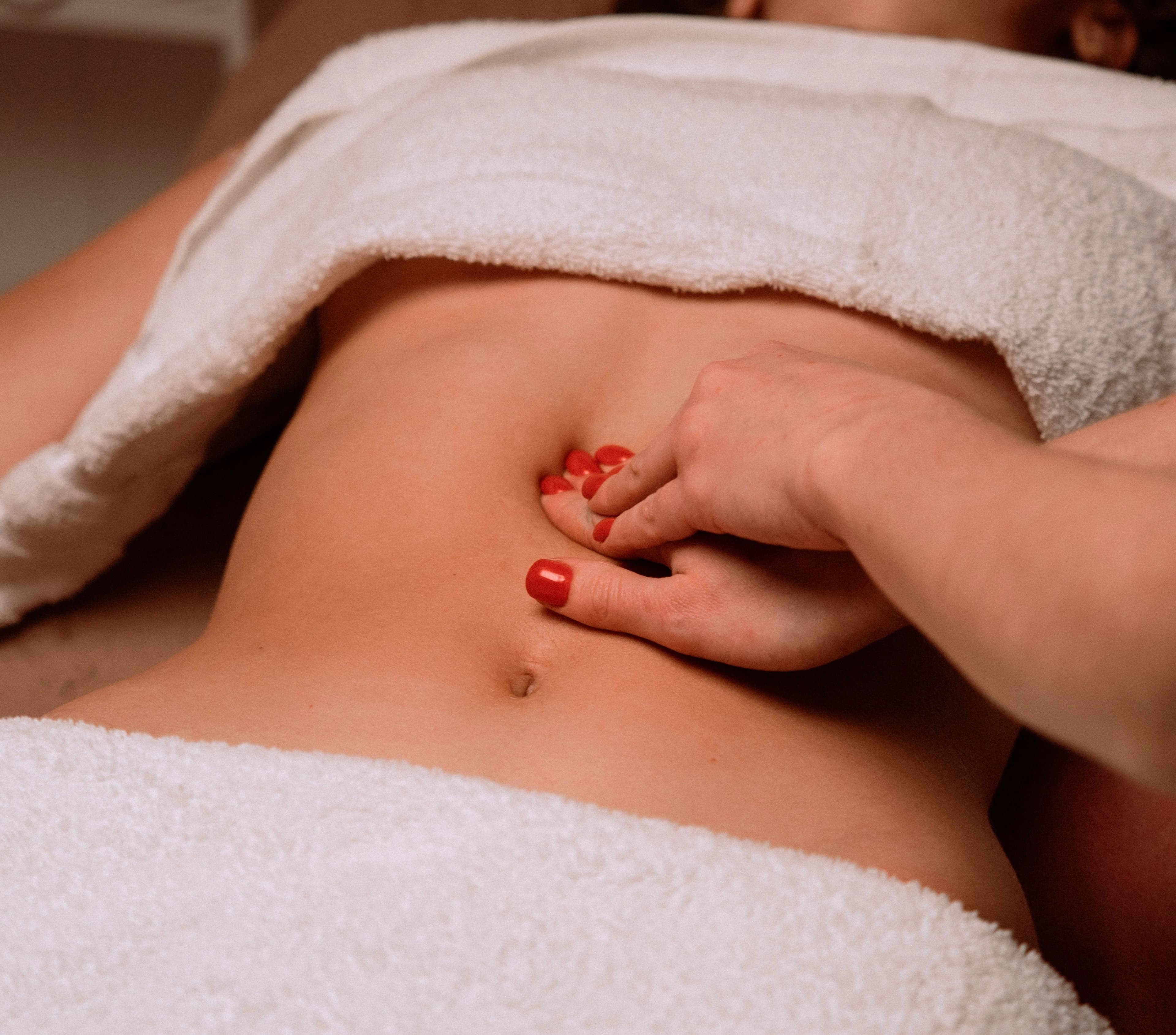
You'll lie face-up on a massage table, fully draped except for your abdomen. Wear or bring comfortable clothing you don't mind having slightly shifted at the waistline.
Using slow, deliberate strokes, your practitioner works across your belly from the ribcage down toward the pubic bone, following the path of the digestive organs and uterine ligaments with firm yet gentle pressure.
You'll be invited to turn over so your practitioner can apply rhythmic massage to your lower back and sacral area, addressing tension that often connects to pelvic congestion and discomfort.
You may feel warmth, gurgling in the abdomen, an emotional release, or a deep settling in your pelvis — all considered normal responses as circulation and organ positioning are encouraged.
Before you leave, your practitioner will walk you through a simple home massage sequence you can repeat daily between sessions, which is a hallmark of this tradition and considered essential to lasting benefit.
Your session closes with recommendations about hydration, rest, and any lifestyle adjustments. Your practitioner may suggest a series of sessions depending on your goals and what was noticed during the work.
The Evidence
What the research says, what tradition holds, and what to keep in mind before exploring Mayan Abdominal Massage.
Rooted in tradition; formal research is very limited
Mayan Abdominal Massage is supported primarily by generations of indigenous cultural knowledge and practitioner observation. Peer-reviewed clinical evidence is sparse, so definitive claims about outcomes cannot be made at this time.
The evidence base sits at traditional-use level. Existing studies are generally small, lack control groups, or have not been replicated. Analogies are sometimes drawn to visceral manipulation research, but findings from that field are not directly transferable. Inflated outcome claims should be viewed with caution.
Within Maya healing culture, the abdomen was considered central to overall wellbeing. Skilled healers used abdominal massage alongside herbal medicine and community-based care. This knowledge was passed down through apprenticeship and oral tradition, and continues to inform modern adapted approaches.
Practitioners understand digestive and reproductive wellbeing as interconnected with emotional and relational health. Sessions are not limited to physical technique — they often include self-care guidance and attention to lifestyle factors, reflecting the holistic orientation of the original Maya healing tradition.
Avoid during pregnancy without medical clearance, active pelvic or abdominal infection, recent surgery, or if an IUD is in place. Those with abdominal aortic aneurysm, clotting disorders, or active cancer should seek physician guidance first. Disclose your full health history to your practitioner before any session.
Look for a practitioner who conducts a thorough health intake, is transparent about their training lineage, and does not make inflated outcome claims. If you experience pain or unusual symptoms during or after a session, stop and consult a healthcare provider. This modality is not a substitute for professional assessment of pelvic or abdominal concerns.
The absence of robust clinical trials means neither strong endorsement nor dismissal is warranted. Many people report positive experiences, and the practice carries a low risk profile when contraindications are respected. Individuals with specific health concerns should discuss this modality with a qualified healthcare provider alongside any other care they are receiving.
Safety first
General guidance to help you decide whether this approach is appropriate for you. This is informational only and not a substitute for medical, psychological, or professional advice.
If you are pregnant, managing a health condition, recovering from injury or surgery, or taking medication, consult a qualified healthcare professional first.
Some situations call for extra care or a different approach. Share any conditions, injuries, or sensitivities with your practitioner before your first session.
Look for clear boundaries, transparent pricing, and practitioners who avoid fear-based claims or pressure to book frequent sessions.
Mild, short-lived effects such as tenderness, tiredness, or temporary soreness can occur. Rest, hydrate, and tell your practitioner how you respond.
For you?
A simple, human way to weigh it up. This is general guidance, not personal medical advice — a qualified practitioner can advise on your situation.
Gyfts is a discovery platform, not a medical provider. Nothing here diagnoses, treats or replaces professional care. In an emergency, contact your local emergency number.
In their words
Before you book
FAQ
Arvigo Techniques of Maya Abdominal Therapy® is a specific trademarked system developed by Dr. Rosita Arvigo based on her studies with a traditional Maya healer in Belize, and it represents one modern formalization of the broader Mayan Abdominal Massage tradition. Other practitioners may offer abdominal massage rooted in similar Maya healing principles under different names or through different training lineages. If this distinction matters to you, it is worth asking a prospective practitioner about their specific training background.
The number of sessions varies depending on the individual's goals and the practitioner's assessment, and there is no single standard protocol. Some practitioners suggest beginning with a series of three to five sessions to allow time for the body to respond, followed by periodic maintenance sessions as desired. Many practitioners also teach clients a self-care home massage routine, which may extend the benefits between sessions.
At this time, the evidence base for Mayan Abdominal Massage is rooted in traditional use and practitioner observation rather than clinical research, and formal scientific studies are limited. Some practitioners draw comparisons to broader visceral manipulation research, but direct clinical evidence specific to this tradition is not yet available. Anyone considering this practice should approach it as a complementary modality rather than a clinically proven treatment.
References
Educational sources that inform this overview. Inclusion is for context and does not imply endorsement.
Full citations are maintained by the Gyfts editorial team and reviewed periodically.
Keep exploring
Browse practitioners, explore honest overviews, and take what you learn to a conversation — at your own pace.