What it is
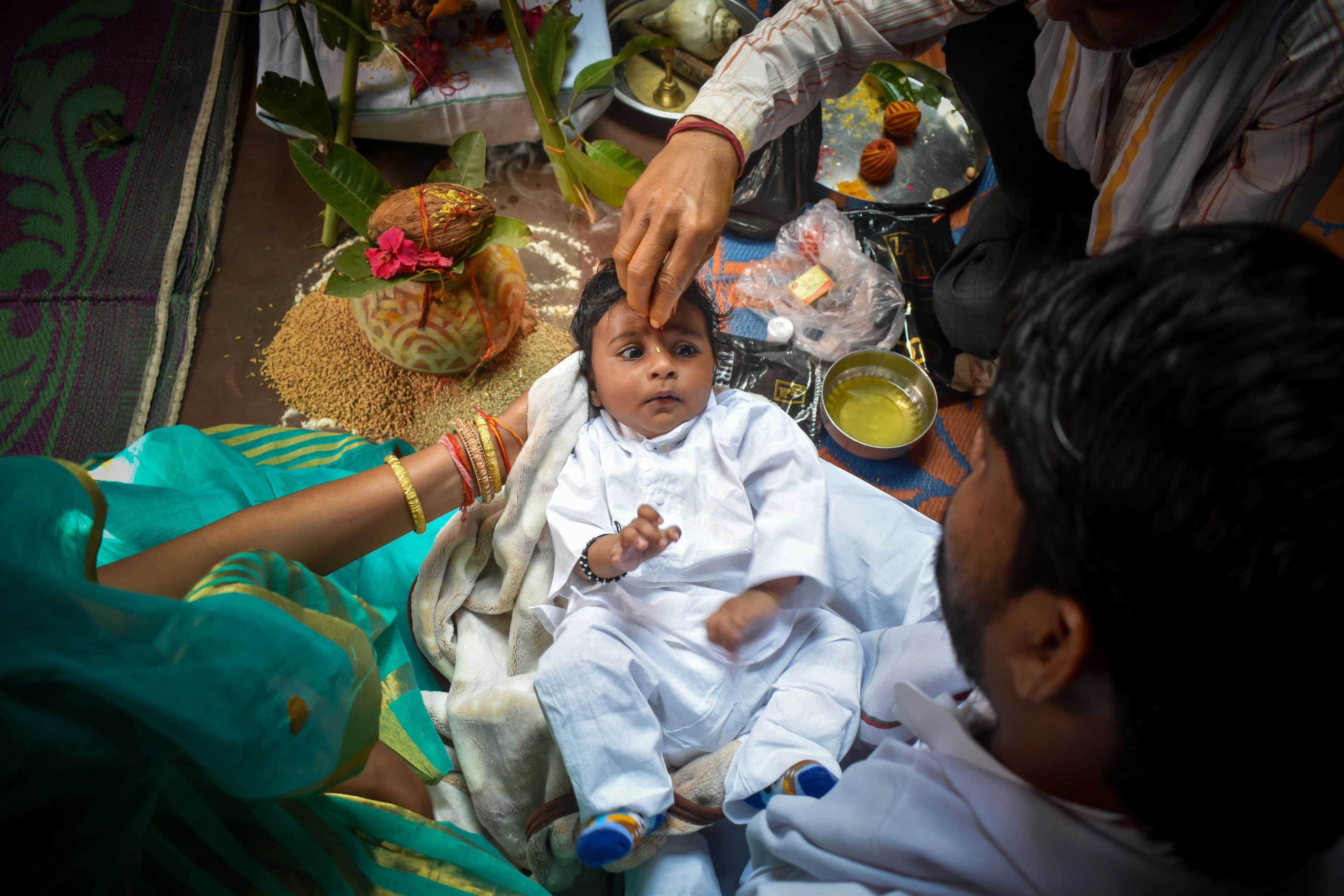
Namakaran is a Hindu naming ceremony that welcomes a newborn through prayer and blessings.
A traditional Indian naming ceremony that formally bestows a name upon a newborn child.
At a glance
What it is
Namakaran is a Hindu naming ceremony that welcomes a newborn through prayer and blessings.
Why explore it
Families choose Namakaran to honor Vedic roots and give their child a meaningful spiritual identity.
How it’s experienced
A priest guides prayers and rituals as the baby's name is whispered at an auspicious moment.
Evidence context
Namakaran is a cherished cultural tradition valued for centuries of community meaning, not clinical study.
See the evidence snapshotSafety
The ceremony is low-risk; ensure your newborn is healthy and guests practice good hand hygiene.
See staying safeHistory & Origin
Namakaran is a traditional naming ceremony in Indian culture that holds significance in bestowing a name upon a child.
Namakaran, derived from Sanskrit words 'nama' (name) and 'karan' (making or creating), is an ancient Hindu ritual that dates back thousands of years in Indian civilization. References to naming ceremonies appear in the Vedas and ancient texts like the Grhya Sutras, which outline detailed protocols for conducting the ceremony with specific rituals and timing considerations. The practice became formalized as one of the Samskaras—the sixteen sacred life-cycle rituals in Hinduism—designed to purify and sanctify different life stages from conception through death.
Historically, Namakaran ceremonies reflected the family's social status, regional customs, and spiritual beliefs. The timing of the ceremony varied across regions and traditions, with some schools recommending the eleventh day after birth, while others preferred the full moon or an auspicious date determined by astrological calculations. The ceremony traditionally involved the father whispering the chosen name into the child's ear, consultation with priests or astrologers for name selection based on birth charts, and the performance of specific rituals and prayers.
As Indian communities spread globally through migration and diaspora, Namakaran ceremonies have been adapted while maintaining core spiritual elements. The practice has evolved to accommodate modern lifestyles while preserving cultural significance, with many families conducting simplified versions or integrating elements from various regional traditions. Today, Namakaran remains an important cultural touchstone for Indian families worldwide, serving as a bridge between traditional heritage and contemporary life.
Mechanism
Namakaran is a broader health tradition or knowledge system rather than a single technique. Practitioners may draw on cultural teachings, observation, lifestyle guidance, ritual, remedies, bodywork, or community practice. Its working model should be described in its own traditional context and not overstated as biomedical proof. People may explore it for cultural continuity, reflection, and supportive wellbeing practices. Namakaran typically occurs between 10 to 41 days after birth, though timing varies by family tradition and regional practice.
Your first visit
A typical session outline to help you feel prepared
A joyful Hindu naming ceremony where your newborn receives their sacred name through prayers, mantras, and blessings shared with family and a presiding priest.
Loved ones and close friends arrive at your home or temple to witness the ceremony, creating a warm, festive atmosphere around the newborn.
The priest prepares the ceremonial space by arranging sacred items including flowers, incense, a small fire or lamp, and offerings such as rice and honey.
The priest chants Sanskrit mantras to invoke blessings from the family deity and ancestors, setting a spiritually protected space for the ceremony.
The name chosen with guidance from an astrologer, often beginning with a letter tied to the baby's birth chart, is formally presented to the priest and gathered family.
The father holds the baby gently and whispers the chosen name into the child's right ear three times, a deeply intimate moment considered the heart of the ceremony.
The priest or a family elder then announces the baby's name aloud to everyone gathered, followed by applause, blessings, and joyful celebration.
A small amount of honey or ghee may be placed on the baby's lips as a symbol of sweetness in life, while elders offer individual blessings and gifts.
The priest closes with final mantras and prayers, and the gathering typically continues with a shared meal celebrating this milestone in the child's life.
The Evidence
Namakaran is a cultural and ceremonial practice. Its value is social, spiritual, and psychological — not clinical.
A meaningful ritual with cultural and social roots
Namakaran is one of Hinduism's classical life-cycle ceremonies, not a health intervention. Research on meaningful rituals broadly supports their role in family bonding and psychological well-being, though no clinical studies evaluate Namakaran specifically.
As a ceremonial and cultural practice, Namakaran is not assessed through clinical trials or systematic reviews. Its significance is rooted in identity, community, and tradition. Applying medical evidence standards here would misrepresent what the practice is and what it is intended to do.
References to formal naming ceremonies appear across Vedic literature, reflecting a long-established tradition of marking birth as a sacred life transition. The ceremony has been continuously practiced across diverse Indian communities worldwide, adapting in form while retaining its core cultural meaning.
Sociological and psychological research recognises that life-cycle ceremonies help establish identity and strengthen community ties. While no studies specifically examine Namakaran's psychological effects, the functions it serves — marking transition, gathering community, bestowing meaning — align with outcomes associated with ritual participation more broadly.
Within a holistic understanding of health, cultural belonging, family connection, and meaningful life transitions all contribute to overall well-being. Namakaran supports these dimensions for families who value it. It is not a substitute for professional assessment or medical care for the newborn or mother.
Newborns have developing immune systems, so good hand hygiene among guests and a clean environment are important. If an infant has health concerns or is hospitalised, families may choose to delay the ceremony. New mothers should feel comfortable resting during lengthy gatherings, and ceremonies can be adapted to suit individual circumstances.
No evidence supports Namakaran as a health intervention, nor is it intended to be one. Families should be cautious of any inflated outcome claims attached to ceremonial practices. The value of Namakaran lies in its cultural, spiritual, and social meaning — and that is sufficient on its own terms.
Safety first
General guidance to help you decide whether this approach is appropriate for you. This is informational only and not a substitute for medical, psychological, or professional advice.
If you are experiencing severe distress, suicidal thoughts, psychosis, acute trauma, or another serious mental health concern, seek qualified support first.
This approach is not suitable for diagnosis, treatment instructions, or decisions that require medical, legal, financial, or professional advice.
Look for clear boundaries, transparent pricing, and practitioners who avoid fear-based claims or pressure to book frequent sessions.
Treat any insight as one reflective perspective, not absolute truth. Important decisions should be considered with appropriate professional support.
For you?
A simple, human way to weigh it up. This is general guidance, not personal medical advice — a qualified practitioner can advise on your situation.
Gyfts is a discovery platform, not a medical provider. Nothing here diagnoses, treats or replaces professional care. In an emergency, contact your local emergency number.
In their words
Before you book
FAQ
Traditionally, Namakaran is performed between the 10th and 12th day after birth, though this varies by regional and religious customs. Some families prefer full moon dates or auspicious dates determined by astrological calculations (based on the child's birth chart). Modern families often choose dates that work practically with family schedules while respecting traditional preferences.
Name selection varies by family tradition. Some consult astrologers who analyze the child's birth chart (janma kundli) and recommend names beginning with specific letters. Others choose names honoring family heritage, deceased relatives, or deities. Many families blend astrological guidance with personal preference, cultural significance, and the name's meaning.
A family priest, religious leader, or respected elder typically conducts the ceremony. In modern contexts, some families may simplify the role or have multiple family members participate in different aspects. No specific training is required—the key is selecting someone the family trusts and who understands the traditions they wish to honor.
Namakaran is a cultural tradition rather than a mandatory religious requirement. Participation depends on family beliefs and preferences. Some families practice it formally, others conduct simplified versions, and some choose to honor the tradition in personal ways rather than through ceremonial gatherings.
Yes, the ceremony can proceed with other family members present, particularly the father or paternal grandparents. However, many modern families prefer conducting it when the mother has recovered sufficiently to participate, as the mother's presence is increasingly considered important in contemporary practice.
Names can be changed legally through civil registration processes. Some families update their ceremonial or formal names, while others maintain the given Namakaran name as their spiritual name. There is no spiritual prohibition against name changes, though traditional views suggest the Namakaran name carries special significance.
Modern Namakaran ceremonies have become more flexible—families may shorten rituals, conduct ceremonies in non-traditional venues, include extended family via virtual attendance, or blend elements from different regional traditions. The core element of formally naming and blessing the child remains, while the specific practices vary based on family comfort and circumstances.
No training is required for family members or guests to participate. The ceremony is open to all invited guests who wish to share in the celebration and offer blessings. Guests typically participate through witnessing the rituals, offering gifts, and sharing in the celebratory feast.
References
Educational sources that inform this overview. Inclusion is for context and does not imply endorsement.
Full citations are maintained by the Gyfts editorial team and reviewed periodically.
Keep exploring
Browse practitioners, explore honest overviews, and take what you learn to a conversation — at your own pace.