What it is
Prolotherapy uses dextrose injections near joints to encourage your body's natural healing.
Inviting your body to heal from within.
At a glance
What it is
Prolotherapy uses dextrose injections near joints to encourage your body's natural healing.
Why explore it
It's often considered when chronic pain in joints or tendons hasn't responded well to standard care.
How it’s experienced
A provider gives a series of targeted injections, and some soreness between visits is normal.
Evidence context
Research shows promise for back pain and tendons, though evidence is still growing, so ask questions.
See the evidence snapshotSafety
Side effects like soreness or swelling are common; a licensed provider must oversee your treatment.
See staying safeHistory & Origin
Prolotherapy — short for proliferative therapy — is a minimally invasive injection-based treatment used by some practitioners to address chronic musculoskeletal pain, joint instability, and connective tissue concerns. The approach involves injecting a solution, most commonly a dextrose (sugar water) mixture, into areas of perceived structural weakness such as tendons, ligaments, and joint spaces. The goal, as understood by practitioners, is to stimulate the body's own healing response in tissues that may have become chronically painful due to incomplete recovery from injury or overuse.
Prolotherapy sits within the broader landscape of regenerative and injection-based therapies, which also includes platelet-rich plasma (PRP) and stem cell treatments. Unlike corticosteroid injections, which are primarily aimed at reducing inflammation, prolotherapy is theorized to work by initiating a localized, controlled inflammatory response that may encourage tissue repair. Some practitioners view it as a way to address the root structural cause of pain rather than simply managing symptoms.
The practice attracts individuals who feel they have not found adequate relief through conventional treatments such as physical therapy, anti-inflammatory medications, or surgery. It is often sought for conditions involving ligament laxity, tendon degeneration, or persistent joint discomfort. Prolotherapy is typically administered by physicians, osteopathic doctors, or other licensed medical professionals with specialized training. While interest in the modality has grown in integrative and sports medicine circles, it remains categorized as a complementary approach, and prospective patients are encouraged to discuss it carefully with a qualified healthcare provider before proceeding.
The roots of prolotherapy can be traced back to the early twentieth century, when physicians began experimenting with injection-based techniques to address joint pain and instability. The term 'prolotherapy' itself is generally attributed to George Stuart Hackett, an American physician who developed and documented injection protocols for ligament and tendon repair during the 1950s. Hackett's work laid an early foundation for the modern practice, and he is often credited with coining the 'prolo' prefix, derived from 'proliferant,' referencing the stimulation of new tissue growth.
The approach evolved further through the contributions of subsequent practitioners in osteopathic and integrative medicine, who refined injection techniques and explored expanded applications. By the late twentieth century, prolotherapy had gained a niche following in sports medicine, pain management, and complementary health circles across North America and parts of Europe.
Historically, the practice has occupied a complicated position — enthusiastically adopted by some clinicians and their patients, yet regarded with skepticism by conventional medical institutions due to limited large-scale research. That dynamic continues today, though growing interest in regenerative medicine has brought renewed attention and research investment to injection-based therapies, of which prolotherapy is considered an earlier predecessor.
Mechanism
Prolotherapy is thought to work by prompting the body's own repair mechanisms in areas of chronic connective tissue weakness.
Your first visit
A typical session outline to help you feel prepared
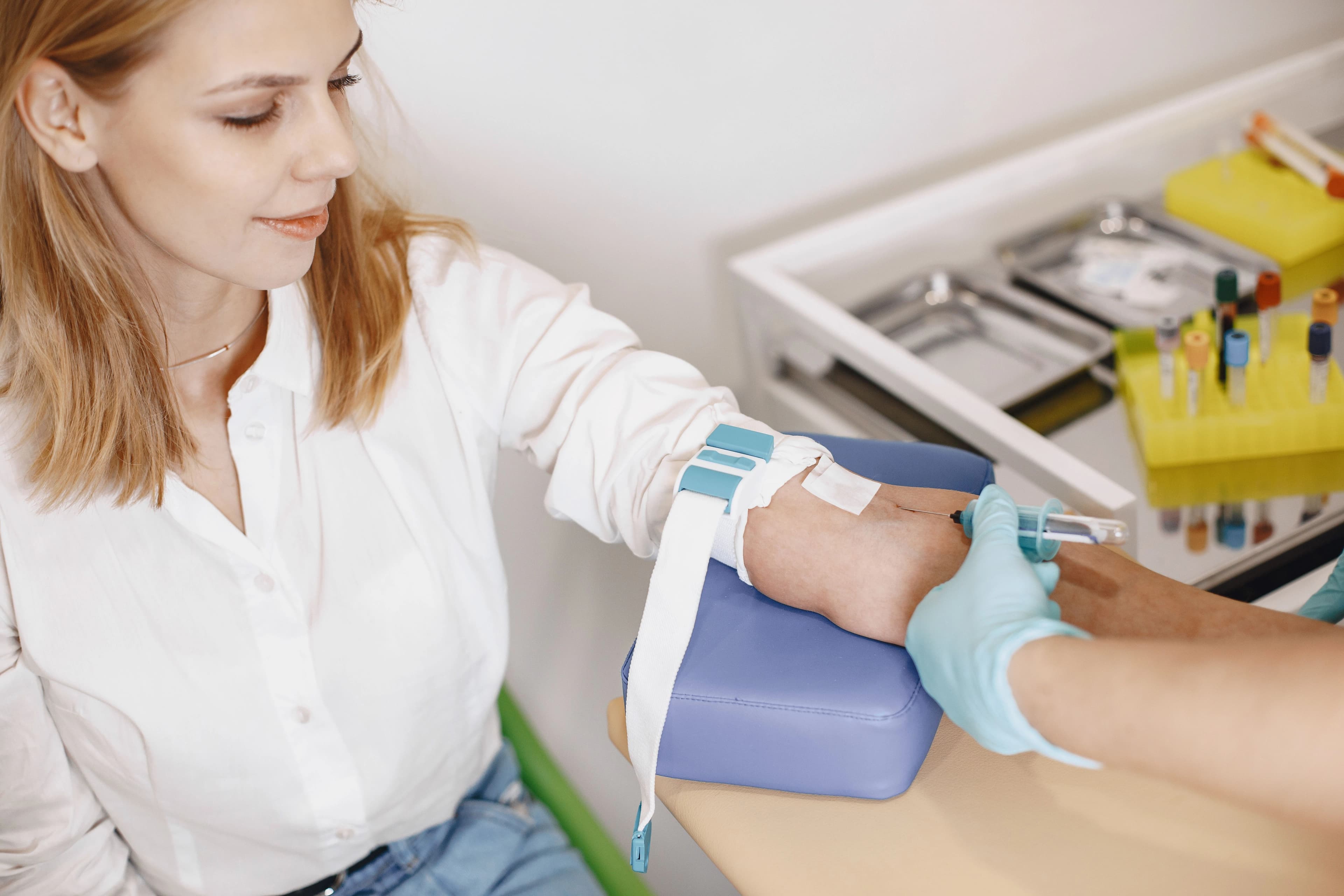
A prolotherapy session involves a brief exam followed by precise injections into painful joints or connective tissue, designed to support your body's natural repair process.
Your practitioner reviews your health history, current symptoms, and any imaging you've brought along. This helps them understand which areas need attention and confirm that prolotherapy is appropriate for you.
The practitioner palpates the painful area to pinpoint the exact ligaments, tendons, or joint spaces that will be targeted. You may be asked to move in certain ways so they can assess your range of mo
Your practitioner walks you through the planned injection sites, the solution being used, and what sensations to expect. You'll have a chance to ask questions and give your consent before anything begins.
The treatment area is cleaned with an antiseptic solution to keep everything sterile. Depending on your preferences and the location being treated, a topical numbing agent or local anesthetic may be applied first.
Using a fine needle, your practitioner delivers small amounts of a dextrose solution into each targeted site. You may feel a brief sharp sensation followed by a deep aching pressure at the injection p
The process is repeated across all mapped sites in a single session, which can range from a handful to a dozen or more injections depending on the area being addressed. The full injection portion typi
Once the injections are complete, your practitioner checks in on how you're feeling and monitors you briefly before you leave. Mild soreness, stiffness, or localized swelling in the treated area over
You'll receive guidance on activity levels, what to avoid such as anti-inflammatory medications that may interfere with the intended response, and when to return. Most people complete three to six ses
The Evidence
What the research currently shows about prolotherapy for chronic musculoskeletal pain, and what remains uncertain.
Promising signals, but the research is still maturing
Some randomised trials report reduced pain and improved function for conditions like chronic low back pain and knee osteoarthritis, but study quality varies widely. Major medical bodies have not yet issued strong endorsements, and interpretation remains cautious.
Randomised controlled trials and systematic reviews exist, particularly for chronic low back pain, knee osteoarthritis, and lateral epicondylosis. Some show meaningful improvements over control groups; others show results comparable to saline injections or exercise alone. Small sample sizes, variable protocols, and differing outcome measures make cross-trial comparison difficult.
Publication bias, heterogeneous injection solutions, and inconsistent follow-up periods are frequently cited concerns. Because prolotherapy protocols vary considerably between practitioners, it is difficult to establish a standardised evidence base. Findings from one study may not generalise to another clinical setting or patient population.
Most conventional guidelines do not include prolotherapy as a first-line recommendation. It is more commonly encountered in integrative, sports medicine, and pain management settings. Patients considering prolotherapy are generally encouraged to discuss it alongside, not instead of, conventional assessment and care options.
Common effects include temporary pain, swelling, and bruising at injection sites. Rare but serious risks include infection and nerve irritation. The procedure should only be performed by licensed practitioners with specific training. Anti-inflammatory medications including NSAIDs are sometimes advised against around treatment time, as they may interfere with the intended tissue response.
Potential contraindications include active local or systemic infection, blood-clotting disorders, use of anticoagulant medications, allergy to injection components, and some autoimmune or inflammatory conditions. A full health and medication history should be shared with the practitioner before any treatment is considered.
Prolotherapy should be performed by a licensed medical professional with documented training in injection technique and musculoskeletal anatomy. Patients are encouraged to ask about a practitioner's qualifications, experience with their specific concern, and what outcomes are realistic to expect. Inflated outcome claims should be approached with scepticism.
Safety first
General guidance to help you decide whether this approach is appropriate for you. This is informational only and not a substitute for medical, psychological, or professional advice.
If you are pregnant, managing a health condition, recovering from injury or surgery, or taking medication, consult a qualified healthcare professional first.
Some situations call for extra care or a different approach. Share any conditions, injuries, or sensitivities with your practitioner before your first session.
Look for clear boundaries, transparent pricing, and practitioners who avoid fear-based claims or pressure to book frequent sessions.
Mild, short-lived effects such as tenderness, tiredness, or temporary soreness can occur. Rest, hydrate, and tell your practitioner how you respond.
For you?
A simple, human way to weigh it up. This is general guidance, not personal medical advice — a qualified practitioner can advise on your situation.
Gyfts is a discovery platform, not a medical provider. Nothing here diagnoses, treats or replaces professional care. In an emergency, contact your local emergency number.
In their words
Before you book
FAQ
The number of sessions varies depending on the individual, the area being treated, and the practitioner's protocol. Most courses involve between three and six sessions spaced several weeks apart, though some individuals may need more or fewer visits. A qualified practitioner can offer a more personalized estimate after an initial evaluation.
Prolotherapy, PRP (platelet-rich plasma), and stem cell injections are distinct therapies that fall under the broader umbrella of regenerative injection treatments. Prolotherapy most commonly uses a dextrose-based solution, while PRP uses components derived from the patient's own blood. Each has its own proposed mechanism, evidence profile, and clinical applications.
In many regions, prolotherapy is not consistently covered by standard health insurance plans, as it is still considered an emerging or experimental therapy by many payers. Coverage can vary significantly depending on the insurer, the condition being treated, and the geographic location. It is advisable to check directly with your insurance provider before scheduling treatment.
References
Educational sources that inform this overview. Inclusion is for context and does not imply endorsement.
Full citations are maintained by the Gyfts editorial team and reviewed periodically.
Keep exploring
Browse practitioners, explore honest overviews, and take what you learn to a conversation — at your own pace.