What it is
Reflexology uses targeted foot pressure on zones believed to connect to organs throughout the body.
Reflexology is a therapeutic practice involving pressure and massage applied to specific reflex points on the feet, which are believed to...
At a glance
What it is
Reflexology uses targeted foot pressure on zones believed to connect to organs throughout the body.
Why explore it
Many people find it eases stress, supports better sleep, and brings a deep sense of relaxation.
How it’s experienced
A practitioner spends 30 to 60 minutes pressing mapped points on your feet while you rest comfortably.
Evidence context
Early studies show promise for relaxation, though it works best alongside conventional care, not instead of it.
See the evidence snapshotSafety
Safe for most healthy adults, but check with your doctor if you have diabetes, DVT, or are pregnant.
See staying safeHistory & Origin
Reflexology involves therapeutic touch and pressure on specific reflex points in the feet to promote well-being.
Reflexology has roots in ancient healing traditions across multiple cultures. Evidence suggests that pressure-point therapies were practiced in ancient Egypt, China, and India, with early Egyptian tomb inscriptions depicting foot massage practices. The modern Western form of reflexology developed in the early 20th century, credited to American physiotherapist Eunice Ingham, who systematically mapped reflex points on the feet and created detailed charts correlating foot zones to body organs and systems. Ingham built upon the earlier zone therapy work of William Fitzgerald, an American otolaryngologist who theorized that the body could be divided into ten vertical zones, each corresponding to different areas of the feet. Ingham refined these concepts throughout the 1930s and 1940s, publishing her findings and establishing the foundational framework used by modern practitioners today. The practice gained broader popularity in the latter half of the 20th century, spreading from the United States to Europe and beyond, where it became integrated into complementary health practices alongside other bodywork modalities.
Approaches
Reflexology isn’t a single method. Practitioners may train in one tradition or blend several — here are the styles you’re most likely to meet.
Works with reflex maps on the feet and is the most common form.
Uses reflex areas on the hands and can be easier for self-care or sensitive feet.
Uses points on the outer ear, overlapping with auricular therapy traditions.
Uses gentle pressure on mapped areas of the face.
Mechanism
Reflexology is generally described as working through skilled touch, careful pacing, and the body's response to pressure, movement, warmth, or stillness. Practitioners may focus on muscle tone, joint comfort, circulation, breath, or relaxation depending on the method. Traditional explanations may also include energy flow or whole-person balance. Research support varies by modality, so the experience is best framed as supportive care with outcomes that vary. Reflexology is based on the principle that specific points on the feet (and sometimes hands or ears) correspond to organs, glands, and systems throughout the body via neural pathways and energy meridians.
Your first visit
A typical session outline to help you feel prepared
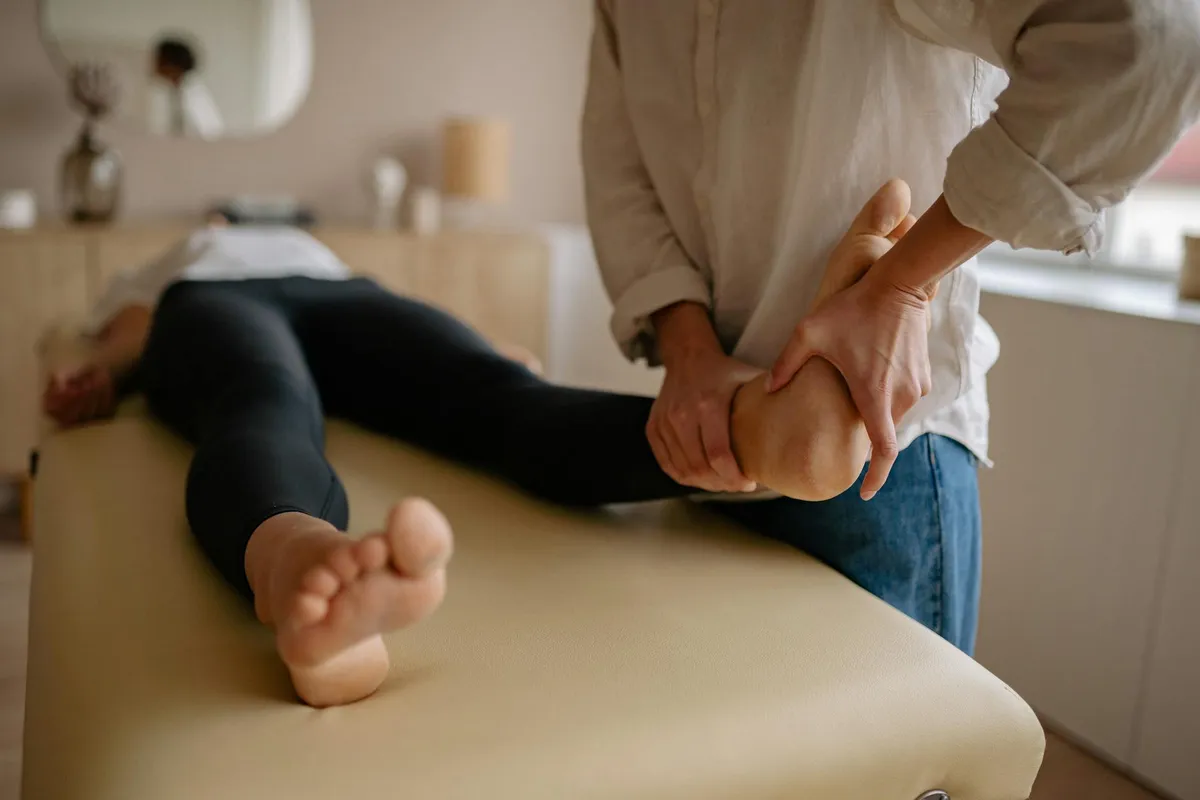
A reflexology session focuses on applying gentle pressure to specific points on your feet, believed to correspond to different areas of the body, leaving you deeply relaxed.
Your practitioner will ask about your health history, any areas of concern, and what you're hoping to get from the session. This helps them tailor the pressure points they focus on.
You'll recline in a comfortable chair or on a treatment table, fully clothed from the ankle up. Your shoes and socks come off, and a light blanket may be offered for comfort.
Before applying pressure, the practitioner will gently observe and touch your feet, noting any areas of tension, texture changes, or sensitivity that may guide the session.
The session begins with slow, gentle strokes and movements across your whole foot to warm the tissue and help you relax before targeted work begins.
Using thumbs and fingers, the practitioner applies steady, rhythmic pressure to specific reflex points across your feet, working through zones linked to different parts of the body.
You may notice warmth, tingling, or tender spots as certain points are worked. Some areas may feel more sensitive than others, and you're always welcome to speak up about pressure.
Toward the end, the practitioner returns to gentler, flowing strokes across the whole foot to ease you out of the deeper work and bring a sense of calm closure.
Your practitioner will suggest drinking plenty of water after your session. You may feel deeply relaxed, a little sleepy, or surprisingly energized for the rest of the day.
The Evidence
An honest look at what science currently supports, where gaps remain, and how reflexology fits within a broader approach to well-being.
Promising for relaxation; broader claims need stronger research
Small studies suggest reflexology may support relaxation, sleep, and anxiety reduction, but most research has methodological limitations. Its theoretical mechanisms remain unproven, and it is best understood as a complementary relaxation practice rather than a standalone intervention.
Several small studies report that reflexology may reduce anxiety, improve sleep quality, and promote relaxation in some individuals. However, most trials have small sample sizes, limited control groups, and difficulty separating reflexology's effects from general touch and relaxation. Broader outcome claims are not yet supported by robust evidence.
A central challenge in reflexology research is isolating its effects from placebo and general relaxation responses. The theoretical model linking foot points to body organs via energy zones has not been confirmed through conventional anatomy or physiology. Findings should be interpreted cautiously until larger, well-controlled trials are available.
Pressure-point foot therapies appear in ancient Egyptian, Chinese, and Indian traditions. The modern Western framework was developed in the early 20th century by Eunice Ingham, who mapped reflex zones on the feet and linked them to body systems. This historical depth informs its continued use, even where scientific validation remains limited.
As an Alternative modality, reflexology is typically used to complement rather than replace professional healthcare. It is not a substitute for professional assessment or medical management of health conditions. People often find value in it as a supportive wellness practice, particularly for stress and relaxation goals.
Most healthy adults can experience reflexology safely. Those with foot injuries, diabetes-related foot complications, circulatory disorders, or DVT should consult a healthcare provider beforehand. Avoid reflexology over acute infections, open sores, or recent foot trauma. Always inform your practitioner of any relevant health conditions.
Look for practitioners certified through recognised reflexology associations in your country. A good practitioner will take a brief health history, communicate clearly about what reflexology can and cannot offer, and adapt pressure to your comfort. Reflexology should never be presented as a replacement for professional medical assessment.
Safety first
General guidance to help you decide whether this approach is appropriate for you. This is informational only and not a substitute for medical, psychological, or professional advice.
If you are pregnant, managing a health condition, recovering from injury or surgery, or taking medication, consult a qualified healthcare professional first.
Some situations call for extra care or a different approach. Share any conditions, injuries, or sensitivities with your practitioner before your first session.
Mild, short-lived effects such as tenderness, tiredness, or temporary soreness can occur. Rest, hydrate, and tell your practitioner how you respond.
Look for clear boundaries, transparent pricing, and practitioners who avoid fear-based claims or pressure to book frequent sessions.
For you?
A simple, human way to weigh it up. This is general guidance, not personal medical advice — a qualified practitioner can advise on your situation.
Gyfts is a discovery platform, not a medical provider. Nothing here diagnoses, treats or replaces professional care. In an emergency, contact your local emergency number.
Explore approaches
Other practices people often explore alongside reflexology.
In their words
FAQ
During a session, you rest comfortably while a trained reflexologist applies precise pressure to reflex points on your feet using their thumbs and fingers. These points correspond to different organs, glands, and body systems according to reflexology theory. The practitioner works systematically across your entire foot, using varying pressure intensities based on the reflex points and your comfort level. Sessions typically last 45-60 minutes and are designed to be deeply relaxing.
Results vary individually. Some people report feeling relaxed and more balanced after a single session, while others benefit from a series of sessions over several weeks. Many practitioners recommend starting with 4-8 weekly or bi-weekly sessions to establish results, then adjusting frequency based on your response. Some people maintain reflexology as an ongoing monthly wellness practice.
While both involve hands-on foot work, reflexology is distinct from a general foot massage. Reflexology focuses on specific reflex points that are believed to correspond to body systems and organs, working according to zone therapy maps. A foot massage, by contrast, typically focuses on relaxing muscles and improving circulation without reference to specific reflex points. Both are relaxing, but they operate under different theoretical frameworks.
Reflexology is considered a complementary therapy meant to support overall well-being and relaxation rather than treat or cure specific medical conditions. While some people report improvements in various areas of health, reflexology should never replace conventional medical care for any condition. If you have a diagnosed health condition, inform your reflexologist and continue working with your healthcare provider.
Reflexology is generally considered safe during healthy pregnancies, and some practitioners specialize in prenatal reflexology. However, certain reflex points are traditionally avoided during pregnancy. Always inform your reflexologist if you are pregnant, and consult with your healthcare provider if you have any pregnancy complications.
After your session, rest if possible and drink plenty of water. Avoid strenuous activity for the remainder of the day if you feel particularly relaxed. Some people experience improved sleep, increased urination, or emotional release in the hours following treatment. These are considered normal responses. If you experience any adverse reactions, contact your practitioner.
Reflexology session costs vary by location and practitioner experience, typically ranging from $40 to $100+ per hour-long session. Some insurance plans may offer limited coverage if the reflexologist is licensed in certain states or works within specific healthcare settings. Check with your insurance provider and ask your practitioner about rates and package discounts for multiple sessions.
Look for practitioners certified through recognized reflexology organizations such as the American Reflexology Certification Board (ARCB), the Reflexology Association of America (RAA), or your country's equivalent. Certified reflexologists have completed extensive training (typically 100+ hours) in anatomy, reflexology theory, and practice techniques. Ask about your practitioner's training background and certification status.
References
Educational sources that inform this overview. Inclusion is for context and does not imply endorsement.
Full citations are maintained by the Gyfts editorial team and reviewed periodically.
Keep exploring
Browse practitioners, explore honest overviews, and take what you learn to a conversation — at your own pace.