What it is
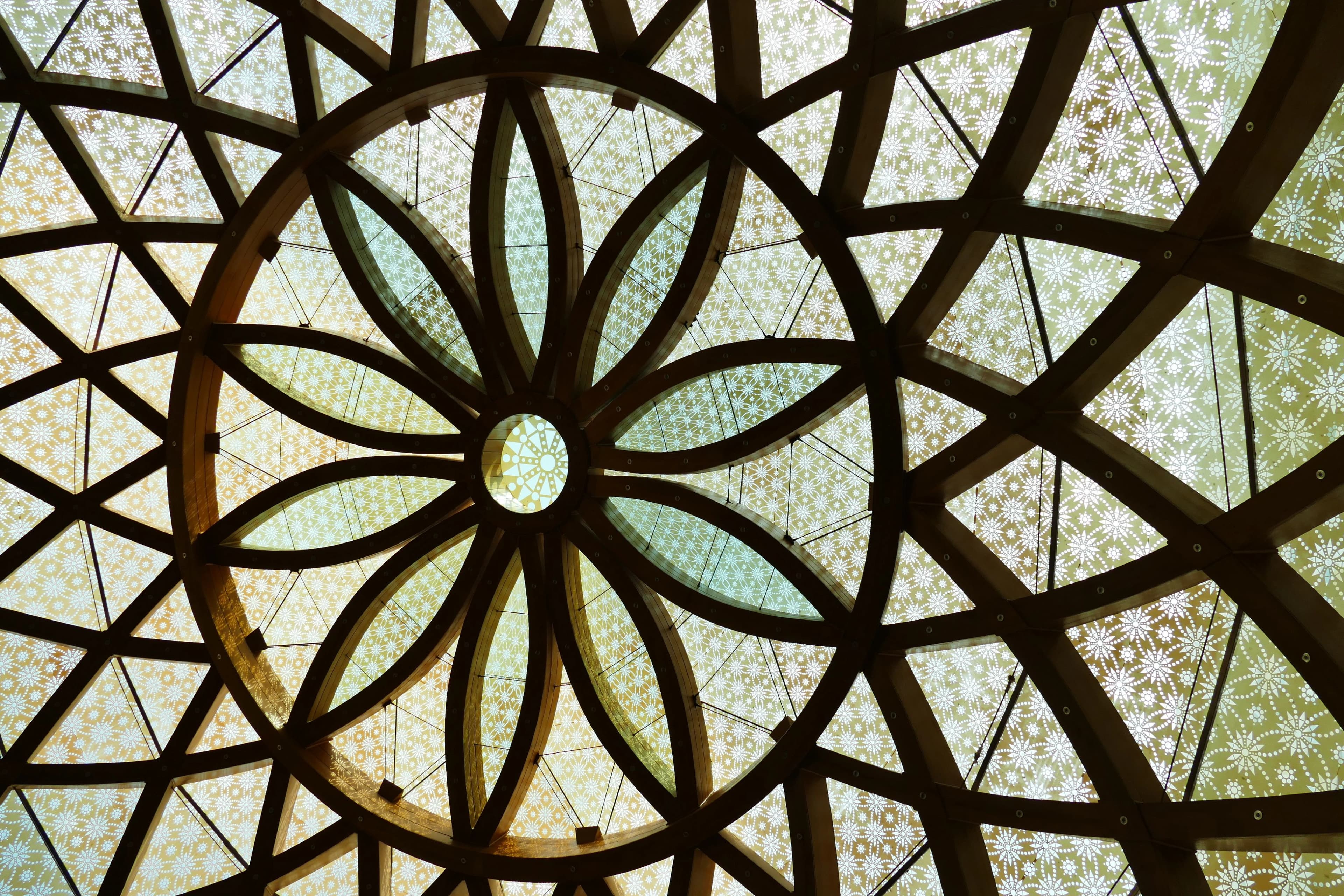
Ancient geometric patterns like mandalas serve as focal points for meditation and inner calm.
Ancient patterns, inner harmony, timeless perspective.
At a glance
What it is
Ancient geometric patterns like mandalas serve as focal points for meditation and inner calm.
Why explore it
Engaging with sacred geometry may support relaxation, focus, and spiritual exploration.
How it’s experienced
Sessions blend guided visualization, breathwork, and quiet attention on meaningful geometric forms.
Evidence context
Rooted in ancient tradition, this practice offers experiential and spiritual value rather than clinical proof.
See the evidence snapshotSafety
Generally low-risk, though those with photosensitivity or trauma history should engage mindfully.
See staying safeHistory & Origin
Sacred Geometry Healing is a contemplative and energetic practice rooted in the belief that specific geometric patterns, ratios, and forms carry profound symbolic and vibrational significance that may influence human well-being. Practitioners work with shapes such as the Flower of Life, Metatron's Cube, the Sri Yantra, and the Golden Ratio — forms that appear across nature, ancient architecture, and spiritual traditions worldwide. The practice holds that these patterns are not merely aesthetic but are considered by many traditions to be foundational blueprints of creation itself, and that intentional engagement with them may support a sense of inner harmony, spiritual alignment, and mental calm.
In practice, Sacred Geometry Healing may involve meditating on geometric forms, using physical tools such as crystals arranged in geometric grids, wearing or placing sacred symbols in one's environment, or working with a practitioner who guides visualization and breathwork alongside geometric focus. Some practitioners integrate it with sound healing, Reiki, or other energy-based modalities to create a more layered experience.
It is important to understand that Sacred Geometry Healing exists within a metaphysical framework and is not a licensed medical practice. It is not intended to diagnose, treat, or cure any physical or psychological condition. Those drawn to this practice typically approach it as a complement to — not a replacement for — conventional healthcare. For individuals who resonate with spiritual or symbolic systems of wellness, Sacred Geometry Healing may offer a meaningful avenue for self-exploration, stress relief, and a deeper sense of connection to the natural world.
The roots of Sacred Geometry stretch across ancient civilizations. In Egypt, the proportions of the pyramids and temples were understood to encode cosmic ratios. Greek philosophers, particularly Pythagoras and Plato, theorized that geometric forms were the foundation of reality — Plato's five perfect solids, known as the Platonic Solids, were each associated with an element of existence. Hindu and Buddhist traditions developed intricate geometric diagrams — yantras and mandalas — as tools for meditation and representations of the cosmos.
In medieval Europe, sacred geometry informed the construction of Gothic cathedrals, whose architects believed specific proportions created spaces conducive to spiritual experience. Islamic art and architecture similarly elevated geometric pattern-making to a spiritual discipline, reflecting the infinite through the finite. The Renaissance revival of Platonic thought brought figures like Leonardo da Vinci to explore the Golden Ratio and the Vitruvian Man as expressions of divine order.
In modern times, interest in Sacred Geometry has been revived through New Age and holistic wellness communities, which have synthesized these cross-cultural threads into healing frameworks. Today's practitioners draw on this rich multicultural heritage, adapting ancient symbolic systems to contemporary wellness contexts.
Mechanism
Sacred Geometry Healing is based on the idea that universal geometric patterns may resonate with the body's energetic and conscious systems.
Your first visit
A typical session outline to help you feel prepared
A Sacred Geometry Healing session guides you through meditations and visualizations using sacred shapes and symbols to support relaxation, clarity, and energetic balance.
Your practitioner starts with a relaxed conversation about what brought you in, your intentions, and any areas of life or energy you'd like to focus on. There's no need to have any prior knowledge of sacred geometry.
The room is arranged with intention — you may notice mandalas, geometric grids, crystals, or singing bowls placed around the space. This setup is designed to create a calm, focused environment that su
You'll be guided through a brief breathing or grounding exercise to help quiet your mind and settle into your body before the main session begins. This usually takes just a few minutes and requires no
Your practitioner introduces specific sacred geometry forms — such as the Flower of Life, Metatron's Cube, or the Sri Yantra — either visually or through guided imagery. They may explain the energetic
The heart of the session involves a spoken guided meditation where you're invited to visualize geometric shapes, move through them mentally, or simply hold their image in your mind's eye. You may feel
Depending on the practitioner, crystals aligned with specific geometric forms may be placed near your body, or singing bowls may be sounded to reinforce the geometric frequencies being worked with. Yo
As the meditation winds down, your practitioner guides you gently back to waking awareness, often using grounding imagery like roots or earth to help you feel present and settled. Take your time retur
You'll have space to share anything that came up — images, feelings, or insights — and your practitioner may suggest geometric forms to meditate on at home or journaling prompts to support your integr
The Evidence
What the research says, what tradition holds, and how to engage with Sacred Geometry Healing with clear expectations.
Rooted in tradition, not clinical research
Sacred Geometry Healing draws on centuries of cross-cultural spiritual practice. There is currently no peer-reviewed clinical evidence supporting its metaphysical claims, and its value is best understood through a contemplative and philosophical lens.
Sacred Geometry Healing has not been evaluated in peer-reviewed clinical trials. Adjacent research on mandala-based art therapy and focused visual meditation suggests some relaxation benefits, but these findings do not validate the broader metaphysical framework. Evidence here is traditional and experiential, not scientific.
Sacred Geometry Healing belongs to the Metaphysical category of the MACH framework. Its core claims — that geometric forms carry vibrational properties influencing human consciousness — are philosophical and spiritual in nature. These ideas are meaningful within their own tradition but sit outside the scope of conventional scientific evaluation.
From Egyptian temple proportions and Platonic solids to Hindu yantras, Buddhist mandalas, and Islamic geometric art, sacred geometry has been a cross-cultural spiritual language for millennia. This historical depth gives the practice cultural and philosophical weight, even in the absence of modern clinical validation.
Common uses include meditative focus, intentional ritual, and complementary support alongside other energy-based practices. Many practitioners report a subjective sense of calm or alignment. These experiences are real and meaningful, though they reflect personal and contemplative value rather than clinically measurable outcomes.
This practice involves no physical manipulation or substances, making it broadly low-risk. Those with photosensitive epilepsy should be cautious with certain visual elements. Deep meditation may surface unexpected emotions — individuals with trauma histories may benefit from working alongside a licensed mental health professional.
Training backgrounds vary widely. Look for practitioners who are transparent about their approach, avoid inflated outcome claims, and actively support your engagement with conventional healthcare when relevant. This practice is not a substitute for professional medical or psychological assessment.
Safety first
General guidance to help you decide whether this approach is appropriate for you. This is informational only and not a substitute for medical, psychological, or professional advice.
If you are experiencing severe distress, suicidal thoughts, psychosis, acute trauma, or another serious mental health concern, seek qualified support first.
This approach is not suitable for diagnosis, treatment instructions, or decisions that require medical, legal, financial, or professional advice.
Look for clear boundaries, transparent pricing, and practitioners who avoid fear-based claims or pressure to book frequent sessions.
Treat any insight as one reflective perspective, not absolute truth. Important decisions should be considered with appropriate professional support.
For you?
A simple, human way to weigh it up. This is general guidance, not personal medical advice — a qualified practitioner can advise on your situation.
Gyfts is a discovery platform, not a medical provider. Nothing here diagnoses, treats or replaces professional care. In an emergency, contact your local emergency number.
In their words
Before you book
FAQ
Sacred Geometry draws from many religious and spiritual traditions worldwide, including Hindu, Buddhist, Christian, Islamic, and ancient Egyptian frameworks, but it is not tied to any single religion. Many practitioners and participants engage with it as a philosophical or contemplative wellness practice rather than a religious one. You do not need to hold any specific belief system to explore it.
No. Sacred Geometry Healing is a traditional-use, metaphysical practice and is not a substitute for medical diagnosis or treatment. It should always be used as a complement to, not a replacement for, care provided by licensed healthcare professionals. If you have any health concerns, please consult your doctor or relevant specialist.
There is no standardized licensing or regulatory body governing Sacred Geometry Healing practitioners, so backgrounds vary widely. Some practitioners have completed courses or certifications offered through holistic wellness or energy healing programs, while others are self-taught through study of esoteric traditions. It is always a good idea to ask a practitioner about their training, experience, and how they approach the work before booking a session.
References
Educational sources that inform this overview. Inclusion is for context and does not imply endorsement.
Full citations are maintained by the Gyfts editorial team and reviewed periodically.
Keep exploring
Browse practitioners, explore honest overviews, and take what you learn to a conversation — at your own pace.