What it is
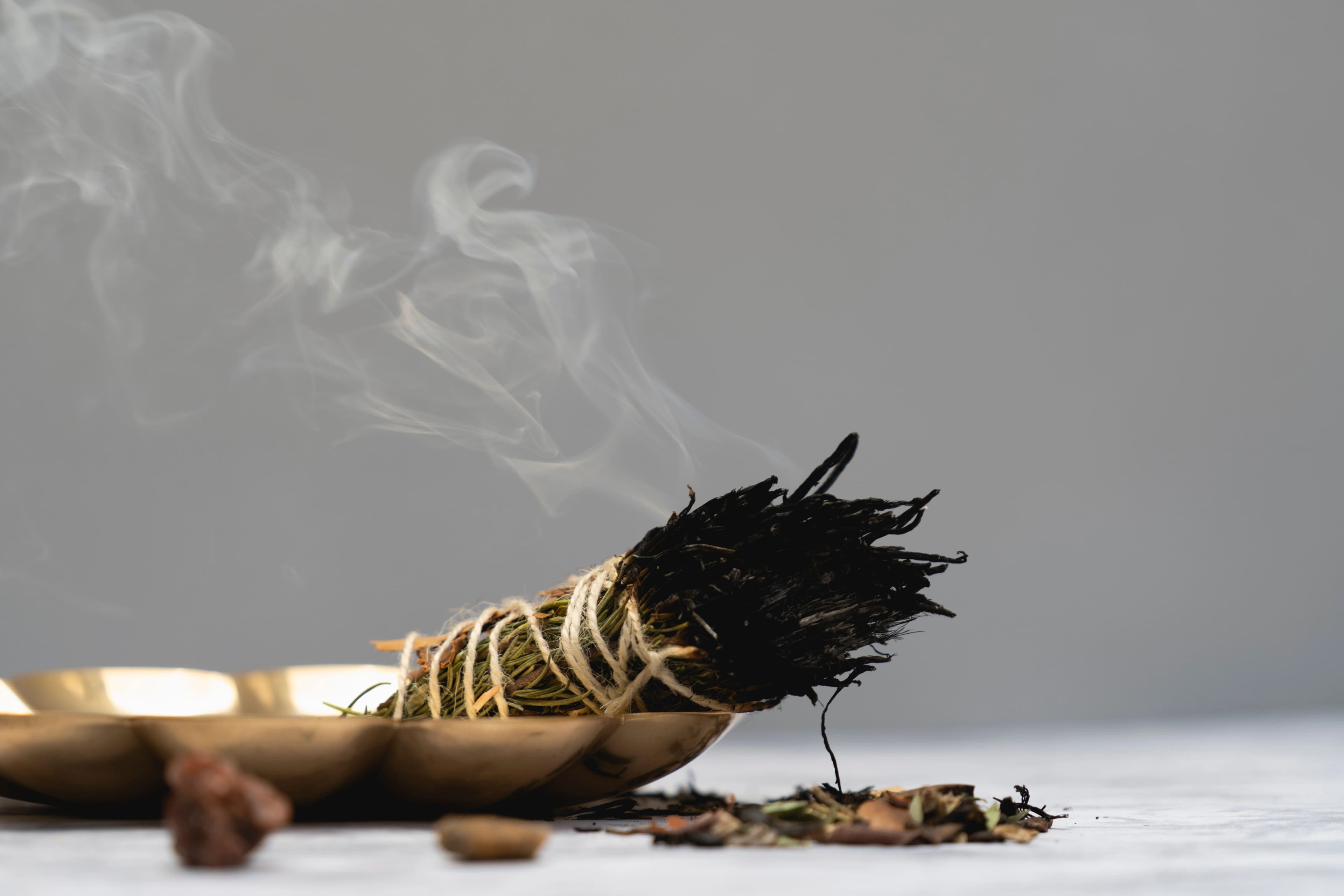
Smudging burns dried herbs like sage or palo santo to cleanse energy in a space.
Cleanse your space, reset your energy.
At a glance
What it is
Smudging burns dried herbs like sage or palo santo to cleanse energy in a space.
Why explore it
Great for ritual lovers who want to mark transitions or create a calm, focused atmosphere.
How it’s experienced
An herb bundle is lit and its smoke is guided through rooms with quiet, mindful intention.
Evidence context
Rooted in Indigenous tradition, smudging has no clinical backing but may aid relaxation.
See the evidence snapshotSafety
Ventilate well, use a fireproof dish, and try smoke-free options if you have breathing concerns.
See staying safeHistory & Origin
Space clearing, often referred to as smudging, is a ceremonial and energetic practice that involves burning dried herbs, resins, or botanicals — most commonly white sage, cedar, palo santo, or sweetgrass — to cleanse a physical space, object, or person of unwanted energetic influences. Rooted in indigenous and shamanic traditions from cultures spanning North America, South America, Asia, and beyond, the practice is based on the belief that smoke carries intentions and purifying properties that can shift the energetic quality of an environment. Today, it has been adopted broadly in wellness culture as a ritual for resetting the atmosphere of a home, office, or healing space.
Practitioners and those who regularly engage in space clearing often report a felt sense of lightness, calm, and renewed clarity following a session. The aromatic quality of burning botanicals is thought to play a role in this experience, with certain plant compounds known to have scent-based effects on mood and mental state. While these subjective experiences are widely reported, it is important to note that the spiritual and energetic mechanisms central to traditional practice have not been validated by clinical science.
As a metaphysical modality, space clearing sits outside the framework of conventional medicine and is not intended to diagnose, treat, or cure any condition. It is most commonly sought as a complementary ritual practice — one that may support a sense of intention-setting, emotional transition, or environmental comfort — rather than as a standalone therapeutic intervention. Those drawn to it often value the ceremonial and symbolic dimensions of the practice as much as any sensory effect.
Smudging and smoke-based purification rituals are among the oldest recorded spiritual practices in human history, with evidence of ceremonial burning found across cultures on nearly every continent. In North America, smudging holds deep sacred significance within many Indigenous nations, where it is used in healing ceremonies, prayer, and rites of passage. Plants such as white sage, cedar, sweetgrass, and tobacco are considered sacred medicines in these traditions, and their use follows specific protocols passed down through generations.
Similar practices appear in ancient Rome and Greece, where incense was burned to honor deities and purify temples. In East Asian traditions, burning of incense and specific botanicals has long been integrated into spiritual and ceremonial life. South American traditions use palo santo — a resinous wood revered for its purifying and grounding qualities — in shamanic and healing contexts. The widespread contemporary adoption of smudging in Western wellness culture has sparked important conversations about cultural appropriation, particularly regarding the commercialization of white sage and practices sacred to Indigenous peoples. Many Indigenous teachers encourage non-Indigenous practitioners to engage with these traditions thoughtfully and to seek out culturally respectful alternatives.
Mechanism
Space clearing operates on the metaphysical premise that environments hold energetic imprints that can be shifted through intentional ritual and the use of sacred smoke.
Your first visit
A typical session outline to help you feel prepared
A smudging session uses sacred smoke from burning herbs to cleanse the energy of a space or your personal energy field, leaving things feeling lighter and refreshed.
You and the practitioner begin with a brief conversation about what you'd like to clear or invite in, such as releasing tension after a move or welcoming new beginnings.
The practitioner opens windows or doors slightly to allow stagnant energy to exit, then arranges the herbs, abalone shell or fireproof dish, and a feather or fan for directing the smoke.
The chosen bundle, often white sage, palo santo, or cedar, is carefully lit and allowed to catch before being gently fanned to a steady, fragrant smoke rather than an open flame.
The practitioner typically smudges themselves first to clear their own energy, then may invite you to stand as smoke is guided around your body from feet to crown using a feather or hand.
The practitioner walks mindfully through each room in a deliberate pattern, guiding smoke into corners, doorways, and windows while speaking prayers or affirmations aloud or silently.
Once every area has been addressed, the practitioner returns to the starting point, offers a closing intention or gratitude, and safely extinguishes the bundle in sand or the fireproof dish.
You'll have a moment to share how you feel and receive simple suggestions, like keeping windows open briefly or setting a personal intention to anchor the energy of the session.
The Evidence
What research and tradition tell us about space clearing and smudging as a wellness practice.
Rooted in tradition, not yet studied in clinical trials
Space clearing is supported by centuries of cross-cultural ceremonial practice rather than peer-reviewed research. Reported benefits such as calm and clarity are plausible but not clinically established.
The evidence base is classified as traditional use only. Some laboratory studies have explored antimicrobial properties of certain botanical smoke compounds, but these findings do not support the energetic or spiritual claims central to the practice. Reported wellbeing effects remain speculative in a clinical context.
The core premise — that environments accumulate energetic residue that smoke can dispel — belongs to a metaphysical worldview. This is not a limitation of the practice; it simply means it should be understood and evaluated on its own terms, not measured against clinical outcome standards it was never designed to meet.
Indigenous nations of North America, ancient Greek and Roman traditions, East Asian ceremonial practice, and South American shamanic contexts all include forms of smoke-based clearing. This breadth of traditional use reflects deep cultural meaning, though traditional use alone does not constitute clinical evidence of health benefit.
White sage and other plants used in smudging are considered sacred medicines within specific Indigenous nations, with protocols passed through generations. Those outside these traditions are encouraged to approach the practice with respect, seek out ethically sourced materials, and remain aware of the cultural weight these rituals carry.
Always use a fireproof dish, ensure full extinguishing after use, and never leave burning materials unattended. Ventilate the space well. People with asthma, respiratory sensitivities, or lung conditions should avoid smoke-based clearing entirely. Pregnant individuals should consult a healthcare provider. Move pets to ventilated areas during sessions.
This practice does not assess, manage, or address physical or mental health conditions. Anyone experiencing persistent distress, health symptoms, or significant life difficulty should seek qualified professional support. Space clearing may complement personal ritual or wellbeing routines but should never replace appropriate professional care.
Safety first
General guidance to help you decide whether this approach is appropriate for you. This is informational only and not a substitute for medical, psychological, or professional advice.
If you are experiencing severe distress, suicidal thoughts, psychosis, acute trauma, or another serious mental health concern, seek qualified support first.
This approach is not suitable for diagnosis, treatment instructions, or decisions that require medical, legal, financial, or professional advice.
Look for clear boundaries, transparent pricing, and practitioners who avoid fear-based claims or pressure to book frequent sessions.
Treat any insight as one reflective perspective, not absolute truth. Important decisions should be considered with appropriate professional support.
For you?
A simple, human way to weigh it up. This is general guidance, not personal medical advice — a qualified practitioner can advise on your situation.
Gyfts is a discovery platform, not a medical provider. Nothing here diagnoses, treats or replaces professional care. In an emergency, contact your local emergency number.
In their words
Before you book
FAQ
The evidence base for space clearing is classified as traditional-use, meaning it is supported by long-standing cultural and ceremonial tradition rather than clinical research. Some limited studies have explored the antimicrobial properties of certain botanical compounds, but these findings do not validate the energetic or spiritual claims central to the practice. Any reported benefits — such as improved mood or a sense of calm — are subjective and have not been confirmed through controlled clinical trials.
This is an important question that many practitioners and cultural educators actively discuss. Smudging with white sage holds deep sacred meaning within many Indigenous North American traditions, and the commercialization of these practices has raised legitimate concerns about cultural appropriation. Those outside these traditions are encouraged to research the cultural origins of what they are using, seek out guidance from Indigenous teachers where appropriate, and consider using botanicals from their own cultural heritage or region as a respectful alternative.
Many people choose to practice space clearing independently as a personal ritual, and no formal training or certification is required to do so. Numerous books and online resources offer guidance on how to perform a simple clearing with attention to safety and intention. However, fire safety precautions are essential — always use a fireproof vessel, ensure good ventilation, and never leave smoldering materials unattended.
References
Educational sources that inform this overview. Inclusion is for context and does not imply endorsement.
Full citations are maintained by the Gyfts editorial team and reviewed periodically.
Keep exploring
Browse practitioners, explore honest overviews, and take what you learn to a conversation — at your own pace.