What it is
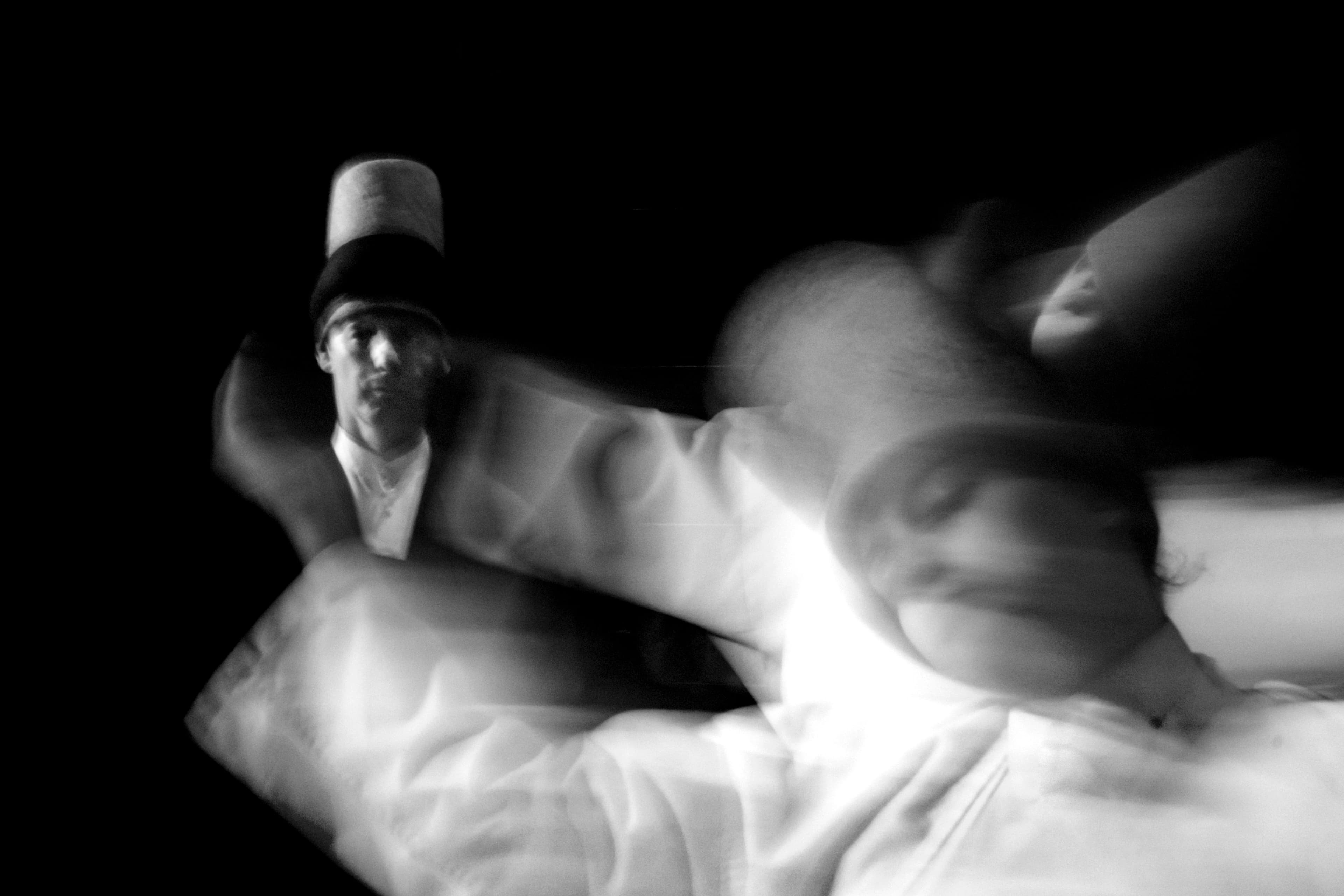
Sema is a sacred spinning meditation from Rumi's 13th-century Sufi tradition.
Turn Inward: Ancient Spinning, Timeless Stillness
At a glance
What it is
Sema is a sacred spinning meditation from Rumi's 13th-century Sufi tradition.
Why explore it
Whirling may ease stress and invite emotional release through movement and contemplative intention.
How it’s experienced
You turn with arms extended in a group setting guided by live flute music and meditative silence.
Evidence context
Benefits come from centuries of tradition and practitioner reports, not clinical research.
See the evidence snapshotSafety
Low-risk for healthy adults, but those with vertigo or heart concerns should check with a provider first.
See staying safeHistory & Origin
Sufi Whirling, known as Sema, is a sacred movement practice rooted in the Sufi mystical tradition of Islam. Practitioners spin continuously in a meditative, rhythmic manner, traditionally accompanied by live music, poetry, and chant. Far more than a performance or dance, Sema is considered by its practitioners to be an active form of prayer and spiritual devotion — a physical expression of the soul's longing for union with the divine. The whirling itself is understood as a metaphor for the rotation of all things in the cosmos, from atoms to planets, and the practitioner's turning is meant to mirror this universal movement.
The practice is most closely associated with the Mevlevi Order, a Sufi brotherhood founded in 13th-century Anatolia in the tradition of the poet and mystic Jalal ad-Din Rumi. While it remains a living spiritual ceremony within the Mevlevi tradition, Sema has also been adopted in secular and therapeutic contexts by practitioners interested in its potential for altered states of consciousness, inner stillness, and emotional release. Some contemporary facilitators offer Sema-inspired sessions outside of a religious framework, framing the practice as a somatic and contemplative tool.
In wellness settings, Sema is classified as a metaphysical and movement-based modality. Participants may report experiences of deep calm, emotional catharsis, heightened presence, or a sense of expanded awareness following a session. These experiences are highly personal and vary widely. It is important to understand that Sema, in its traditional form, is a sacred religious rite, and those approaching it purely as a wellness tool are encouraged to do so with cultural sensitivity and respect for its origins.
Sema originates within the Mevlevi Sufi Order, which traces its lineage to the 13th-century Persian poet, theologian, and mystic Jalal ad-Din Rumi, known simply as Rumi. Born in 1207 in what is now Afghanistan, Rumi settled in Konya, in present-day Turkey, where his son Sultan Walad formalized the Mevlevi Order after Rumi's death. The whirling ceremony became central to the Order's devotional practice, understood not as entertainment but as a form of active worship and a method of dissolving the ego in the presence of the divine.
The Mevlevi Order flourished for centuries under the Ottoman Empire, and the Sema ceremony developed a highly structured ritual form complete with specific garments, musical accompaniment, and a sequence of movements rich with spiritual symbolism. The tall felt hat, or sikke, represents the ego's tombstone, and the white robe represents the ego's shroud — both shed in the act of turning toward the divine. Following the secularization of Turkey in the early 20th century, the Mevlevi Order was officially dissolved, though it was later revived. In 2008, UNESCO recognized the Mevlevi Sema ceremony as an Intangible Cultural Heritage of Humanity.
Mechanism
Sema works through intentional, sustained spinning that is believed to shift awareness and open the practitioner to states of deep presence and spiritual receptivity.
Your first visit
A typical session outline to help you feel prepared
A Sufi Whirling session gently introduces you to the sacred spinning practice of the Mevlevi tradition, guiding you from stillness into meditative movement and back to quiet rest.
Your facilitator greets you warmly and briefly explains the spiritual roots of Sema, so you understand the practice is approached with reverence rather than as performance or exercise.
You'll be invited to wear loose, comfortable clothing, ideally a long skirt or wide trousers that allow free movement. Shoes are removed, and the space is often marked with a circular boundary represe
Before any movement begins, you stand quietly with hands crossed over your chest in a posture called niyaz, taking slow breaths to settle your mind and set a personal intention for the session.
The facilitator walks you through the foundational pivot step, placing your left foot as an anchor while the right foot drives the turn. You also learn to soften your gaze or fix it gently on one hand
You begin whirling at a very slow pace, arms gradually rising — left palm facing down toward earth, right palm facing up toward sky — finding your own rhythm before any music is introduced.
Live ney flute or recorded Mevlevi music begins, and you whirl continuously for several minutes, allowing the sound and motion to carry your awareness inward. Many people notice a quiet, trance-like s
The music fades and you gradually slow to a stop, returning hands to your chest in niyaz. Standing or sitting quietly for a few minutes helps your vestibular system settle and lets any arising feeling
Your facilitator invites you to share briefly if you wish, or simply to rest with water and light refreshment. You may feel pleasantly spacious, emotionally softened, or gently euphoric as you prepare to leave.
The evidence
Explore the meaning and context behind Sufi Whirling (Sema) — how people use it for reflection, symbolism, or spiritual insight, where research is limited, and what to keep in mind before booking.
Sufi Whirling (Sema) is used as a reflective meaning-making practice
Sufi Whirling (Sema) is best framed as symbolic or spiritual reflection, not as a medical approach. People may use it for insight, meaning, or personal exploration.
This kind of practice is best understood as subjective and reflective. People may use it to notice patterns, clarify values, or explore spiritual meaning, but it should not be used as medical, psychological, legal, or financial advice.
Traditional context can explain the language, session style, and goals practitioners use. It does not automatically mean a practice has strong formal evidence, so tradition and research should be understood as different kinds of context.
Many wellness studies are small, mixed, or focused on specific populations. For reflective or traditional modalities, formal research may be sparse. Use the evidence context as one input, not a prediction of your personal outcome.
Existing safety notes flag that fit can depend on personal health context, practitioner scope, and session setup. Ask about contraindications, consent, training, hygiene where relevant, and whether professional guidance is appropriate before booking.
Look for grounded communication and avoid anyone who pressures you, makes fear-based claims, or promises outcomes. Reflective modalities work best when boundaries are explicit and you feel free to question or decline guidance.
Safety first
General guidance to help you decide whether this approach is appropriate for you. This is informational only and not a substitute for medical, psychological, or professional advice.
If you are experiencing severe distress, suicidal thoughts, psychosis, acute trauma, or another serious mental health concern, seek qualified support first.
This approach is not suitable for diagnosis, treatment instructions, or decisions that require medical, legal, financial, or professional advice.
Look for clear boundaries, transparent pricing, and practitioners who avoid fear-based claims or pressure to book frequent sessions.
Treat any insight as one reflective perspective, not absolute truth. Important decisions should be considered with appropriate professional support.
For you?
A simple, human way to weigh it up. This is general guidance, not personal medical advice — a qualified practitioner can advise on your situation.
Gyfts is a discovery platform, not a medical provider. Nothing here diagnoses, treats or replaces professional care. In an emergency, contact your local emergency number.
In their words
Before you book
FAQ
In its traditional form, Sema is a sacred Islamic devotional practice performed within the Mevlevi Sufi Order, and religious context is central to its meaning. However, wellness-oriented Sema sessions are increasingly offered in secular or interfaith settings open to people of any background. If you participate outside a religious context, approaching the practice with genuine respect for its origins is strongly encouraged.
Sustained whirling does require a reasonable degree of physical balance, coordination, and endurance, and it can be surprisingly demanding on the vestibular system and lower body joints. Beginners are typically guided to start slowly and only spin for as long as is comfortable. Those with balance issues, joint problems, or vestibular sensitivities should consult a healthcare provider before attempting the practice.
Formal clinical research on Sema as a health intervention is extremely limited, and its evidence level is classified as traditional-use. The practice's wellness associations — including reduced stress and a sense of expanded awareness — are based primarily on centuries of anecdotal and spiritual testimony rather than controlled studies. Individuals interested in Sema for health-related goals should maintain realistic expectations and consult a qualified healthcare provider.
References
Educational sources that inform this overview. Inclusion is for context and does not imply endorsement.
Full citations are maintained by the Gyfts editorial team and reviewed periodically.
Keep exploring
Browse practitioners, explore honest overviews, and take what you learn to a conversation — at your own pace.