What it is
Tui Na is Chinese therapeutic bodywork using rhythmic pressing and kneading to restore balance.
Ancient Chinese bodywork, purposefully applied.
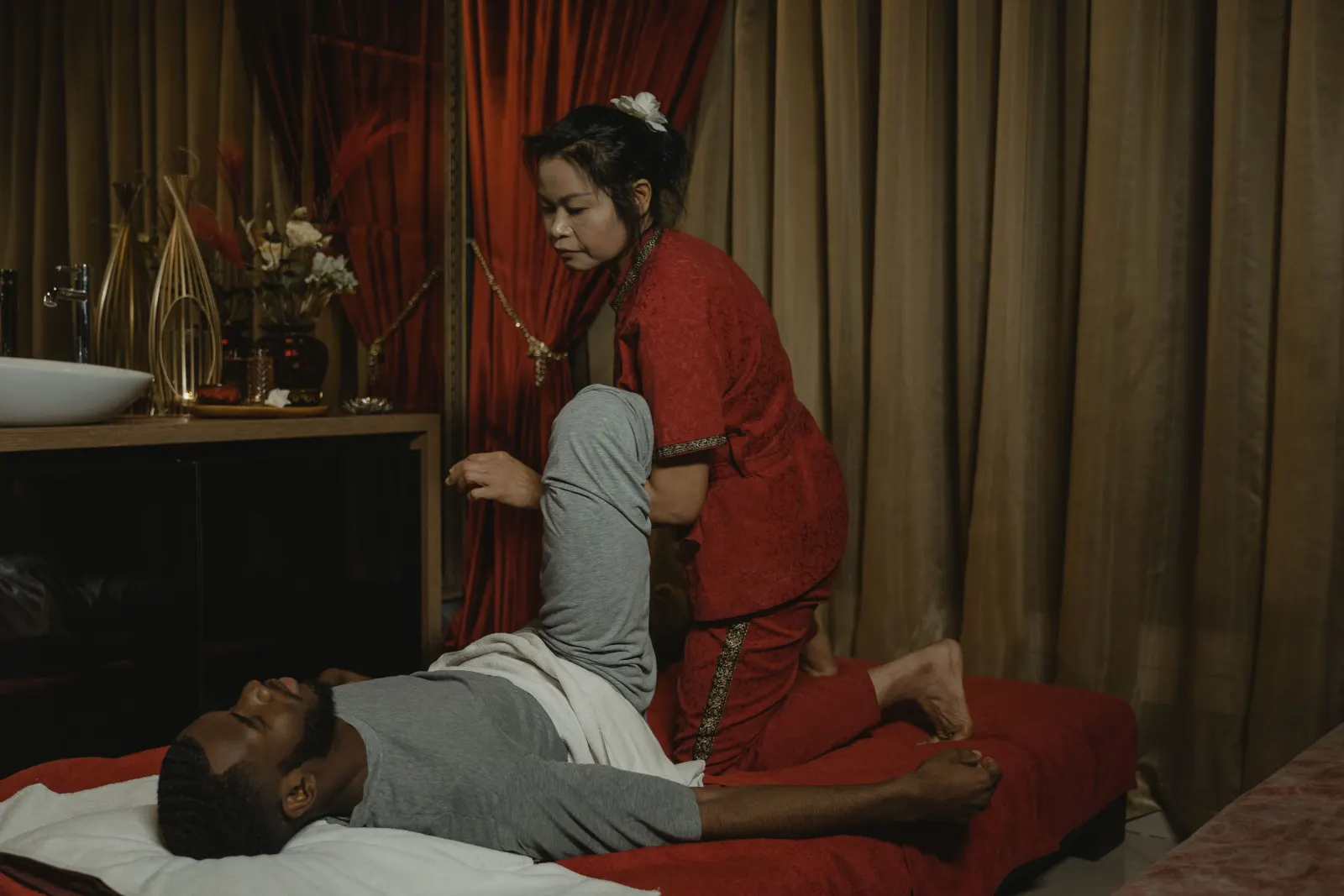
At a glance
What it is
Tui Na is Chinese therapeutic bodywork using rhythmic pressing and kneading to restore balance.
Why explore it
It may ease neck tension, back pain, joint stiffness, and stress through focused hands-on techniques.
How it’s experienced
A practitioner applies firm rhythmic pressure while you stay clothed on a table for 30 to 60 minutes.
Evidence context
Research shows promise for pain and tension relief, though studies remain small and findings are still emerging.
See the evidence snapshotSafety
Generally safe for healthy adults, but those who are pregnant or have fractures should consult a doctor first.
See staying safeHistory & Origin
Tui Na (pronounced 'twee nah') is a form of Chinese therapeutic bodywork that has been practiced for thousands of years as a core component of Traditional Chinese Medicine (TCM). Unlike general relaxation massage, Tui Na is a structured clinical practice designed to address specific health concerns by manipulating soft tissue, joints, and energy pathways known as meridians. Practitioners use a range of hand techniques — including pressing, rolling, kneading, and stretching — to encourage the movement of qi (vital energy) and blood throughout the body, with the intention of restoring functional balance.
Tui Na is often practiced alongside other TCM modalities such as acupuncture, herbal medicine, and cupping. It is used both as a standalone therapy and as part of broader integrative treatment plans. Sessions may feel more targeted and purposeful than Swedish-style massage, as the practitioner typically focuses on specific areas of tension, discomfort, or energetic imbalance rather than providing a full-body relaxation experience.
In China, Tui Na is taught in TCM medical universities and practiced in clinical hospital settings, giving it a more established institutional presence than many other complementary therapies. In the United States and other Western countries, it is increasingly available through licensed acupuncturists, TCM practitioners, and integrative health clinics. While it is broadly categorized as a holistic modality, some of its applications — particularly for musculoskeletal pain and tension — have attracted meaningful clinical research interest in recent years.
Tui Na is one of the oldest forms of manual medicine in recorded history, with roots in ancient China dating back more than 2,000 years. Its origins are closely tied to the development of Traditional Chinese Medicine as a system, with early references appearing in foundational texts such as the Huangdi Neijing (Yellow Emperor's Classic of Internal Medicine), which is estimated to have been compiled around the second century BCE.
Historically, Tui Na was practiced by physicians who specialized in treating injuries, musculoskeletal disorders, and internal conditions through structured touch and manipulation. Over centuries, it evolved into a sophisticated clinical discipline with codified techniques and treatment protocols. During the 20th century, it was formally integrated into the curricula of TCM universities in China, cementing its place as a recognized medical practice within the Chinese healthcare system.
Today, Tui Na is practiced across Asia and has gained a growing following in Western integrative health communities. It carries a rich cultural legacy as a medical art that bridges physical bodywork with the energetic and philosophical principles of TCM.
Mechanism
Tui Na works by combining manual bodywork techniques with TCM principles to address tension, circulation, and energetic balance.
Your first visit
A typical session outline to help you feel prepared
A Tui Na session blends traditional Chinese medicine with hands-on bodywork, using rhythmic pressure and joint techniques through your clothing to support your body's natural flow.
Your practitioner will ask about your health history, any pain or tension you're experiencing, and your goals for the session. This helps them understand your body from a Traditional Chinese Medicine perspective.
The practitioner may observe your posture, check your pulse at the wrist, and look at your tongue — classic TCM diagnostic tools that help them identify imbalances and plan your session.
You'll remain fully clothed, so wear something loose and comfortable. You'll lie on a massage table or sit in a chair depending on what areas are being worked on, and the practitioner will confirm you
The session begins with broad, rhythmic strokes called Gun Fa or rolling techniques to warm up the muscles and encourage circulation. This opening phase helps your body ease into the deeper work ahead.
The practitioner uses pressing, kneading, and pinching techniques along specific meridian pathways and acupressure points. You may feel focused pressure that is more intense than a relaxation massage,
Your practitioner may gently move, rotate, or traction your joints — commonly the neck, shoulders, hips, or spine. These movements aim to restore range of motion and release stagnation held in the joints.
The session winds down with lighter, sweeping strokes to help your nervous system settle and encourage the body to integrate the work. The pace slows noticeably and you'll be given a moment to rest before sitting up.
Your practitioner will share simple recommendations — staying hydrated, resting if needed, or specific stretches to support the session. Mild soreness or a feeling of lightness in the hours after is completely normal.
The Evidence
What research currently shows about Tui Na, where the evidence is strong, and where important gaps remain.
Promising findings for musculoskeletal support, with study limitations
Tui Na has a growing body of clinical research supporting its use for conditions like neck pain, back pain, and joint stiffness. Evidence is encouraging but limited by study size and methodological variation, so findings should be interpreted with appropriate caution.
Randomized controlled trials and systematic reviews — primarily from East Asian clinical settings — suggest Tui Na may help reduce pain and improve function in conditions like chronic low back pain, neck pain, and shoulder stiffness. Results are generally positive, but many studies are small and methodologically inconsistent, so conclusions remain cautious.
It is hard to separate the specific effects of Tui Na techniques from general benefits of therapeutic touch or practitioner attention. Most research originates from non-Western settings, which may limit how broadly findings apply. Larger, more rigorous independent trials are needed before stronger conclusions can be drawn.
Referenced in foundational TCM texts including the Huangdi Neijing, Tui Na evolved into a codified practice taught in TCM universities across China. Its theoretical basis — influencing qi flow through meridians and acupressure points — reflects a distinct health framework that sits alongside, rather than within, conventional biomedical models.
Within a holistic TCM framework, practitioners believe Tui Na works to address physical tension, circulation, and nervous system tone simultaneously. Manual techniques are typically sequenced to engage both local and distal meridian points within a single session. It is commonly combined with other TCM modalities, and some integrative health settings incorporate it alongside movement-based or rehabilitative care approaches.
Tui Na is not recommended over open wounds, skin infections, or recent fractures. People with osteoporosis, clotting disorders, or active inflammatory flares should consult their healthcare provider first. Pregnant individuals should inform their practitioner before any session, as some techniques and points are traditionally avoided during pregnancy.
In countries with regulated TCM frameworks, Tui Na practitioners complete formal clinical training. Where regulation is less defined, look for practitioners with recognised TCM qualifications and specific Tui Na experience. Always share your full health history before a session, and consult your primary healthcare provider if you are unsure whether Tui Na is appropriate for your situation.
Safety first
General guidance to help you decide whether this approach is appropriate for you. This is informational only and not a substitute for medical, psychological, or professional advice.
If you are pregnant, managing a health condition, recovering from injury or surgery, or taking medication, consult a qualified healthcare professional first.
Some situations call for extra care or a different approach. Share any conditions, injuries, or sensitivities with your practitioner before your first session.
Look for clear boundaries, transparent pricing, and practitioners who avoid fear-based claims or pressure to book frequent sessions.
Mild, short-lived effects such as tenderness, tiredness, or temporary soreness can occur. Rest, hydrate, and tell your practitioner how you respond.
For you?
A simple, human way to weigh it up. This is general guidance, not personal medical advice — a qualified practitioner can advise on your situation.
Gyfts is a discovery platform, not a medical provider. Nothing here diagnoses, treats or replaces professional care. In an emergency, contact your local emergency number.
In their words
Before you book
FAQ
Tui Na is distinct from Western-style massage in both philosophy and technique. While both involve hands-on bodywork, Tui Na is rooted in Traditional Chinese Medicine theory and targets specific meridians, acupressure points, and areas of energetic imbalance rather than focusing primarily on relaxation. Sessions tend to feel more clinical and purposeful, and may include joint mobilization techniques not typically found in Swedish or relaxation massage.
The number of sessions varies depending on the individual and the concern being addressed. Some people report noticing changes after one or two sessions, while others may benefit from a series of treatments over several weeks. Most TCM practitioners will recommend an initial course of sessions and then reassess progress together with the client.
Tui Na should not be painful, though some techniques can feel quite firm or intense, particularly when applied to areas of significant tension or stiffness. Mild soreness in the hours following a session is not uncommon and is generally considered a normal response. If any technique feels uncomfortable beyond a tolerable level, you should always feel empowered to communicate that to your practitioner.
References
Educational sources that inform this overview. Inclusion is for context and does not imply endorsement.
Full citations are maintained by the Gyfts editorial team and reviewed periodically.
Keep exploring
Browse practitioners, explore honest overviews, and take what you learn to a conversation — at your own pace.