What it is
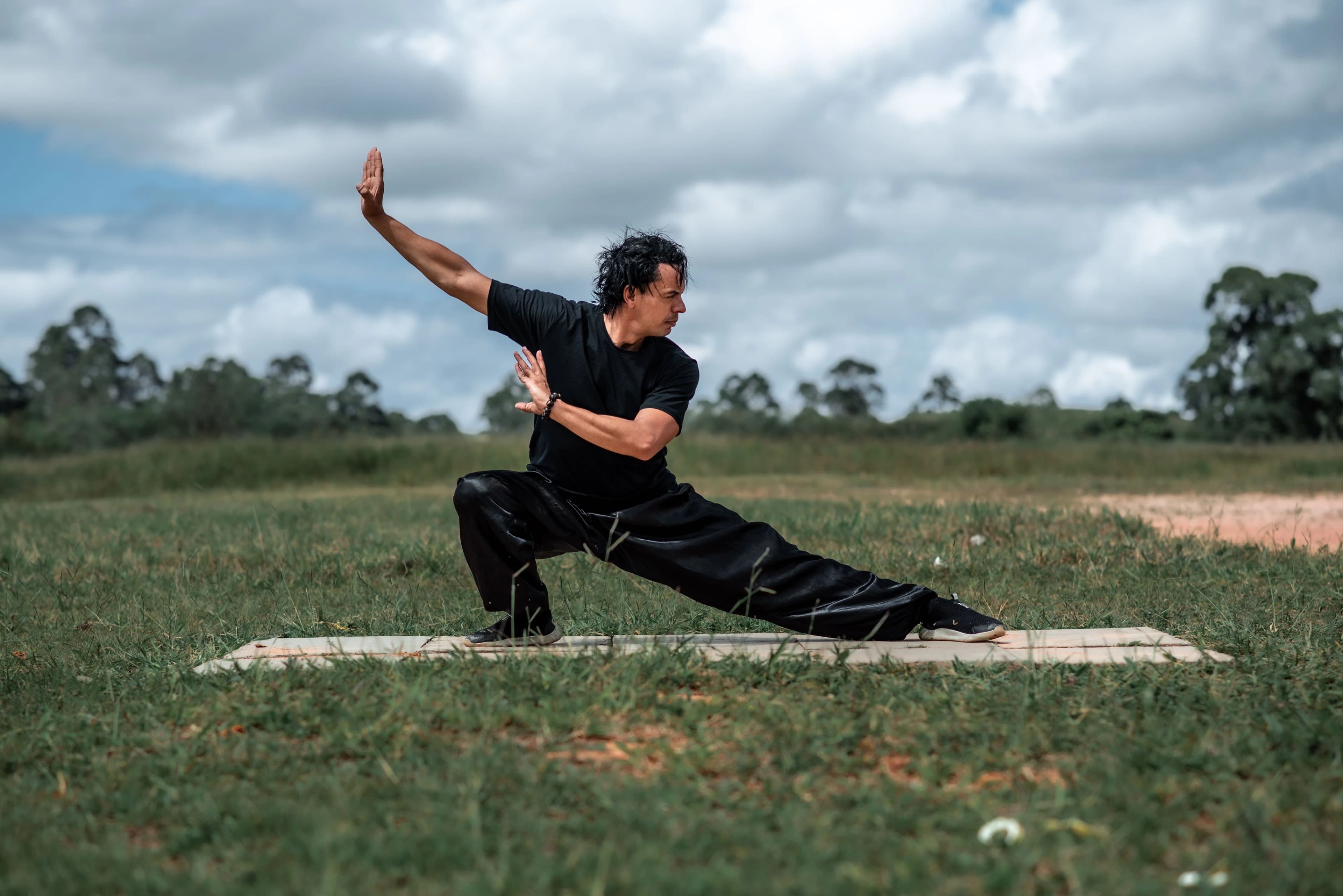
Xingqi is an ancient Chinese practice that uses slow breath and focused intention to guide qi through the body.
Breathe, focus, and move energy from within.
At a glance
What it is
Xingqi is an ancient Chinese practice that uses slow breath and focused intention to guide qi through the body.
Why explore it
Practitioners use Xingqi to support stress relief, mental clarity, and vitality through rhythmic, intentional breathwork.
How it’s experienced
You breathe slowly and focus inward, guiding qi through meridian pathways while seated or standing in quiet stillness.
Evidence context
Xingqi is rooted in centuries of Chinese tradition rather than modern clinical trials, so individual results will vary.
See the evidence snapshotSafety
Xingqi is low-risk for most, though those who are pregnant or have heart conditions should check with a provider first.
See staying safeHistory & Origin
Xingqi, often translated as 'Moving Qi' or 'circulating vital energy,' is a traditional Chinese practice rooted in the cultivation and intentional movement of qi — the life force believed in classical Chinese medicine to animate all living beings. Unlike more widely recognized practices such as Tai Chi or Qigong, Xingqi is a quieter, more internally focused discipline that involves specific breathing techniques, mental concentration, and subtle body awareness to guide qi through the body's meridian pathways. Practitioners describe it as a method of harmonizing the body's energetic landscape from the inside out.
Traditionally, Xingqi has been used as both a meditative and a health-maintenance practice. Some practitioners suggest it may be associated with a sense of increased vitality, reduced tension, and greater mental clarity. It is often practiced in stillness or with minimal movement, distinguishing it from the more choreographed forms of Qigong. The emphasis is placed on the breath and inner attention rather than external postures.
As a holistic practice, Xingqi is typically considered complementary to, rather than a replacement for, conventional medical care. Those drawn to it often come from backgrounds in Chinese medicine, meditation, or broader energy-based wellness traditions. It is generally practiced individually or in small group settings, and its depth of tradition gives it a rich philosophical context that practitioners find meaningful beyond any purely physical or clinical framing.
Xingqi has its roots in ancient Chinese civilization, with references to qi cultivation practices appearing in texts dating back more than two thousand years. One of the earliest known references to a practice recognizable as Xingqi appears on a jade pendant inscription from the Warring States period (approximately 475–221 BCE), which describes a sequence of breathing and energy circulation. This artifact is considered among the oldest physical records of qi cultivation in Chinese history.
Over centuries, Xingqi developed within the broader landscape of Daoist philosophy and classical Chinese medicine, which shared a deep interest in the nature of vital energy and its role in human health and longevity. It was practiced by scholars, Daoist cultivators, and physicians as part of a broader regimen of self-cultivation known as yangsheng, or 'nourishing life.' Unlike some martial or ceremonial traditions, Xingqi remained an intimate, often privately transmitted practice. Its emphasis on inner work and energetic refinement aligned closely with Daoist ideals of returning to naturalness and cultivating harmony between the individual and the cosmos.
Mechanism
Xingqi works by combining conscious breathwork with focused mental intention to guide vital energy through the body's traditional meridian pathways.
Your first visit
A typical session outline to help you feel prepared
A Xingqi session guides you through slow, intentional breathing and inner awareness to help qi move freely through your body's pathways.
Your teacher greets you and briefly explains how the session will unfold, giving you a chance to share any areas of tension or energetic stagnation you've been noticing.
You'll be guided into a comfortable position, typically seated, lying down, or standing still, wearing loose clothing that allows your belly and chest to expand freely with each breath.
The session begins with simple observation of your natural breath, no changes yet, just noticing its rhythm and depth as your mind begins to quiet and turn inward.
Your teacher introduces slow, deliberate breathing rhythms, often with specific counts for inhale, pause, and exhale, designed to begin drawing qi downward into the lower abdomen or dantian.
As the breath deepens, you're guided to follow the movement of qi along internal routes in the body, perhaps feeling warmth, tingling, or a subtle sense of flow moving through your torso or limbs.
For the longest portion of the session, typically 20 to 40 minutes, you breathe and attend inwardly with minimal external instruction, allowing the qi to circulate with as little interference as possible.
Your teacher gently brings your awareness back to the surface, slowing the breath and letting the body absorb the session before you rest quietly for several minutes without any directed focus.
You'll have a moment to share what you noticed, and your teacher may suggest simple home breathing practices to support the qi movement between sessions.
The Evidence
What the research does and does not say about this traditional Chinese energy cultivation practice.
Rooted in tradition, not yet studied as a distinct practice
Xingqi's foundations rest on centuries of classical Chinese medical theory and practitioner lineage. No formal clinical trials exist specifically for Xingqi, and its core concepts are not recognised constructs in conventional Western medicine.
No published clinical trials specifically examine Xingqi as a distinct practice. Broader research on related practices such as Qigong and breathwork exists, but findings cannot be directly applied to Xingqi. Personal and practitioner accounts form the primary available record. Evidence is limited, and health outcome claims should be interpreted with care.
Classical Chinese medicine understands health through concepts such as qi, meridians, and energetic balance. These are not recognised in conventional Western medicine, but they form a consistent framework with a long history of use. Understanding this context helps set realistic expectations without dismissing the tradition's depth.
One of the earliest known references appears on a jade pendant inscription from the Warring States period, describing breath and energy circulation. Xingqi developed within Daoist philosophy and yangsheng — the practice of nourishing life. Its longevity as a tradition reflects sustained cultural value, even in the absence of modern clinical validation.
Practitioners commonly report a sense of increased vitality, reduced tension, and greater mental clarity. These are experiential outcomes rather than clinically verified effects. Xingqi is best understood as a complementary self-care practice that may support overall wellbeing when integrated thoughtfully alongside other health habits and professional care.
Some people experience lightheadedness, tingling, or emotional release during breathwork. Those who are pregnant, have cardiovascular conditions, or are managing active mental health concerns should consult a healthcare provider first. Xingqi is not a substitute for professional assessment or medical care. Seek instruction from a teacher with appropriate training.
Inflated outcome claims are not supported by current evidence. Qi and meridians are not recognised constructs in biomedical science, so mechanistic explanations from that framework do not apply. This does not diminish the personal value many find in the practice, but it does mean Xingqi should not be positioned as a replacement for qualified professional care.
Safety first
General guidance to help you decide whether this approach is appropriate for you. This is informational only and not a substitute for medical, psychological, or professional advice.
If you are pregnant, managing a health condition, recovering from injury or surgery, or taking medication, consult a qualified healthcare professional first.
Some situations call for extra care or a different approach. Share any conditions, injuries, or sensitivities with your practitioner before your first session.
Look for clear boundaries, transparent pricing, and practitioners who avoid fear-based claims or pressure to book frequent sessions.
Mild, short-lived effects such as tenderness, tiredness, or temporary soreness can occur. Rest, hydrate, and tell your practitioner how you respond.
For you?
A simple, human way to weigh it up. This is general guidance, not personal medical advice — a qualified practitioner can advise on your situation.
Gyfts is a discovery platform, not a medical provider. Nothing here diagnoses, treats or replaces professional care. In an emergency, contact your local emergency number.
In their words
Before you book
FAQ
Xingqi and Qigong share common roots in classical Chinese medicine and the cultivation of qi, but they are not identical. Xingqi tends to be more internally focused and breath-centered, with minimal external movement, while Qigong often incorporates structured physical postures and choreographed sequences. Both practices may complement each other within a traditional Chinese wellness approach.
Many people engage with Xingqi as a breathwork and meditative practice regardless of their personal beliefs about qi as a literal energy. Some find value in the relaxation and attentional training the practice offers, while others engage more fully with its traditional philosophical framework. Your level of belief or openness may shape the experience, but it is not necessarily a prerequisite for finding the practice meaningful.
Experiences vary widely among practitioners, and there is no scientifically established timeline for outcomes from Xingqi. Some individuals report a sense of calm or relaxation after a single session, while others describe a gradual deepening of awareness over weeks or months of consistent practice. It is important to approach Xingqi with realistic expectations and understand that any effects are subjective and not guaranteed.
Keep exploring
Browse practitioners, explore honest overviews, and take what you learn to a conversation — at your own pace.