What it is
A Vedic fire ritual of offerings and mantras from Hindu tradition, also called homa or havan.
A Vedic fire ritual from Hindu tradition in which offerings and mantras are given to a sacred fire, practiced for devotion, intention, and renewal
At a glance
What it is
A Vedic fire ritual of offerings and mantras from Hindu tradition, also called homa or havan.
Why explore it
Some people use it for devotion, ceremony, and a sense of calm and renewal.
How it’s experienced
Chanting and offerings at a sacred fire, led by a priest, often outdoors.
Evidence context
No controlled trials were found. Reports of benefit are small and uncontrolled.
See the evidence snapshotSafety
Real fire and smoke risks. Use ventilation and care, and never a closed room.
See staying safeHistory & Origin
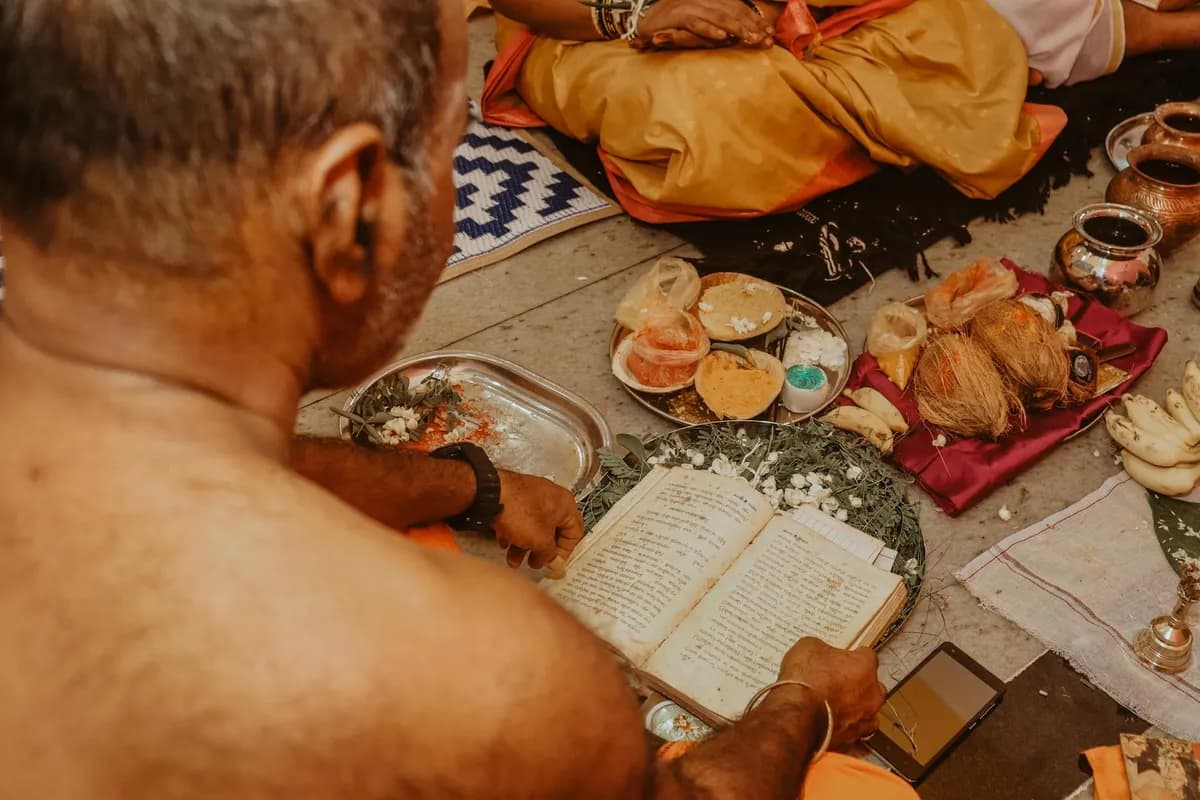
Yajna, also spelled yagna and closely related to homa and havan, is a ritual performed before a sacred fire. Offerings such as ghee, grains, herbs, and wood are placed into the fire while a priest or practitioner chants mantras. In Hindu and Vedic understanding the fire, called Agni, carries the offerings to the divine, and the rite is a form of devotion, gratitude, and shared intention. Ceremonies range from a brief household offering at sunrise to elaborate public rites led by several priests over many days.
People come to yajna for different reasons. Many take part because it is part of their faith, such as at a wedding, a new home blessing, or a festival. Others join a ceremony in a wellness or retreat setting as a way to mark a transition, set an intention, or let go of something. Some people use it to support a sense of calm and renewal, and traditional teachers describe it as a way of purifying the surroundings and restoring harmony. These are meanings held by the tradition, and research on them is very limited.
Yajna is best understood as a religious and cultural practice first. It belongs to Hindu and wider Vedic traditions, and it is most meaningful when led by someone trained in the lineage and the mantras. Because it involves an open flame and smoke, it also carries practical risks that every participant should understand. It is a devotional complement to ordinary life and care, not a replacement for medical or mental health treatment.
Yajna, from the Sanskrit root yaj meaning to worship or offer, is a ritual performed before a sacred fire, usually with mantras. By the time of the Rigveda, composed in the second millennium BCE, it was already a developed institution centered on Agni, the fire deity who carries offerings to the gods. Worshippers expected blessings such as prosperity and healthy children in return. Offerings included ghee, milk, grains, and cakes. The tradition divides into public shrauta rites, which need several specialist priests (the hota, adhvaryu, udgata, and brahma, linked to the four Vedas) and more than one fire, and domestic grihya rites, which a householder performs at a single fire to mark births, weddings, and deaths. Agnihotra, a simple shrauta rite, centers on an offering at sunrise and sunset.
During the first millennium BCE animal offerings declined and symbolic substitutes spread, and the Upanishads reframed yajna as an inner offering and a form of knowledge. Buddhist and Jain teachers criticized Brahmanical sacrifice in the same period. The fire rite nonetheless endured. The wedding fire in Hindu marriage is a living example, and homa or havan, a later and simpler form, is performed in temples and homes today. The scholar Frits Staal documented a twelve-day Agnichayana rite in Kerala in 1975. Today yajna is led by Hindu priests, by householders, and by some modern wellness teachers who adapt it outside its religious setting. Health claims made for it are recent and rest mostly on small, uncontrolled reports.
Mechanism
Yajna works through ritual, mantra, and shared intention. No physical mechanism for health effects has been established.
Your first visit
A typical session outline to help you feel prepared
Ceremonies differ by tradition and priest, but a first yajna often follows a shape like the one below. You can ask about any step before you attend.
The priest explains the purpose of the rite, its tradition, and what will happen, and answers questions about your role.
The fire vessel is set up, fuel is arranged, and attention is paid to ventilation, safe distance, and fire safety.
The priest opens with a short prayer or invocation to Agni and sets the intention of the ceremony with those present.
Mantras are chanted while ghee, grains, or herbs are offered into the fire, and you may be invited to join the offerings.
The ceremony ends with a final prayer or blessing, a moment of quiet, and the fire is allowed to burn down safely.
You settle any offering or fee, ask about follow-up, and leave the fire area only once it is fully out.
The evidence
An honest read on how Yajna / Fire Ritual has been studied — an evidence tier and the research behind it, not a guarantee and not a ranking of “better.”
Rooted in traditional use, with growing research interest
No controlled trials of yajna were found.
Its value is devotional and communal, and smoke and carbon monoxide are real safety concerns.
These uses are cultural and personal, not clinical, and it is wise to check with a clinician first if you have lung or breathing conditions.
Safety first
General guidance to help you decide whether this approach is appropriate for you. This is informational only and not a substitute for medical, psychological, or professional advice.
This approach is not suitable for diagnosis, treatment instructions, or decisions that require medical, legal, financial, or professional advice.
If you are experiencing severe distress, suicidal thoughts, psychosis, acute trauma, or another serious mental health concern, seek qualified support first.
Look for clear boundaries, transparent pricing, and practitioners who avoid fear-based claims or pressure to book frequent sessions.
Treat any insight as one reflective perspective, not absolute truth. Important decisions should be considered with appropriate professional support.
For you?
A simple, human way to weigh it up. This is general guidance, not personal medical advice — a qualified practitioner can advise on your situation.
Gyfts is a discovery platform, not a medical provider. Nothing here diagnoses, treats or replaces professional care. In an emergency, contact your local emergency number.
Explore approaches
Other practices people often explore alongside yajna / fire ritual.
In their words
Before you book
FAQ
It is a Vedic ritual from Hindu tradition in which a priest chants mantras while offerings such as ghee, grains, and herbs are placed into a sacred fire. The fire is understood as a messenger to the divine. It is a devotional practice, and it is also called homa or havan.
No. No controlled trials were found. A few small, uncontrolled reports from India describe agnihotra as a possible adjunct in addiction recovery, but they cannot show cause and effect. Some people find the ritual calming, and that may be its main value. Research on smoke shows irritation risks.
It can be, with care, but it carries real fire and smoke risks. Use a ventilated or outdoor space, keep a fire plan, and never hold it in a closed room, since carbon monoxide poisoning has been reported. People with asthma, heart disease, or pregnancy should keep their distance or skip it.
No, not always, but it helps to approach it with respect. Many ceremonies welcome guests, and some wellness settings offer adapted versions. Ask the leader about the lineage, what is expected of you, and which parts are religious. Remember it is a Hindu rite, not a generic wellness exercise.
No. Yajna is a devotional practice and does not replace medical or mental health treatment. Many people take part alongside ordinary care. If you have symptoms that worry you, speak with a licensed professional, and be wary of anyone who says a ritual will cure illness or asks you to stop treatment.
References
Educational sources that inform this overview. Inclusion is for context and does not imply endorsement.
Full citations are maintained by the Gyfts editorial team and reviewed periodically.
Keep exploring
Browse practitioners, explore honest overviews, and take what you learn to a conversation — at your own pace.