What it is
Zero Balancing uses gentle touch on bones and joints to ease structural and energetic tension.
Where structure meets stillness, balance begins.
At a glance
What it is
Zero Balancing uses gentle touch on bones and joints to ease structural and energetic tension.
Why explore it
It may support relaxation, mental clarity, and grounding during life transitions or recovery.
How it’s experienced
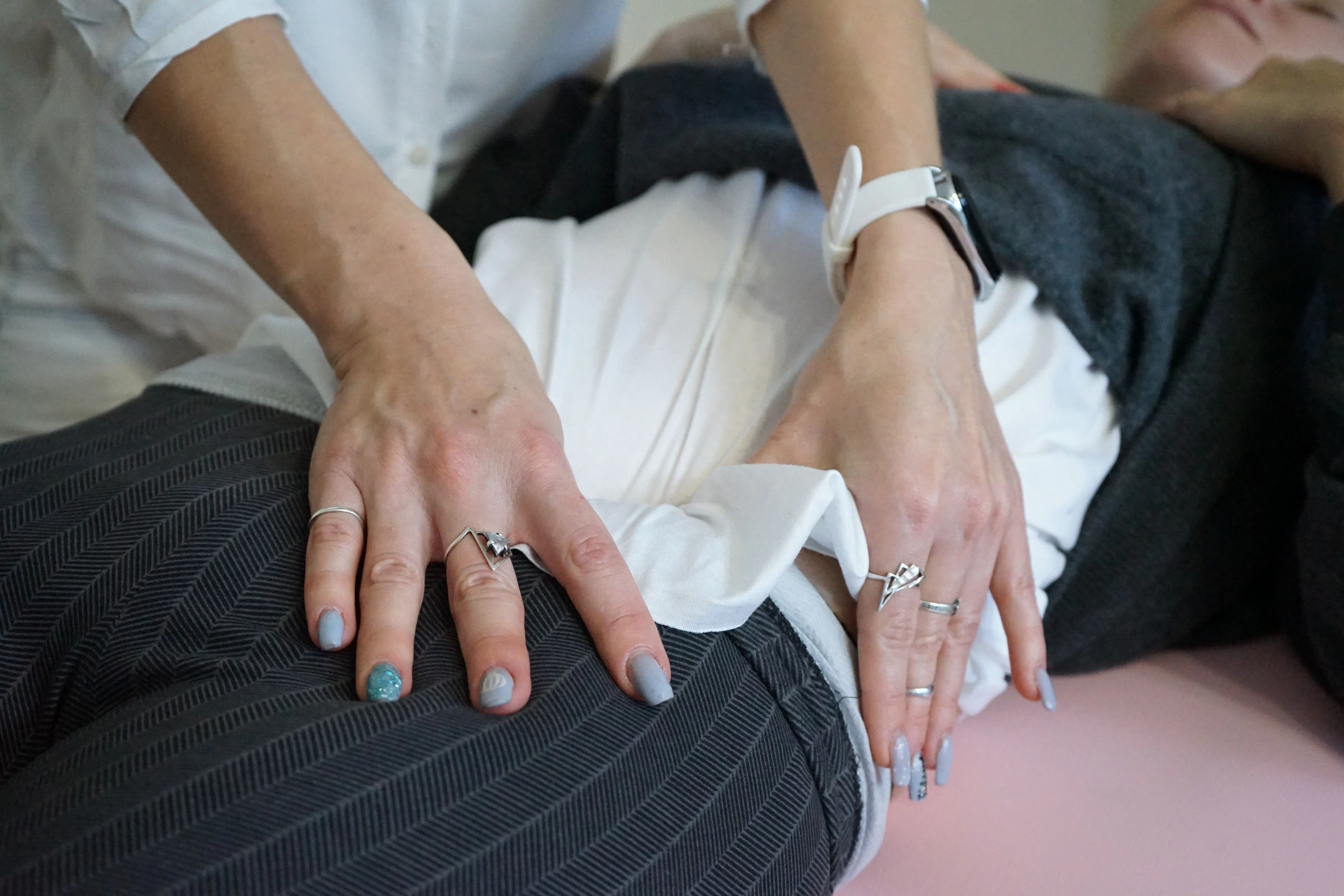
A practitioner applies light pressure at key joints while you lie clothed in a calm 30–45 minute session.
Evidence context
Research is early and limited, so benefits like relaxation are promising but not yet clinically confirmed.
See the evidence snapshotSafety
Generally low-risk, but share any bone conditions, injuries, or trauma history with your practitioner first.
See staying safeHistory & Origin
Zero Balancing is a hands-on bodywork modality developed in the early 1970s that works at the intersection of body structure and body energy. Practitioners use finger pressure and gentle traction at key points along the skeleton — particularly the joints and bones — with the intention of releasing tension held in the deepest layers of the body. Unlike massage, which primarily addresses soft tissue, Zero Balancing focuses on the interface between the physical framework of the body and the energetic fields that practitioners believe flow through and around it. The practice draws from both Western anatomical understanding and Eastern concepts of energy, aiming to create what proponents describe as a state of balance and ease.
Sessions are typically conducted fully clothed, with the recipient lying on a massage table. A practitioner moves through a structured protocol, using what are called 'fulcrums' — brief moments of held tension or traction — to invite the body to reorganize and release. Proponents suggest this process may be associated with reduced physical tension, greater mental clarity, and a sense of overall wellbeing. Some practitioners also describe it as useful for periods of life transition or emotional stress.
Zero Balancing is considered a complementary modality, meaning it is generally used alongside conventional medical care rather than as a replacement. It is not a licensed medical profession in the United States, and practitioners typically complete specialized training programs through the Zero Balancing Health Association or affiliated schools. The evidence base for Zero Balancing remains in early stages, and while anecdotal reports are favorable, robust clinical research is limited. Individuals considering Zero Balancing are encouraged to consult their healthcare provider, particularly if they have existing medical conditions.
Zero Balancing was developed in the early 1970s by Fritz Smith, an American osteopathic physician and acupuncturist. Smith had trained extensively in both Western medicine and Eastern healing traditions, including study in acupuncture at a time when such cross-disciplinary exploration was uncommon in the United States. His exposure to both paradigms led him to question how structural and energetic systems in the body might relate to one another, and he began developing a hands-on approach that attempted to bridge the two. Smith formally introduced Zero Balancing in 1973 and subsequently founded the Zero Balancing Health Association to support the training and development of practitioners. The modality drew conceptual influence from osteopathy, acupuncture theory, and Rolfing, as well as from Smith's observations in clinical practice. Over the following decades, Zero Balancing spread primarily through practitioner training programs in the United States and United Kingdom. It has remained a relatively niche practice within the broader landscape of complementary and integrative health, though it maintains a dedicated practitioner community and structured credentialing pathways through the Zero Balancing Health Association.
Mechanism
Zero Balancing works by applying brief, intentional pressure and traction at bony landmarks to invite release in the body's deepest structural and energetic layers.
Your first visit
A typical session outline to help you feel prepared
You'll lie fully clothed on a table while a practitioner uses gentle held pressure at joints and bones to help your body release tension and find balance.
Your practitioner greets you and asks about your health history, any areas of discomfort, and what you're hoping to experience. This conversation helps them tailor the session to you.
You lie face-up on a padded massage table, fully clothed in comfortable, form-fitting clothing. No oils or undressing are involved, so you can stay relaxed and at ease throughout.
The practitioner gently engages with your body through light touch, starting at your feet and legs, to get a sense of where tension or imbalance may be held in your structure.
Using a technique unique to Zero Balancing, the practitioner places fingers beneath bones and joints, creating held points called fulcrums. These feel like a gentle, still pressure rather than massage.
The practitioner works along your spine, hips, ribcage, shoulders, and feet, pausing at each fulcrum to invite your body to soften and reorganize at its own pace.
You may notice warmth, a floating sensation, spontaneous deep breaths, or a pleasant heaviness as your nervous system responds to the fulcrums. Some people drift into a deeply restful state.
The practitioner finishes with a few grounding holds at your feet and legs to help settle your energy back into your body before you slowly return to full awareness.
Your practitioner invites you to take a moment before rising, then shares simple aftercare tips like drinking water and resting if possible, so the session can continue to integrate.
The Evidence
What research currently shows about Zero Balancing, and what remains uncertain.
Early-stage research, limited formal study to date
Zero Balancing has a small body of practitioner-led research suggesting benefits for stress and wellbeing, but no large-scale controlled trials exist. Its theoretical foundations have not been validated through mainstream biomedical research.
Available studies are small, often lack control groups, and carry a high risk of bias. Participants have reported positive experiences around stress and relaxation, but these findings cannot yet support firm clinical conclusions. No large-scale randomised controlled trials have been published.
It is designed to work alongside, not instead of, conventional care. People exploring it for stress, tension, or general wellbeing should understand it as a supportive option rather than a primary intervention, and should keep their wider care team informed.
Developed in the 1970s by osteopath and acupuncturist Fritz Smith, the modality bridges structural bodywork with ideas about energy flow through bone and joint. These theoretical foundations are not validated by conventional biomedical science, but reflect a deliberate synthesis of two distinct traditions.
The idea that bones conduct or hold energetic fields has not been demonstrated through standard research methods. This does not rule out experiential benefit, but prospective recipients should be cautious of inflated outcome claims and approach the modality with realistic expectations.
Those with osteoporosis, recent fractures, active infections, or a history of trauma should inform their practitioner before a session. Pregnant individuals should seek guidance from their healthcare provider first. Zero Balancing is not a substitute for professional medical assessment.
Zero Balancing practitioners are typically trained through the Zero Balancing Health Association or affiliated programmes. They are not licensed medical providers. Those with complex or active health conditions are encouraged to involve their primary care team when considering complementary bodywork.
Safety first
General guidance to help you decide whether this approach is appropriate for you. This is informational only and not a substitute for medical, psychological, or professional advice.
If you are pregnant, managing a health condition, recovering from injury or surgery, or taking medication, consult a qualified healthcare professional first.
Some situations call for extra care or a different approach. Share any conditions, injuries, or sensitivities with your practitioner before your first session.
Look for clear boundaries, transparent pricing, and practitioners who avoid fear-based claims or pressure to book frequent sessions.
Mild, short-lived effects such as tenderness, tiredness, or temporary soreness can occur. Rest, hydrate, and tell your practitioner how you respond.
For you?
A simple, human way to weigh it up. This is general guidance, not personal medical advice — a qualified practitioner can advise on your situation.
Gyfts is a discovery platform, not a medical provider. Nothing here diagnoses, treats or replaces professional care. In an emergency, contact your local emergency number.
In their words
Before you book
FAQ
No, Zero Balancing is distinct from massage in both theory and technique. Rather than focusing on muscles and soft tissue, it works primarily at the level of bones and joints using held pressure and gentle traction. Sessions are performed fully clothed, and the approach is generally quieter and more subtle than most massage styles.
There is no standardized protocol, and recommendations vary by practitioner and individual need. Some people report noticeable effects after a single session, while others may engage in a short series to explore cumulative benefits. It is advisable to discuss your goals and any health considerations with a practitioner before committing to a course of sessions.
The evidence base for Zero Balancing is currently emerging, meaning formal clinical research is limited and preliminary. Some small studies and anecdotal reports suggest potential benefits related to relaxation and wellbeing, but robust randomized controlled trials have not yet been conducted. Individuals should weigh this honestly when considering the modality.
References
Educational sources that inform this overview. Inclusion is for context and does not imply endorsement.
Full citations are maintained by the Gyfts editorial team and reviewed periodically.
Keep exploring
Browse practitioners, explore honest overviews, and take what you learn to a conversation — at your own pace.