What it is
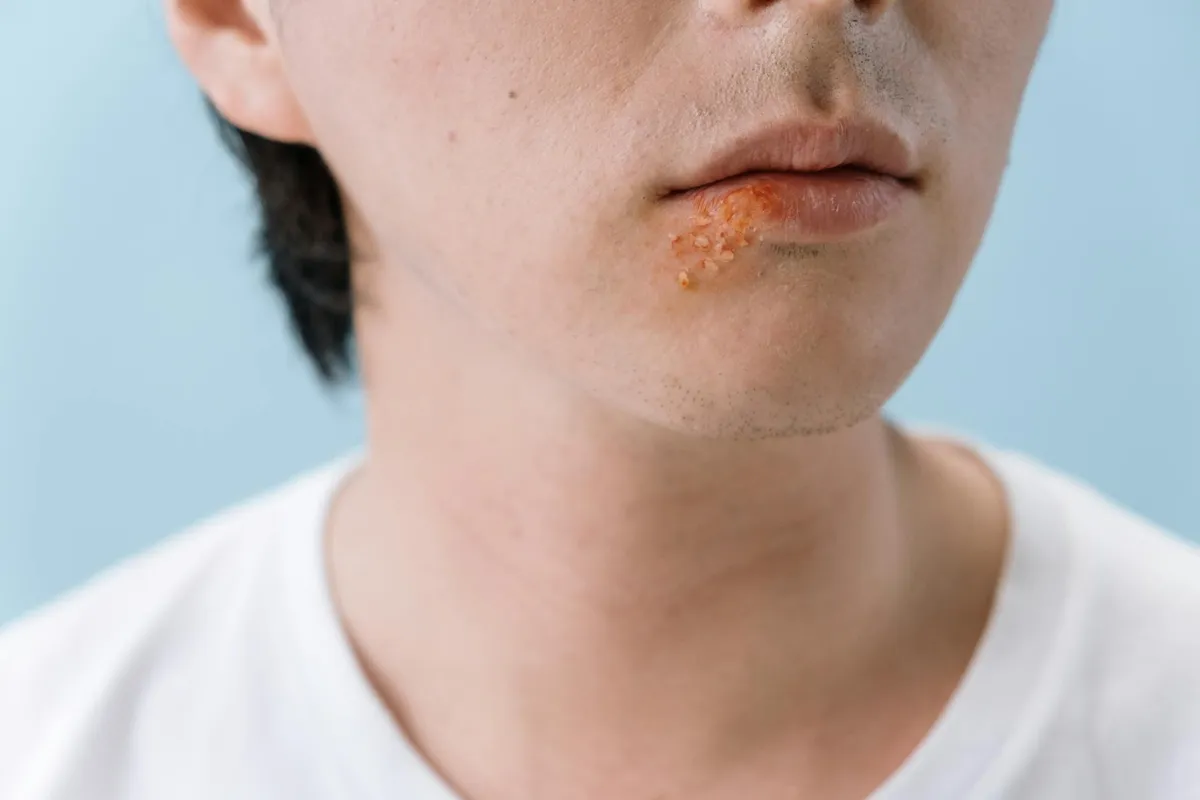
Small raised lesions around the lip and mouth area — commonly perioral dermatitis, cold sores, lip folliculitis, or fordyce spots — each requiring different management.
Small raised lesions around the lip and mouth area — commonly perioral dermatitis, cold sores, lip folliculitis, or fordyce spots — each requiring different management.
At a glance
What it is
Small raised lesions around the lip and mouth area — commonly perioral dermatitis, cold sores, lip folliculitis, or fordyce spots — each requiring different management.
Commonly experienced as
Evidence context
Emerging evidenceSee the evidence snapshotContext
Bumps around the mouth have several distinct causes. Perioral dermatitis — a common inflammatory facial rash — presents as small red papules and pustules around the mouth, typically exacerbated by topical steroids, toothpaste with fluoride, or barrier preparations. Cold sores (herpes simplex virus) cause characteristic blister clusters at the lip border. Fordyce spots are benign sebaceous glands visible as small pale bumps on the lip. Milia are tiny keratin-filled cysts. Angular cheilitis causes soreness at the corners of the mouth. Identifying the specific type guides appropriate management significantly.
Could this be you
Bumps Around Mouth shows up differently for everyone. Browse by how it tends to be felt — these are common experiences, not a checklist or a diagnosis.
Common experiences people describe — not a diagnostic checklist.
The Evidence
What the evidence says about bumps around the mouth and the approaches that may support management.
Multiple causes — identifying the type matters most
Bumps around the mouth have several distinct causes, each requiring different management. Evidence supports specific nutritional and herbal approaches for some types, particularly cold sores, while professional assessment is important for accurate identification.
Seek prompt care if a rash spreads rapidly alongside fever, if a skin lesion changes shape, colour, or size quickly, or if a wound is not healing. Signs of skin infection — increasing redness, warmth, swelling, or pus — also warrant professional review without delay.
Perioral dermatitis, cold sores, Fordyce spots, milia, and angular cheilitis look similar but require different management. A GP or dermatologist can distinguish between them. Self-managing without knowing the cause risks worsening some conditions, particularly if topical steroids are used on perioral dermatitis.
Lemon balm (Melissa officinalis) has reasonably good evidence for reducing cold sore duration and recurrence. Lysine, vitamin C, and zinc have supporting evidence for immune function relevant to cold sore recurrence. Evidence for complementary approaches to perioral dermatitis or Fordyce spots is more limited.
For cold sore recurrence, nutritional therapy focusing on lysine intake and reducing arginine-rich foods has a reasonable evidence base. Herbal topicals containing lemon balm are among the better-studied options. Stress management is relevant across both cold sore recurrence and perioral dermatitis, where stress is a recognised contributing factor.
Perioral dermatitis is commonly worsened by fluoride toothpaste, heavy barrier creams, and topical steroid use. Cold sore recurrence is associated with stress, UV exposure, and immune dips. Identifying and reducing personal triggers is a practical first step alongside professional guidance.
No complementary approach is a substitute for professional assessment of an unidentified skin lesion. Some conditions in this area — including persistent non-healing lesions — require clinical evaluation. Complementary and lifestyle approaches are most useful once the cause is known and as part of a broader management plan.
References
Educational sources that inform this overview. Inclusion is for context and does not imply endorsement.
Full citations are maintained by the Gyfts editorial team and reviewed periodically.
Keep exploring
Browse practitioners, explore honest overviews, and take what you learn to a conversation — at your own pace.