What it is
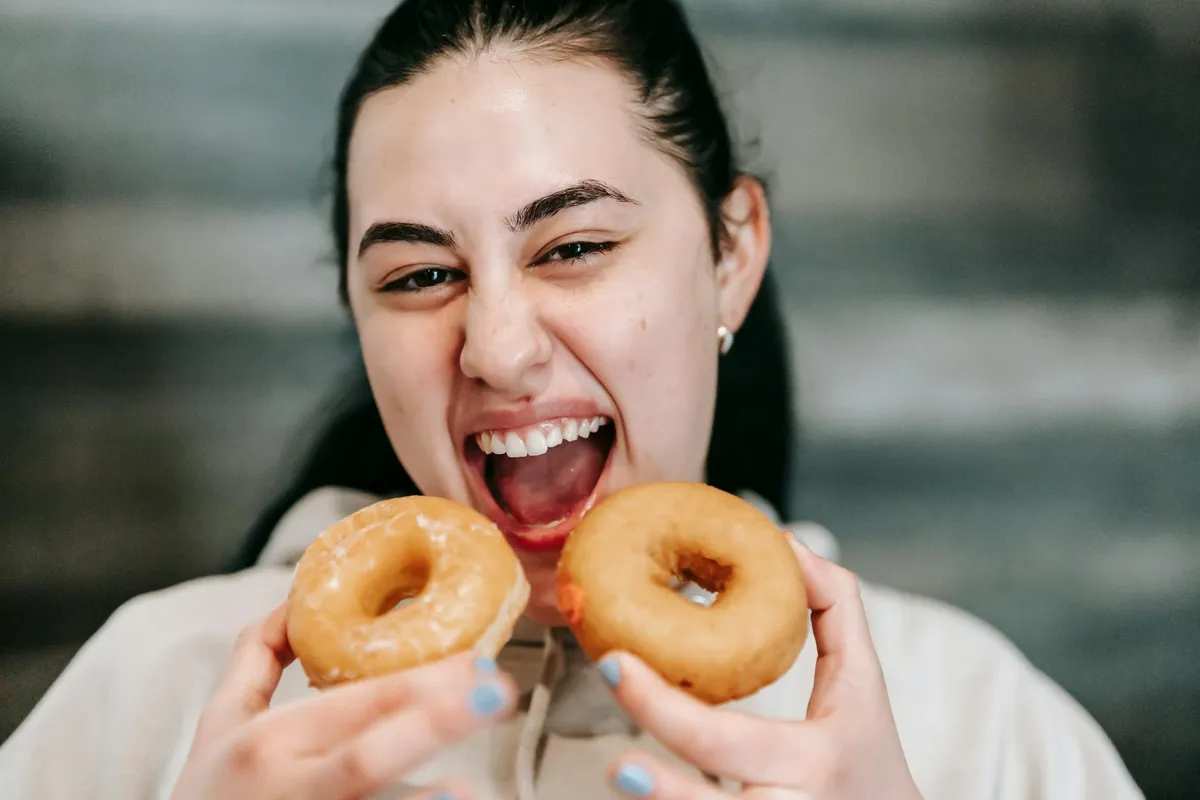
Intense food cravings are powerful, often overwhelming urges for specific foods that go beyond normal hunger.
Powerful urges for specific foods — often high in sugar, fat, or salt — that feel difficult to resist and may be linked to nutritional, hormonal, or emotional factors.
At a glance
What it is
Intense food cravings are powerful, often overwhelming urges for specific foods that go beyond normal hunger.
Commonly experienced as
Evidence context
Emerging evidenceSee the evidence snapshotSafety
See staying safeContext
Intense food cravings involve a compelling, specific urge to consume a particular food or food type — most commonly those high in sugar, fat, or salt — that exceeds ordinary hunger and may feel difficult to resist. They are distinct from general appetite in their specificity and emotional intensity. Neurobiologically, food cravings activate overlapping reward circuitry with substance cravings, involving dopaminergic and opioidergic pathways. They commonly occur premenstrually (driven by hormonal fluctuation), in pregnancy, during caloric restriction (as a rebound to dietary restraint), and in binge eating disorder, bulimia nervosa, and emotional eating patterns. Specific cravings may occasionally reflect nutritional deficiency (e.g., salt cravings in adrenal insufficiency, ice-craving in iron deficiency).
Could this be you
Intense Food Cravings shows up differently for everyone. Browse by how it tends to be felt — these are common experiences, not a checklist or a diagnosis.
Common experiences people describe — not a diagnostic checklist.
The Evidence
What research and clinical practice say about intense food cravings — and when they need professional attention.
Real neurobiological drivers, with some well-supported approaches
Food cravings involve reward circuitry, hormones, and emotional regulation — not simply willpower. Behavioural and mindfulness-based approaches have meaningful evidence, though some areas, like gut microbiome influence, remain early-stage.
Cravings driving binge-purge cycles may indicate bulimia nervosa. Craving non-food substances (pica) warrants screening for iron deficiency or developmental factors. Extreme restriction alternating with uncontrolled eating, or cravings alongside significant weight change and physical symptoms, all require professional assessment rather than self-directed approaches.
CBT-E and DBT skills targeting emotional eating have solid evidence in eating disorder contexts. Mindfulness-based eating awareness training (MB-EAT) shows emerging benefit for reducing craving reactivity. Adequate protein intake and regular meal timing reduce cravings linked to blood glucose fluctuation. Gut microbiome research is growing but not yet clinically actionable.
Cravings activate dopaminergic and opioidergic reward circuits — the same systems involved in other compulsive urges. Hormonal shifts (premenstrual, pregnancy), caloric restriction, and elevated cortisol from stress all reliably amplify craving intensity. Specific cravings can occasionally reflect physiological needs, such as salt craving in adrenal insufficiency or ice craving in iron deficiency.
Rigid dietary elimination to suppress cravings often intensifies restriction-binge cycles rather than resolving them. Appetite suppressants carry cardiovascular risks and require clinical assessment before use. Inflated outcome claims from commercial craving-control products are common — evidence for most is weak or absent.
Ayurveda links taste cravings to dosha imbalances and nutritional signals. TCM maps craving patterns to five-element organ correspondences. Naturopathic approaches explore digestive function, blood sugar regulation, and adrenal health alongside diet. These frameworks can offer useful context, though they operate outside conventional evidence standards and should complement, not replace, professional assessment where needed.
Regular, protein-adequate meals help stabilise blood glucose and reduce rebound cravings. Mindfulness practices that build awareness of craving triggers — without immediate suppression — are supported by emerging research. For cravings linked to emotional distress or disordered eating patterns, working with a psychologist or dietitian experienced in eating behaviour offers the strongest foundation.
Safety first
General, informational guidance — not diagnostic. A qualified practitioner can advise on your own situation.
References
Educational sources that inform this overview. Inclusion is for context and does not imply endorsement.
Full citations are maintained by the Gyfts editorial team and reviewed periodically.
Keep exploring
Browse practitioners, explore honest overviews, and take what you learn to a conversation — at your own pace.