Menopause Transition Support
Navigating menopause with whole-person care
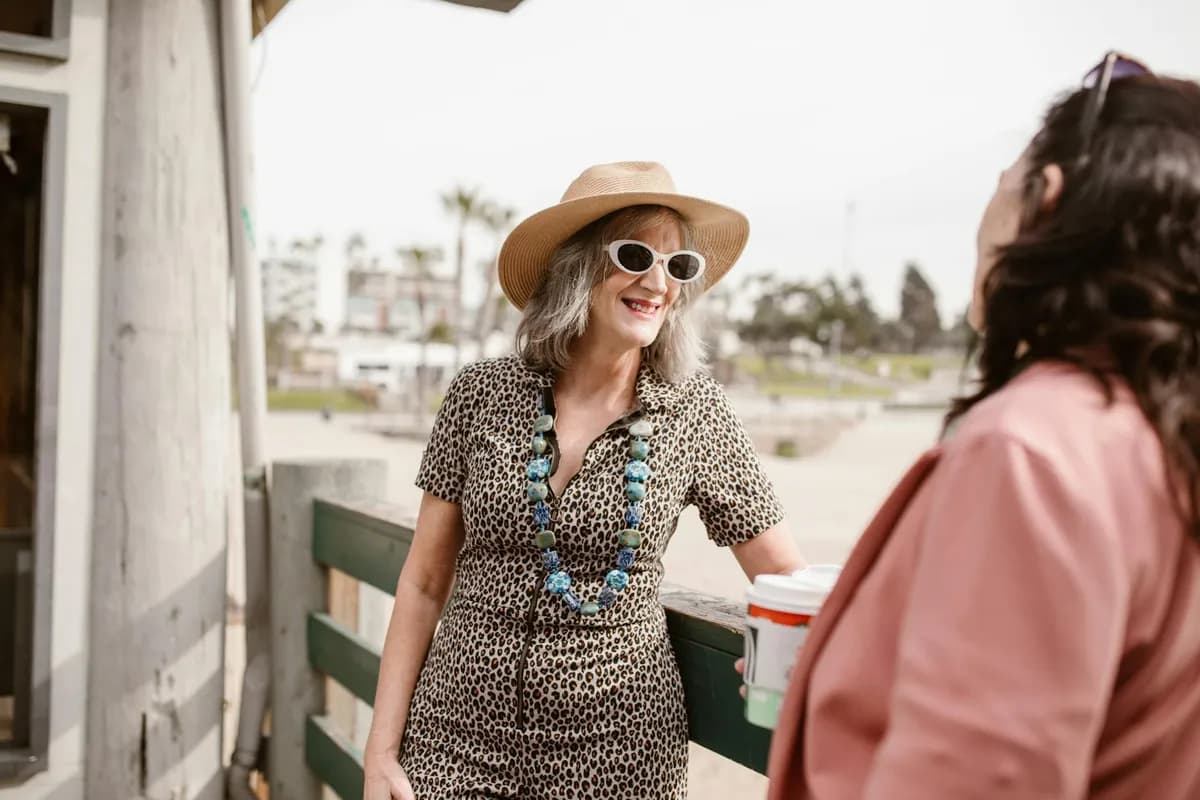
This page covers a specific support option offering. Practitioners and organizations appear only when they offer this exact support option, not simply the modality in general.
Treatment Principles
Overview of Menopause Transition Support
What is Menopause Transition Support?
Menopause Transition Support is a holistic, multi-session pathway that offers emotional and lifestyle support as you navigate the changes of perimenopause and menopause.
It is a complementary experience focused on comfort, wellbeing, and gentle self-care. It does not treat symptoms medically and is designed to sit alongside your doctor's care.
How Menopause Transition Support may support you
Many people describe finding comfort in having space to talk through a significant life transition and in building calmer, sustainable routines.
Areas people often explore include:
- Emotional wellbeing and mood support
- Lifestyle strategies for rest and comfort
- Gentle movement and nourishment habits
- The psychological and identity aspects of this transition
What to expect
Sessions are unhurried and supportive. A practitioner listens to how you are experiencing the transition and helps you explore relaxation, rest, and everyday lifestyle habits.
There are no clinical tests or treatments. The focus is on feeling supported and finding practical comfort in daily life.
How the program works
The pathway spans several sessions so support can adapt as your experience of the transition changes.
Each session may weave together reflective conversation, mind-body relaxation, and simple self-care ideas you can use at your own pace.
Working alongside your medical care
This pathway is complementary only. It never replaces your doctor or any medical treatment, and it makes no changes to prescribed care.
Please keep your medical team informed and bring any clinical concern or symptom, including hot flashes, night sweats, sleep changes, or mood, to your doctor so they can guide you.
How to know whether it is right for you
This may suit you if you want emotional support and gentle lifestyle strategies during the menopause transition, rather than a medical intervention.
Always consult your doctor for anything clinical. Any symptom or health concern should be reviewed by your medical team, with this pathway offering supportive, complementary care alongside them.
Formats compared
Different experiences
These come in several formats. None is “better” — they suit different people and circumstances.
One-to-one pathway
- Setting
- All
- Typically
- 45–60 min
- May suit
- People who want tailored lifestyle support alongside their care.
Online sessions
- Setting
- Online
- Typically
- 45–60 min
- May suit
- People who prefer to meet from home.
Who explores this
What people explore it for
Why people explore this. Not a claim of effectiveness.
Proposed benefits
What people and the tradition describe
Benefits proposed by the tradition and reported by people who explore this — described experiences, not clinically established outcomes. Evidence is limited and individual responses vary.
Support through the transition
A compassionate space to navigate the physical and emotional changes of the menopause transition.
Practical lifestyle guidance
Guidance on sleep, movement, nutrition, and stress that many people find supportive during this time.
Feeling heard and informed
A structured space to understand your experience and the questions to raise with your medical provider.
Steady, personalized pacing
A multi-session pathway shaped around your symptoms and circumstances.
For you?
Is this right for you?
A simple, human way to weigh it up. This is general guidance, not personal medical advice — a qualified practitioner can advise on your situation.
- This support pathway may be particularly well-suited to individuals who are in perimenopause or postmenopause and are seeking a personalized, whole-person approach to managing their experience of the transition.
- It may appeal to those who prefer to explore complementary options alongside or instead of conventional hormone therapy, or who feel that standard medical appointments do not fully address the emotional, lifestyle, and relational dimensions of their experience.
- It may also be a good fit for those experiencing a range of overlapping symptoms — such as sleep disruption, mood changes, fatigue, and hot flashes — who feel that addressing only one issue at a time has not been sufficient.
- Individuals who are motivated to make sustainable lifestyle changes and who value an ongoing therapeutic relationship with a practitioner are likely to get the most from this type of program.
- This support pathway may not be the most appropriate first step for individuals experiencing severe or rapidly progressing symptoms that require prompt medical evaluation, such as unusual bleeding, significant cardiovascular symptoms, or signs of early surgical menopause following medical procedures.
- In these cases, a conventional medical assessment should take priority.
- Those who are managing complex chronic conditions, taking multiple medications, or who have a history of hormone-sensitive conditions should consult their physician before beginning a complementary menopause program, as some botanical or nutritional components may interact with medications or may not be appropriate for their health profile.
- Individuals looking for a quick, single-session solution may also find this pathway less suitable, as the benefits of an integrated program typically unfold over time and require active participation and commitment between sessions.
Gyfts is a discovery platform, not a medical provider. Nothing here diagnoses, treats or replaces professional care. In an emergency, contact your local emergency number.
Evidence & tradition
Evidence and tradition in context
What research says about Menopause Transition Support, where the evidence is limited, and how it fits within a broader wellbeing picture.
The current evidence base is insufficient to draw firm conclusions
Most available research focuses on individual modalities, such as acupuncture, phytoestrogens, mindfulness, or specific herbal preparations, rather than on comprehensive multi-session programs as a whole.
What the research showsHow strong the current research is, and where it remains limited, inconsistent, or inconclusive.
The evidence base for Menopause Transition Support as a multi-modal holistic program is currently insufficient, meaning that robust, high-quality clinical trials examining this specific integrated approach are lacking. Most available research focuses on individual modalities — such as acupuncture, phytoestrogens, mindfulness, or specific herbal preparations — rather than on comprehensive multi-session programs as a whole. Some individual components used within these programs, such as mindfulness-based stress reduction and certain plant-based supplements, have been studied with mixed or preliminary results for specific menopause-related symptoms. However, these findings cannot be straightforwardly extrapolated to a full holistic program. It is important to note that insufficient evidence does not mean the approach is ineffective — it reflects gaps in research rather than proof of harm or lack of benefit. Many practitioners and individuals report meaningful improvements in quality of life and symptom management. Anyone considering this pathway is encouraged to discuss it openly with their conventional healthcare provider, particularly if they have underlying health conditions or are managing menopause with prescribed medications.
Ancient roots and traditionThe traditions and history this practice draws on, offering meaningful context that is distinct from clinical evidence.
Support for women during the menopause transition has roots in traditional healing systems across many cultures, where herbalists, midwives, and community healers provided guidance through life-stage changes using botanical remedies, dietary wisdom, and ritual practices. These traditions recognized menopause not as a medical condition but as a significant physiological and spiritual transition requiring community and holistic care. In modern complementary health, dedicated menopause support programs began emerging more prominently in the late 20th century, partly in response to concerns about the risks of hormone replacement therapy and growing interest in integrative approaches. Today, practitioners trained in naturopathy, functional medicine, integrative nutrition, and mind-body therapies have developed structured protocols specifically designed for the perimenopause and menopause transition, drawing on both traditional knowledge and contemporary wellness frameworks.
Safety and when to seek guidanceGenerally low risk for most people, though some situations call for professional guidance first.
Take particular care if you are seeking medical treatment for menopause symptoms, such as HRT, which a qualified provider should manage; you have severe or concerning symptoms that need medical assessment; you take hormone medication, without coordinating with your prescriber; heavy or unusual bleeding, severe symptoms, or new health concerns, which need prompt medical assessment; any practitioner who offers to replace, adjust, or stop your prescribed treatment. Any serious or persistent health concern should be evaluated by a licensed healthcare provider, alongside rather than in place of professional care.
Limitations to keep in mindIndividual responses vary, and inflated outcome claims are common, so a balanced view matters.
A limited or developing evidence base does not mean an experience holds no value, but it does mean outcomes cannot be promised. Be cautious of anyone guaranteeing results, and treat personal reports as context rather than proof of effectiveness.
FAQ
Common questions
Is a Menopause Transition Support medical treatment?
No. Gyfts is a discovery platform, not a medical provider. This is presented as an educational support option — it is not medical advice, diagnosis, or treatment, and it does not replace care from a qualified professional. In an emergency, contact your local emergency number.
How is this different from seeing my doctor about menopause?
Conventional medical care for menopause typically focuses on diagnosing and treating specific symptoms, often through hormone therapy or other medications. A holistic Menopause Transition Support program takes a broader view, exploring lifestyle, nutrition, stress, emotional wellbeing, and complementary approaches over multiple sessions. The two approaches are not mutually exclusive and many people find they work well together.
How many sessions will I need?
The length of the program varies depending on the practitioner and your individual needs, but most structured programs span between three and six months, with sessions every two to four weeks. Your practitioner will typically review progress regularly and adjust the frequency and focus as your symptoms evolve throughout the transition.
Is there solid scientific evidence that this type of program works?
Honestly, the evidence for holistic multi-session menopause support programs as a whole is currently insufficient — meaning well-designed studies on the integrated approach are limited. Some individual components used within these programs have been studied with mixed results. Many practitioners and participants report meaningful benefits, but it is important to approach this pathway with realistic expectations and to keep your medical team informed.
Guided wellbeing journey
Start a guided wellbeing journey
No specific guided journey is linked to this Support Option yet, but you can explore the available journeys.
Educational only. Not a diagnosis or medical assessment.
View available journeysCommonly explored alongside
People commonly explore these areas also
Reasons people explore this — a complementary practice used alongside conventional care, not a replacement, and not conditions this treats.
People often explore Menopause Transition Support for emotional and lifestyle support during the menopause transition — as a complementary practice used alongside conventional medical care, never a replacement for it.
Emotional balance3 areas
Rest and comfort3 areas
Mind-body self-care3 areas
Shown only where an explicit relationship exists.
Explore next
Related sessions & formats
Neighbouring experiences people often consider alongside this one.
Read a little further
Related guides



References
Evidence & Research
Educational sources that inform this overview. Inclusion is for context and does not imply endorsement.
- 1Women's experience of menopause: a systematic review of qualitative evidence
- 2Effects of nutritional interventions on the severity of depressive and anxiety symptoms of women in the menopausal transition and menopause: a systematic review, meta-analysis, and meta-regression
- 3PCOS during the menopausal transition and after menopause: a systematic review and meta-analysis
- 4The mental health challenges, especially suicidality, experienced by women during perimenopause and menopause: A qualitative study
- 5The menopause transition: a call for a holistic approach
- 6Improving holistic menopause care in the community by upskilling health and wellbeing coaches
Full citations are maintained by the Gyfts editorial team and reviewed periodically.